What is the almas?
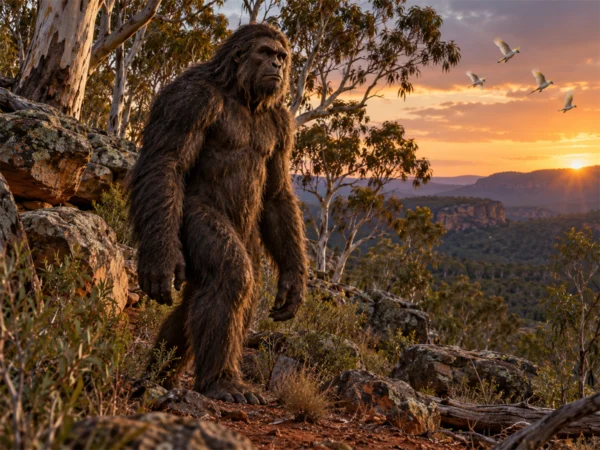
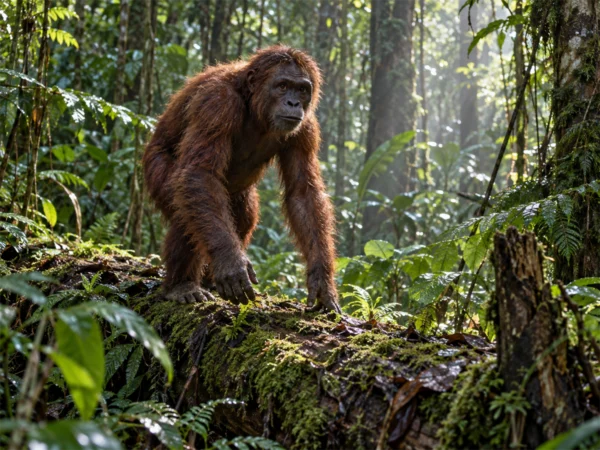
The almas is a hominid-type unidentified creature said to live in the mountains of Mongolia and in the Caucasus region of southern Russia. In the Caucasus it is also called the “almasty.” Smaller than Bigfoot or the yeti, it is said to be about 1.5–2 m tall, covered in reddish-brown hair, and to have a near-human face.
Folklore of the almas
Stories of the almas have long been passed down among the peoples of Mongolia and Central Asia. In the 19th-century Caucasus, there is a story that “Zana,” a hairy wild woman said to have been captured in the forest, lived in a village and had children. In the 20th century, Soviet researchers also set out to investigate the almas.
What is the almas really?
A famous theory holds that the almas is a surviving Neanderthal, a species that went extinct about 40,000 years ago. On the other hand, 21st-century genetic research on the remains of people said to be Zana’s descendants suggested that Zana was a human with African ancestry. Most sightings are thought to be bears or other animals, or people living in the mountains, mistaken for something else.