Entries: 37

Divine & Mythical Beasts ★★★★★ Middle East and Europe (Christianity)

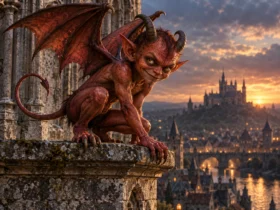
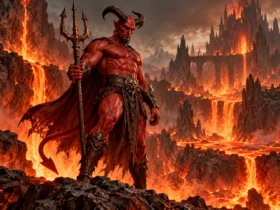
The Devil

In Christianity, the leader of evil who opposes God and tempts people toward evil. Also called Satan or Lucifer, he is said to have originally been an angel serving God who was cast out of heaven for his pride, a "fallen angel." The image with horns, a tail and bat wings became established in art from the Middle Ages on.
Divine & Mythical Beasts ★★★★★ Greece

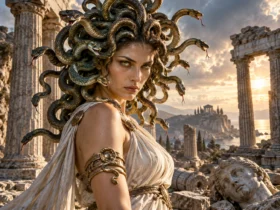
Medusa

One of the three Gorgon sisters of Greek mythology. Her hair is a mass of snakes, and anyone who looks into her eyes is turned to stone. The hero Perseus cut off her head, and from her blood the winged horse Pegasus was born. Her head was placed on the goddess Athena's shield to ward off evil.

Divine & Mythical Beasts ★★★★★ Czechia (Jewish tradition)

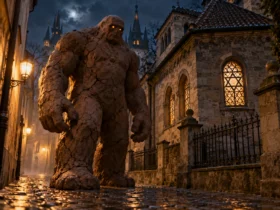
Golem

An artificial giant made of mud or clay in Jewish tradition. It moves by the power of sacred letters and obeys its maker. A famous story says that erasing the "e" from "emeth" (truth) on its forehead, leaving "meth" (death), turns it back to earth. The legend of Rabbi Loew of 16th-century Prague is especially famous.

Divine & Mythical Beasts ★★★★★ England (Europe)

Imp

A small devil or goblin of European folklore. The word originally meant "shoot" or "child," and imps were thought to be the children or servants of devils. Seen as minor demons who merely play tricks on people, they were also thought to be witches' "familiars." The imp statue in England's Lincoln Cathedral is famous.

Divine & Mythical Beasts ★★★★★ Europe

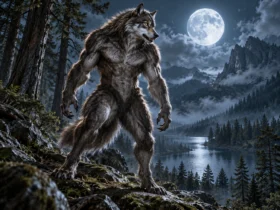
Werewolf

A monster of European folklore said to turn into a wolf on full moon nights. It goes back to the Greek myth of King Lycaon, and in the 16th–17th centuries some people were even put on trial as werewolves. The idea that silver bullets can kill them spread mainly through modern stories and films.

Divine & Mythical Beasts ★★★★★ Greece (Lycia in Asia Minor)

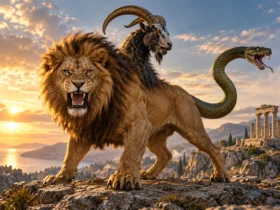
Chimera

A monster of Greek mythology with a lion's head, a goat's body and a serpent's tail, which breathes fire. It ravaged Lycia in Asia Minor but was slain by the hero Bellerophon riding the winged horse Pegasus. It is the origin of the word "chimera," a combination of different creatures.

Divine & Mythical Beasts ★★★★★ Greece (Europe)

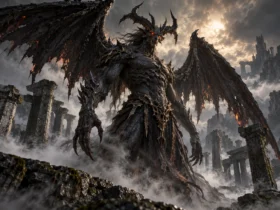
Demon

A word for devils and evil spirits. It comes from the ancient Greek "daimon," a spiritual being between gods and humans. As Christianity spread, it came to mean evil spirits opposed to God, and it often refers to the many devils who serve Satan (the Devil), leader of the fallen angels.

Divine & Mythical Beasts ★★★★★ France

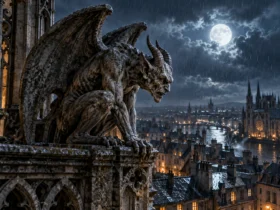
Gargoyle

A stone carving in the shape of a monster placed on the roofs of European cathedrals and other buildings. Its original role was a rain spout that spat water from its mouth, and it was also thought to ward off evil. In Rouen, France, there is a legend of a saint defeating the dragon Gargouille. In fantasy, gargoyles are stone monsters that come to life.

Divine & Mythical Beasts ★★★★★ Ancient Israel

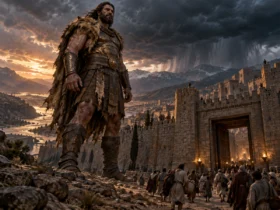
Nephilim

Mysterious giants in Genesis and other books of the Old Testament. They are said to be the children of the "sons of God" and human daughters, and in the Book of Enoch they are the children of fallen angels. Said to have been destroyed by Noah's Flood, they are a subject of giant legends.

Divine & Mythical Beasts ★★★★★ Scandinavia (Icelandic records)

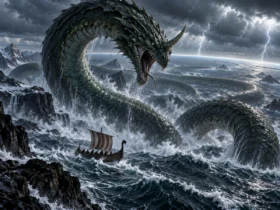
Jormungandr (Midgard Serpent)

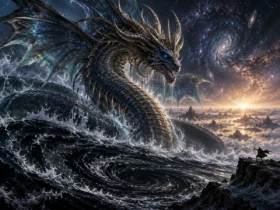
A serpent in Norse mythology so huge it encircles the world. A child of the evil god Loki and brother of Fenrir, he was thrown into the sea and grew until he surrounded the human world, biting his own tail. At Ragnarok, the final battle, he and the thunder god Thor kill each other.

Divine & Mythical Beasts ★★★★★ Ancient Israel

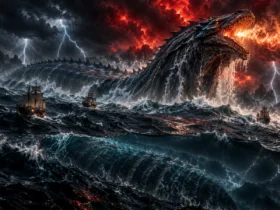
Leviathan

A giant sea monster in the Old Testament. Described as the mightiest creature God made, it breathes fire, and no weapon can harm it. It was later linked with demons and became the title of Hobbes's work of political philosophy.

Divine & Mythical Beasts ★★★★★ Greece

Titans

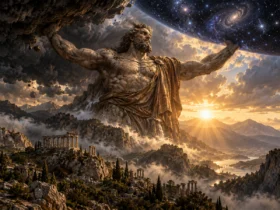
The race of giant gods who ruled the world before the Olympian gods in Greek mythology. Children of the sky god Uranus and the earth goddess Gaia, they were led by Cronus. They lost the ten-year war against Zeus and his siblings known as the Titanomachy.

Divine & Mythical Beasts ★★★★★ Greece

Cyclops

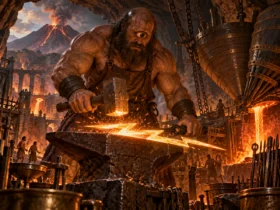
Giants in Greek mythology with a single eye in the middle of the forehead. They are told of as master smiths who made Zeus's thunderbolts, while in the Odyssey the cyclops Polyphemus is a man-eating giant who captures and eats the hero Odysseus's men.

Divine & Mythical Beasts ★★★★★ Greece

Gigantes

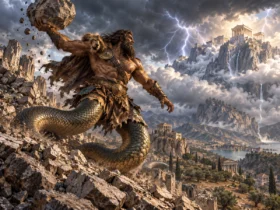
The race of giants in Greek mythology. Born from Gaia, goddess of the earth, they challenged the Olympian gods to battle (the Gigantomachy). The gods won with the help of the human hero Heracles. They are said to be the origin of the English word "giant."

Divine & Mythical Beasts ★★★★★ Iraq (ancient Mesopotamia)

Humbaba

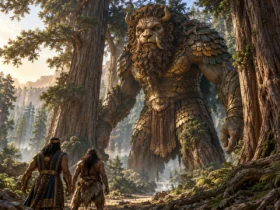
The monstrous guardian of the Cedar Forest in the Epic of Gilgamesh of ancient Mesopotamia. Ordered by the god Enlil to guard the forest, he had a terrifying face and seven radiant auras. He was slain by the hero Gilgamesh and his friend Enkidu.

Divine & Mythical Beasts ★★★★★ Scandinavia (Icelandic records)

Ymir

In Norse mythology, the primordial giant who appeared first, before the world was born. Ancestor of the frost giants, he was killed by Odin and his two brothers, and the world, including earth, sea, sky and mountains, was made from his body.

Divine & Mythical Beasts ★★★★★ Iraq (ancient Mesopotamia)

Tiamat

The primordial goddess of the sea in the Babylonian creation myth Enuma Elish. She created an army of monsters and fought the young gods, but was defeated by the hero god Marduk, who split her body in two to make heaven and earth.

Divine & Mythical Beasts ★★★★★ Greece

Prometheus

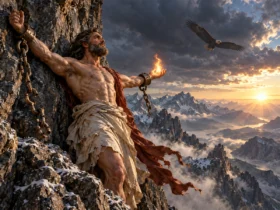
A Titan god of Greek mythology who stole the fire of the gods and gave it to humans, bringing civilization. As punishment, the angry Zeus chained him to a mountain where a great eagle pecked at his liver every day, until he was rescued by the hero Heracles.

Divine & Mythical Beasts ★★★★★ Japan (nationwide)

Komainu (Lion-Dogs)

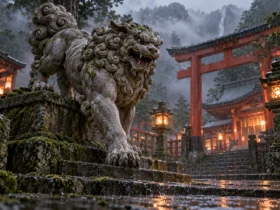
Statues of guardian beasts placed in pairs along the approaches to shrines and in front of shrine buildings. They are usually a pair of "a" (open mouth) and "un" (closed mouth). Their origin is said to be the lion statues of the ancient Middle East, which reached Japan by way of Chinese lions.

Divine & Mythical Beasts ★★★★★ Japan (Okinawa Prefecture)

Shisa

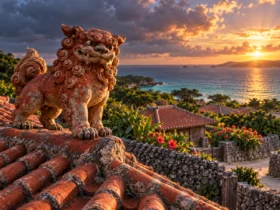
A guardian lion statue placed on roofs and gates and at village entrances in Okinawa to ward off evil. Its name comes from the Okinawan pronunciation of "shishi" (lion). Shisa are often set out in pairs, a male with an open mouth and a female with a closed mouth, and are believed to drive away misfortune.