Entries: 37

Divine & Mythical Beasts ★★★★★ Europe (ancient Greek records)

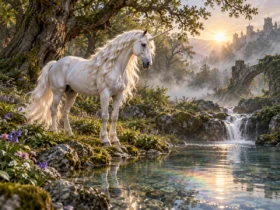
Unicorn

A horse-like creature with a single long horn on its forehead. It appears in ancient Greek records, and in medieval Europe it was a holy beast that only a pure maiden could capture. Its horn was believed to neutralize poison and was traded at high prices.
Divine & Mythical Beasts ★★★★★ India

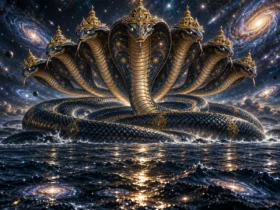
Ananta

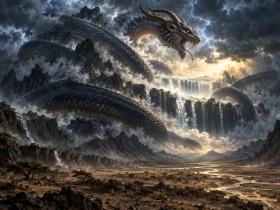
The king of serpents with countless heads in Indian mythology, also called Shesha. He serves as the bed on which the god Vishnu sleeps in the primordial ocean and is said to support the world. His name means "endless."

Divine & Mythical Beasts ★★★★★ India

Vritra

A giant serpent (dragon) in the Rigveda, the sacred text of ancient India. It dammed up the world's waters and brought drought, but was struck down by the thunder god Indra with his vajra. Its name is said to mean "the one who covers."

Divine & Mythical Beasts ★★★★★ Egypt

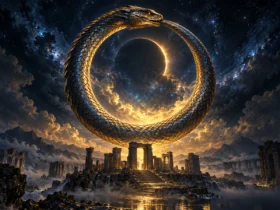
Ouroboros

The image of a serpent (or dragon) that forms a circle by biting its own tail. Originating in ancient Egypt, it was handed down in alchemy and Gnosticism. Having no beginning and no end, it symbolizes infinity, eternity, and death and rebirth.

Divine & Mythical Beasts ★★★★★ China

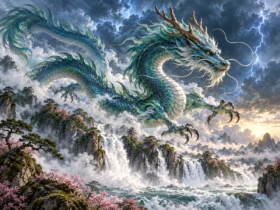
Seiryu (Azure Dragon)

One of the Four Symbols, a sacred beast in the form of a blue dragon that guards the east. It governs spring and the element of wood. It is painted on the walls of the Takamatsuzuka and Kitora tombs and was built into the plan of the Heian capital.

Divine & Mythical Beasts ★★★★★ China

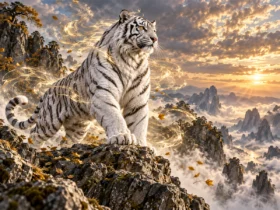
Byakko (White Tiger)

One of the Four Symbols, a sacred beast in the form of a white tiger that guards the west. It governs autumn and the element of metal. It is painted in the Kitora tomb and gave its name to the Byakkotai, the young samurai unit of the Aizu domain at the end of the Edo period.

Divine & Mythical Beasts ★★★★★ China

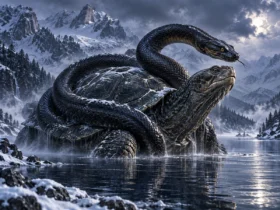
Genbu (Black Tortoise)

One of the Four Symbols, a sacred beast in the form of a tortoise entwined with a snake that guards the north. It governs winter and the element of water. Genbudo Cave in Hyogo Prefecture is named after it, and the cave in turn gave its name to basalt (genbugan).

Divine & Mythical Beasts ★★★★★ China

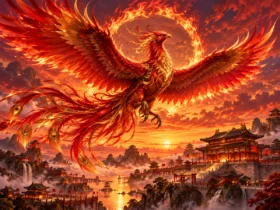
Suzaku (Vermilion Bird)

One of the Four Symbols, a sacred beast in the form of a red bird that guards the south. It governs summer and the element of fire. It is sometimes identified with the phoenix, and it gave its name to Suzaku Avenue, which ran through the center of the Heian capital.

Divine & Mythical Beasts ★★★★★ China

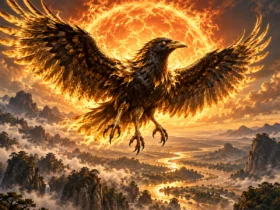
Kin'u (The Golden Crow)

A three-legged crow said in Chinese mythology to live in the sun. It is a symbol of the sun itself and is paired with the rabbit of the moon. "Kin'u gyokuto" (golden crow, jade rabbit) means the sun and the moon, and by extension the passing years.

Divine & Mythical Beasts ★★★★★ India

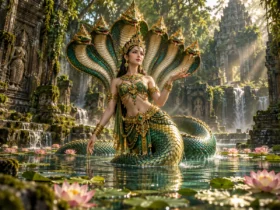
Naga

Serpent gods and spirits of Indian mythology, depicted as human above and snake below, or as a cobra with many heads. In Buddhism they became protectors of the Dharma, and in China and Japan they were translated as "dragons."

Divine & Mythical Beasts ★★★★★ Scandinavia

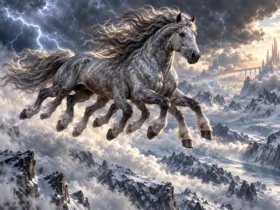
Sleipnir

The eight-legged grey divine horse ridden by Odin, chief god of Norse mythology. The fastest of all horses, it races across sky, land and sea and can even go to the land of the dead. It is also a child of the trickster god Loki.

Divine & Mythical Beasts ★★★★★ Scandinavia

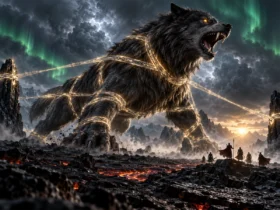
Fenrir

A giant wolf in Norse mythology, the son of the god Loki. Feared by the gods, he was bound with the magic fetter Gleipnir. He is foretold to swallow the chief god Odin at Ragnarok, the end of the world.

Divine & Mythical Beasts ★★★★★ Japan

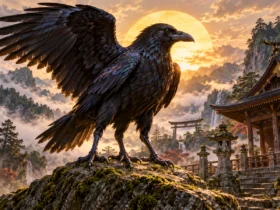
Yatagarasu

A great crow from Japanese mythology that guided Emperor Jimmu from Kumano to Yamato. Usually shown with three legs and revered as a messenger of the gods of Kumano, it is also famous as the symbol of the Japan Football Association.

Divine & Mythical Beasts ★★★★★ India

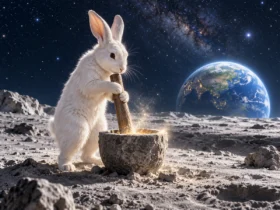
The Moon Rabbit (Tsuki no Usagi)

The tradition of seeing a rabbit in the markings of the moon. In Japan it pounds rice cakes (mochi); in China it makes the elixir of immortality. An Indian Buddhist tale says a rabbit that offered itself was painted on the moon.

Divine & Mythical Beasts ★★★★★ China

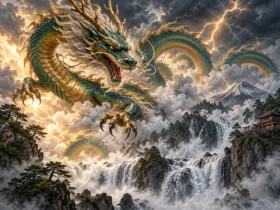
Ryu (Japanese Dragon)

A sacred creature with a long, snake-like body, horns and scales that governs water and rain. It came to Japan from China, where belief in the dragon god Ryujin, master of lakes, rivers and ponds, took deep root.

Divine & Mythical Beasts ★★★★★ Japan

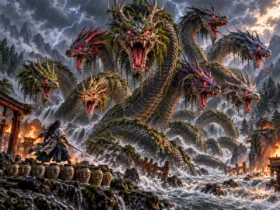
Yamata no Orochi

A gigantic serpent with eight heads and eight tails. Described in the Kojiki and Nihon Shoki, it was slain by the god Susanoo after being made drunk on sake, and the sword Kusanagi was found in its tail. It is the most famous monster of the Izumo myths.

Divine & Mythical Beasts ★★★★★ China

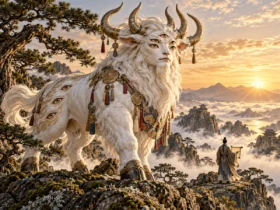
Hakutaku (Bai Ze)

A legendary sacred beast of China that speaks human language and knows about every yokai and calamity in the world. In Edo-period Japan, pictures of it became popular as charms against illness and disaster.