What is the ouroboros? Meaning and origin
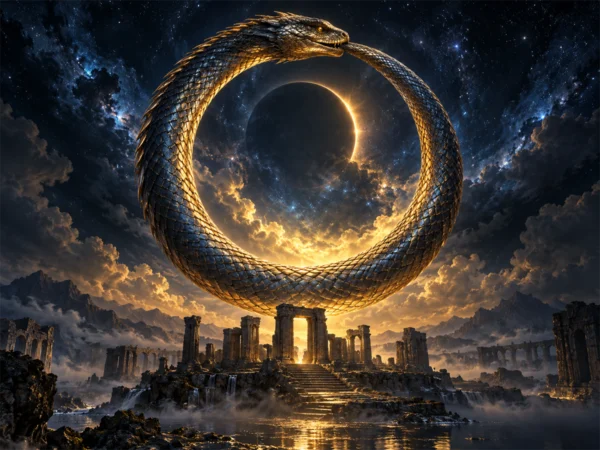
The ouroboros is the image of a serpent or dragon that forms a circle by biting its own tail. The name means “tail-devourer” in Greek. Endlessly eating itself and being born from itself, it is said to symbolize “infinity” and “eternity” with no beginning or end, as well as “death and rebirth” and “cycles.”
The ouroboros in ancient Egypt
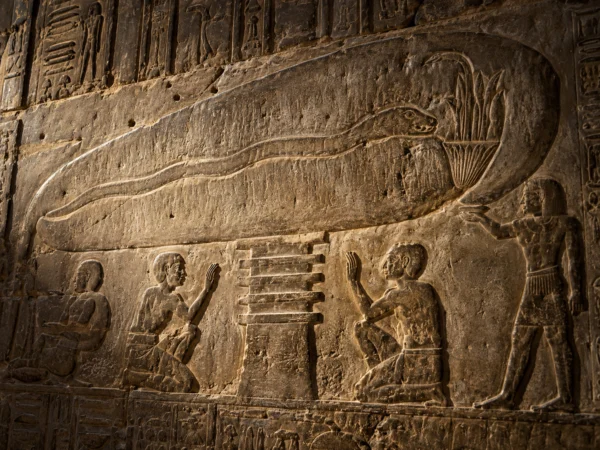
One of the oldest examples of a serpent biting its tail is said to be the image on a shrine found in the tomb of Tutankhamun, pharaoh of ancient Egypt in the 14th century BC. There it is depicted as a serpent encircling the sun god, thought to represent the eternal cycle of the sun setting and rising each day.
Alchemy and the ouroboros
The ouroboros was later handed down in Gnosticism of the Greco-Roman world and in alchemy, born in Hellenistic Egypt. Old alchemical manuscripts depict it with the words “One is All,” making it a symbol of the alchemical idea that matter changes form while cycling as one. Together with the homunculus, it is a symbol of alchemy.
In the 20th century, the psychologist Jung discussed the ouroboros as one of the “archetypes” representing the primordial wholeness deep in the human psyche.
Tail-biting serpents in world myths
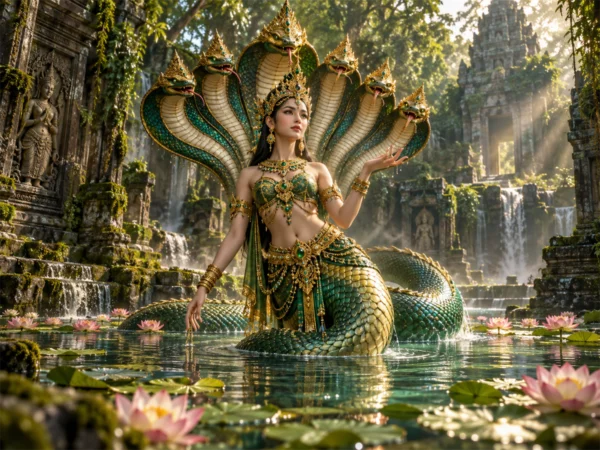
In Norse mythology, the great serpent Jormungandr, living in the sea surrounding the world, encircles the land biting its own tail. Indian mythology also links the world with serpents, as with Ananta, the naga king coiled in the primordial ocean. The ouroboros is still widely used in logos and designs expressing infinity and cycles, and as a motif in fantasy works.