Entries: 24

OOPArts ★★★★★ Italy (first recorded in France)

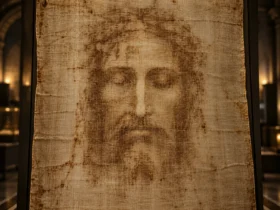
Shroud of Turin

A linen cloth in the cathedral of Turin, Italy, said to have wrapped the body of Jesus Christ. The faint image of a man's whole body appears on it. A 1988 dating test placed it in the Middle Ages, but how the image was made remains a mystery.
OOPArts ★★★★★ Iraq

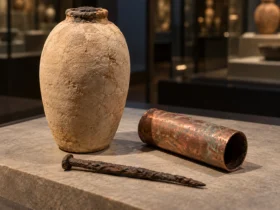
Baghdad Battery

An ancient clay jar containing a copper cylinder and an iron rod, found near Baghdad, Iraq. The "ancient battery" theory was published in 1938, and replicas producing a weak current made it famous. No wires have been found, and other uses such as storing scrolls are considered more likely.

OOPArts ★★★★★ Mexico (Maya civilization)

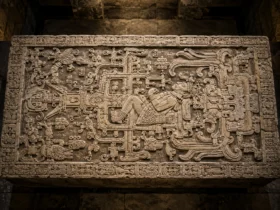
Palenque Sarcophagus Lid (Pakal's Tomb)

The carved lid of the 7th-century sarcophagus of King Pakal, found in 1952 beneath the Temple of the Inscriptions at the Maya site of Palenque, Mexico. It caused a stir because the figure seems to be piloting a rocket. Mayanists read it as a scene of the king's death and rebirth.

OOPArts ★★★★★ Egypt

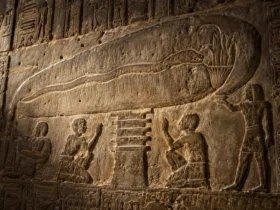
Dendera Light

A relief carved on the wall of a crypt in the Temple of Hathor at Dendera, Egypt, that looks like a giant light bulb. It was hailed as "proof of electricity in ancient Egypt," but Egyptologists read it as a mythological scene of a snake born from a lotus flower.

OOPArts ★★★★★ Costa Rica

Stone Spheres of Costa Rica

More than 300 stone spheres found in southern Costa Rica, Central America. The smallest are a few centimeters across, the largest over 2 m, weighing more than ten tons. Thought to have been made by the Diquis culture around AD 300–1500, they were inscribed as a World Heritage site in 2014.

OOPArts ★★★★★ Iraq (ancient Assyria)

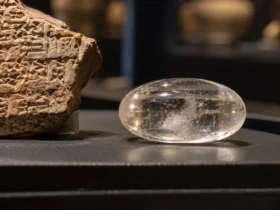
Nimrud Lens

A piece of rock crystal from around the 8th century BC, found in 1850 in the palace ruins of Nimrud, a capital of ancient Assyria in today's Iraq. Because it works like a convex lens, it was hailed as an ancient magnifying glass or telescope. It is held at the British Museum. Some see it as part of an ornament.

OOPArts ★★★★★ Turkey (Ottoman Empire)

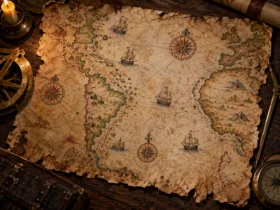
Piri Reis Map

A world map drawn in 1513 by the Ottoman admiral Piri Reis. It shows the coastline of South America, and its lower part was claimed to be "Antarctica before it was covered in ice." Most researchers think it shows the South American coastline bent to fit.

OOPArts ★★★★★ India

Iron Pillar of Delhi

An iron pillar about 7 m tall standing at the Qutub Minar complex in Delhi, a World Heritage site. Said to have been made in the Gupta era of the 4th–5th centuries, it is known as the "rustless iron pillar" because it has barely rusted in over 1,600 years. In Japan it is also called the "Ashoka Pillar."

OOPArts ★★★★★ Germany

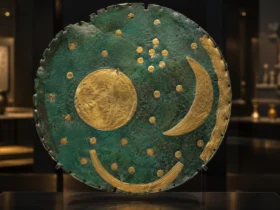
Nebra Sky Disc

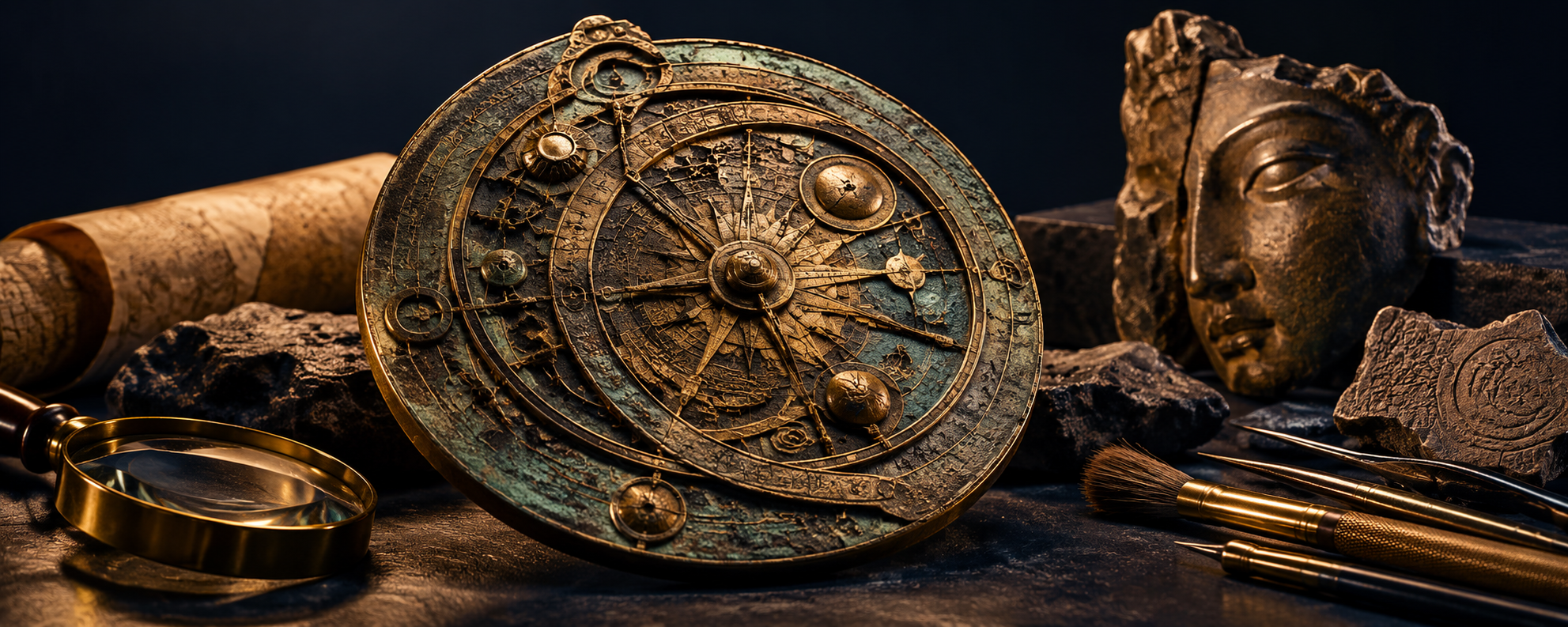
A bronze disc about 32 cm across, found near Nebra, Germany, with the sun (or full moon), a crescent moon and stars depicted in gold. Dated to around 1600 BC in the Bronze Age, it is one of the oldest concrete depictions of the cosmos in the world. The story from looting to recovery also drew attention.

OOPArts ★★★★★ Greece

Antikythera Mechanism

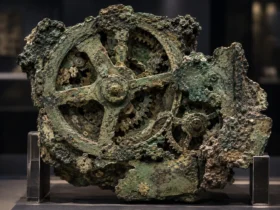
A bronze geared device from around the 2nd–1st century BC, recovered in 1901 from a shipwreck off the Greek island of Antikythera. An astronomical calculator that could predict the movements of the sun and moon and eclipses, it is called "the world's oldest computer." It is a genuine ancient artifact.

OOPArts ★★★★★ United States

The Cretaceous "Finger" Fossil

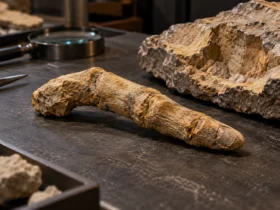
A stone shaped just like a human fingertip, said to have been found in Texas in the 1980s. Claimed to come from Cretaceous rock about 100 million years old, it was presented as evidence that dinosaurs and humans coexisted. It has been pointed out that its joints do not match a human finger, and the prevailing view is that it is a stone with a chance resemblance.

OOPArts ★★★★★ Colombia

Golden Space Shuttle (Quimbaya Airplanes)

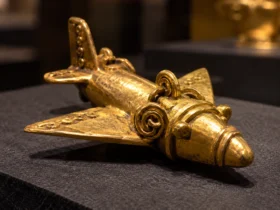
Small gold ornaments found at ancient sites in Colombia that look just like airplanes or the space shuttle. Because they have parts like wings and tail fins, they were hailed as proof of ancient aircraft. The leading view is that they are ornaments shaped like fish, birds or other animals.

OOPArts ★★★★★ United States

Lake Winnipesaukee Mystery Stone

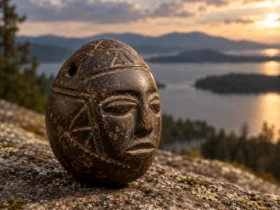
A dark, egg-shaped stone found near Lake Winnipesaukee, New Hampshire, in 1872. It is carved with a human face, ears of corn, arrowheads and moons, and has holes drilled through both ends. Who made it, when and why remain unknown.

OOPArts ★★★★★ Ecuador

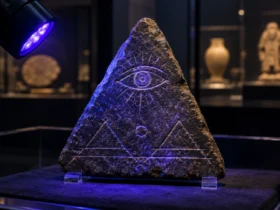
Pyramid Eye Tablet

A pyramid-shaped stone object about 27 cm tall said to have been found at La Mana, Ecuador. With an eye at its apex and 13 steps carved below, it looks just like the "pyramid and eye" on the dollar bill. It is said to glow under ultraviolet light, but its origin and date are unknown.

OOPArts ★★★★★ United States

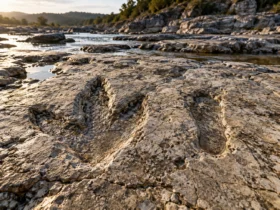
Paluxy "Man Tracks"

Fossil dinosaur footprints from the Cretaceous on the bed of the Paluxy River in Texas. Some claimed giant human-like footprints beside them proved dinosaurs and humans coexisted. Research has shown they are elongated dinosaur tracks or fakes carved later.

OOPArts ★★★★★ Russia

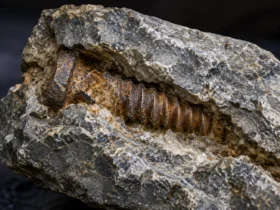
The Cambrian "Bolt"

A stone found in Russia in the 1990s with what looks like a metal bolt embedded in it. It was hailed as "a part from a spaceship." Its claimed age varies from the "Cambrian" to "1.5 billion years ago," and the leading theory is that it is a crinoid fossil mistaken for a bolt.

OOPArts ★★★★★ United States

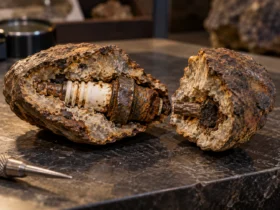
Coso Artifact

An object found in the Coso Mountains of California in 1961, with metal and ceramic parts embedded in stone. It caused a stir as "a spark plug from a 500,000-year-old rock," but it was later found to be a 1920s car spark plug.

OOPArts ★★★★★ Germany

Freiberg Skull (Lignite Skull)

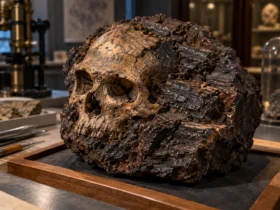
An object in the shape of a human skull said to have been found in the 19th century in the German mining town of Freiberg. It is made of lignite and iron ore and is told of as an OOPArt from rock millions of years old. Others see it as a forgery.

OOPArts ★★★★★ Japan (Hyogo Prefecture)

Prince Shotoku's Globe

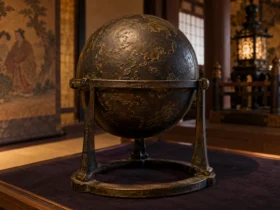
A small globe called the "Chichuseki" kept at Ikarugadera Temple in Taishi, Hyogo Prefecture. Because it shows the Americas and a southern continent unknown in the Asuka period, it became famous as a Japanese OOPArt. Its material and the place names on it suggest it was made in the Edo period.

OOPArts ★★★★★ Mexico

Acambaro Figures

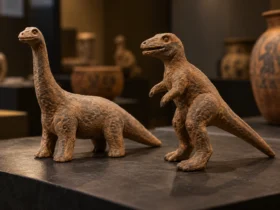
More than 30,000 clay figures collected in Acambaro, Mexico, in the 1940s by the German-born businessman Waldemar Julsrud. Many look just like dinosaurs, and they were hailed as evidence that dinosaurs and humans coexisted, but most archaeologists think they were made in modern times.