What is Prince Shotoku’s globe?
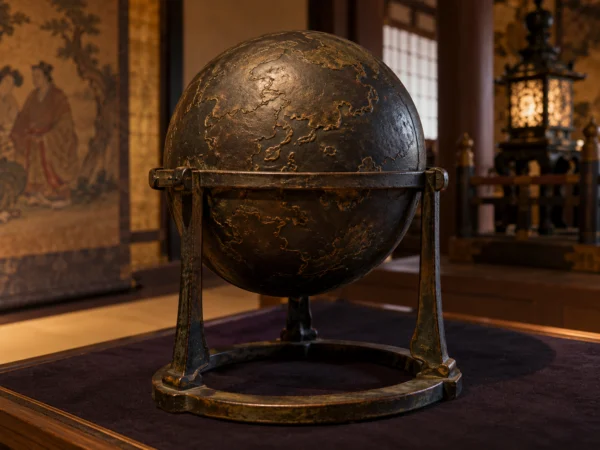
Prince Shotoku’s globe is a softball-sized globe kept at Ikarugadera Temple in Taishi, Ibo District, Hyogo Prefecture. The temple calls it the “Chichuseki” (earth stone) and has handed it down as one of its treasures linked to Prince Shotoku. Ikarugadera is an old temple said to have been founded by Prince Shotoku himself.
Land is shown raised and sea recessed, and not only Eurasia and Africa but also the Americas and a large continent around the area of Antarctica are depicted.
Why it is called an OOPArt
If it really dated from Prince Shotoku’s time, the 7th-century Asuka period, the Japanese would have known the shape of the Earth nearly 900 years before Europeans reached the Americas. Antarctica, moreover, was not discovered until the 19th century. That is why it has been featured on TV and in books as “Japan’s OOPArt.” Prince Shotoku is also the subject of the legend of the Miraiki, in which he foretold the future.
Made in the Edo period?
Closer study, however, showed that the globe is made not of stone but of a plaster-like material of hardened lime, a material used only much later. The globe also first appears in the temple’s treasure records only near the end of the Edo period.
Furthermore, the southern continent is labeled “Megallanica,” the imaginary southern continent Megallanica drawn on 16th–17th-century European world maps, which also appears on world maps that reached Japan in the Edo period. For these reasons, the globe is thought to have been made in the Edo period by someone with knowledge of Western maps and donated to the temple. Famous OOPArts are listed on the OOPArts page.