What are OOPArts?
OOPArts is short for “out-of-place artifacts,” objects said to be impossible to make with the technology of the time and place where they were found. The term is credited to the American naturalist Ivan Sanderson, and in Japan it became widely known with the boom in super-ancient civilizations from the 1970s.
OOPArts are sometimes presented as evidence of lost super-ancient civilizations or of aliens who visited the Earth in ancient times (the ancient astronaut theory).
OOPArts that show genuine ancient technology
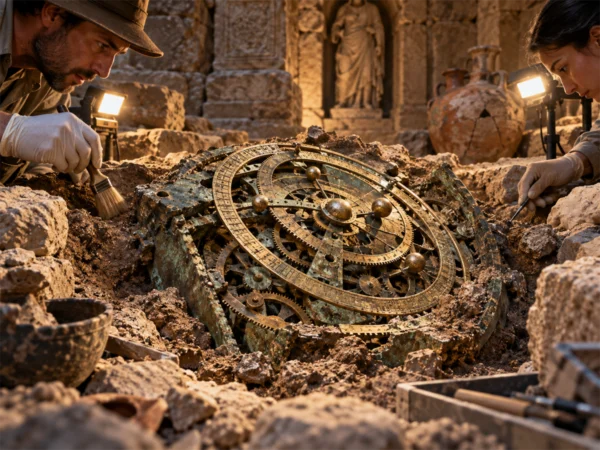
The Antikythera mechanism, an ancient Greek geared astronomical calculator; the Nebra sky disc, depicting the Bronze Age night sky; the Iron Pillar of Delhi, unrusted for more than 1,600 years; the Piri Reis map, drawn by an Ottoman admiral; the ancient Assyrian Nimrud lens; and the giant stone spheres of Costa Rica are all genuine ancient artifacts. They show not alien technology but the high knowledge and skill of ancient peoples.
OOPArts open to interpretation
The Baghdad Battery, said to be an ancient battery; Egypt’s Dendera light, which looks like a light bulb; the Maya Palenque sarcophagus lid, said to show a rocket pilot; the airplane-like golden space shuttle; and the Lake Winnipesaukee mystery stone, whose carvings remain unexplained, are genuine artifacts, but their interpretation as OOPArts is disputed.
OOPArts thought to be modern creations or natural objects
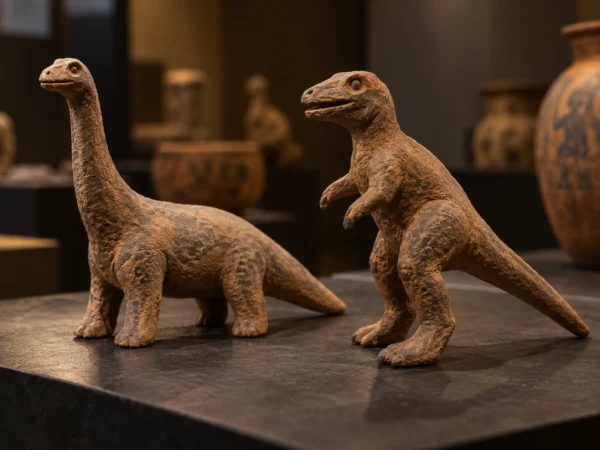
The crystal skulls, the Ica stones, the Acambaro figures and Prince Shotoku’s globe are thought to have been made in modern times. The Coso artifact is a 1920s car spark plug, and the leading theory is that the Cambrian “bolt” is a crinoid fossil.
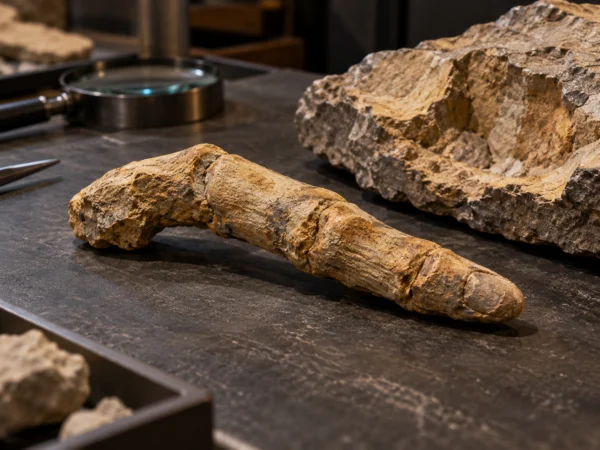
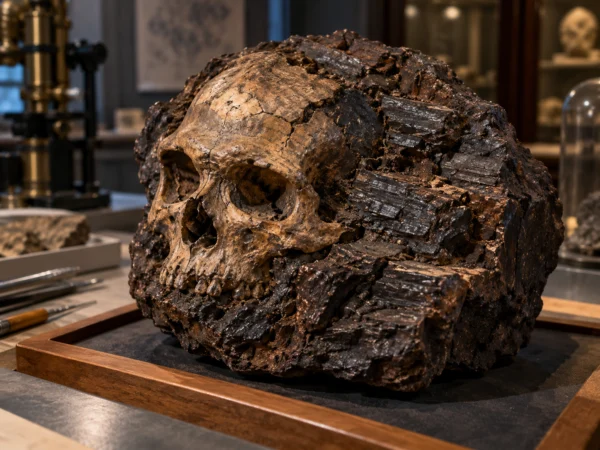
The Paluxy “man tracks”, the Meister print and the Cretaceous “finger” fossil, said to show that dinosaurs and humans coexisted, as well as the Freiberg lignite skull and the Pyramid Eye Tablet, also leave serious questions about their origins and interpretation.
How to enjoy OOPArts
Most objects called OOPArts have since been explained by research. Even so, the surprise of “why is this here?” gives us a chance to think about the wisdom of ancient people and about our own assumptions. In Japan, the shakoki dogu figurines were also rumored to depict aliens.