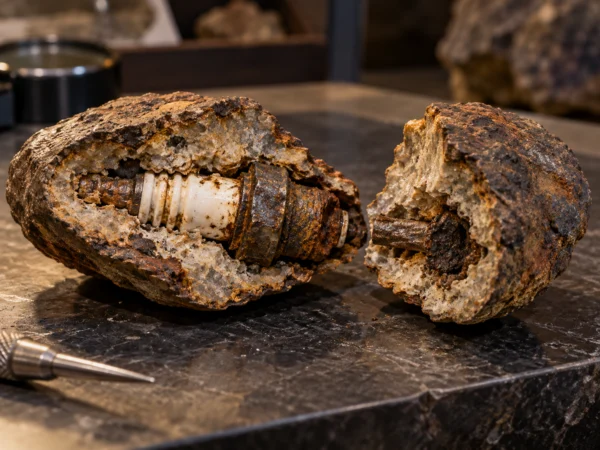
What is the Antikythera mechanism?
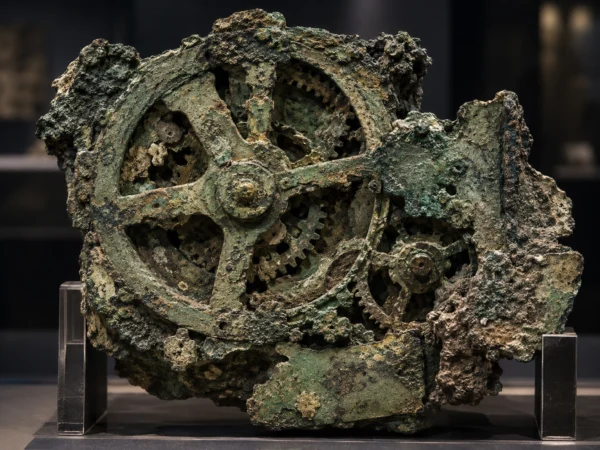
The Antikythera mechanism is a bronze geared device found in an ancient shipwreck off Antikythera, a small island between the Peloponnese and Crete in Greece. Sponge divers discovered the wreck in 1900, and the mechanism was raised along with sculptures and pottery by 1901. It is now displayed at the National Archaeological Museum in Athens.
How the “ancient computer” worked
The device was found badly broken, but about 30 gears survived. The British historian of science Derek de Solla Price studied it from the mid-20th century, and in the 2000s its interior was examined in detail with X-ray CT scanning and other modern techniques.
This revealed that it was an astronomical calculator: turning a handle displayed the positions of the sun and moon, the phases of the moon, the timing of solar and lunar eclipses, and even the years of athletic games such as the ancient Olympics. It is also thought to have shown the movements of the planets.
Why is it called an OOPArt?
No other geared device of such precision is known in Europe until mechanical clocks appeared around the 14th century. Because it was more than a thousand years ahead of its time, it became the best-known example of an “out-of-place artifact.”
It was not made by aliens or a lost super-civilization, however. It is a genuine ancient artifact that shows how advanced ancient Greek astronomy and metalworking were. Its maker is unknown, but some suggest it involved scholars in the tradition of Archimedes or Hipparchus. See our OOPArts overview for more famous examples.