What is the ryu?
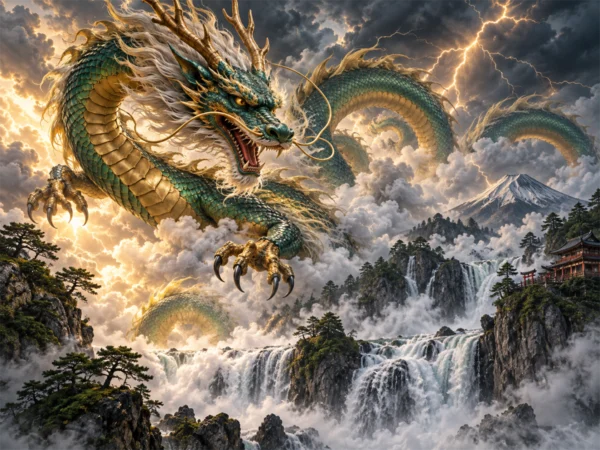
The ryu (dragon) is a flying sacred creature with a long, snake-like body covered in scales, horns on its head and sharp claws on its four legs. It was born in ancient China as an imaginary creature, became a symbol of the emperor, and was believed to have the power to summon clouds and bring rain. It reached Japan along with Buddhism and continental culture, and is also familiar as the “tatsu” of the twelve zodiac signs.
The dragon’s form and its nine resemblances
In China, the dragon was described as having “horns like a deer, a head like a camel, eyes like a demon (or a rabbit), a neck like a snake, a belly like a clam, scales like a carp, claws like a hawk, palms like a tiger and ears like an ox.” Under its chin grows a single reversed scale, the gekirin; touching it was said to send the dragon into a rage, which is why Japanese describes provoking a superior’s anger as “touching the reversed scale.”
Dragon worship in Japan
In Japan the dragon came to be seen as Ryujin, the god of water and master of lakes, rivers, ponds and the sea, closely linked to prayers for rain and good harvests. It appears as the Eight Great Dragon Kings who protect Buddhism, in dragon legends across the country, and in the dragon-mouth spouts of shrine purification fountains. While Western dragons are often symbols of evil to be slain, Eastern dragons have been revered as sacred beings, which is the biggest difference between them.