The island Plato described
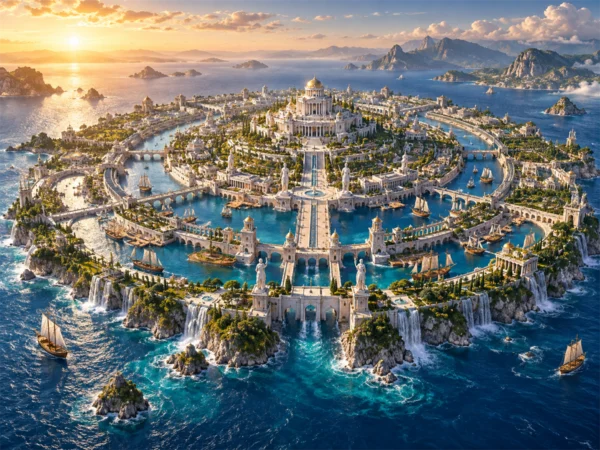
Atlantis is a legendary island nation described by the ancient Greek philosopher Plato in his dialogues Timaeus and Critias. It lay beyond the “Pillars of Heracles” (the Strait of Gibraltar) and extended its mighty power into Europe and Africa, but was swallowed by the sea in a single day and night of earthquakes and floods.
The modern Atlantis boom
In the late 19th century, the American politician Ignatius Donnelly argued in his book that Atlantis really existed and was the source of the world’s ancient civilizations, causing a great stir. Since then, the Atlantic, the Mediterranean, Antarctica and many other places have been proposed as its location.
Real place or allegory?
A well-known theory holds that the great eruption of Santorini (Thera) around the 17th century BC and the decline of the Minoan civilization that followed inspired the legend. Many scholars, however, consider Atlantis an allegory that Plato created to discuss the ideal state. Similar legends of lost continents include Mu and Lemuria.