What is the Epic of Gilgamesh?
The Epic of Gilgamesh is one of the oldest stories recorded in writing, born in ancient Mesopotamia (around today’s Iraq). Its hero Gilgamesh is a king of Uruk who may have actually existed, a hero said to be “two-thirds god and one-third human.” Tales of Gilgamesh were written in Sumerian by around 2000 BC, and a long epic in Akkadian was compiled from them.
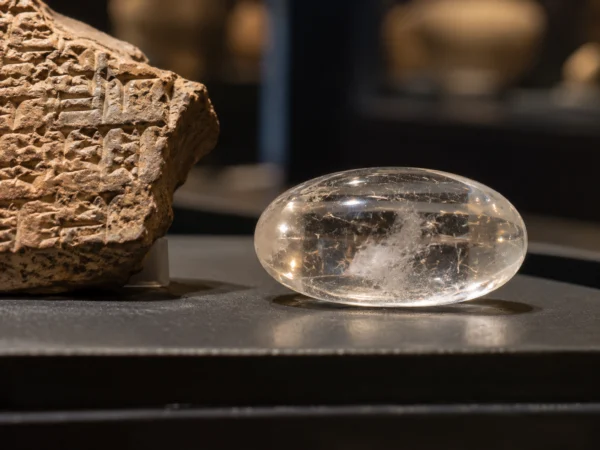
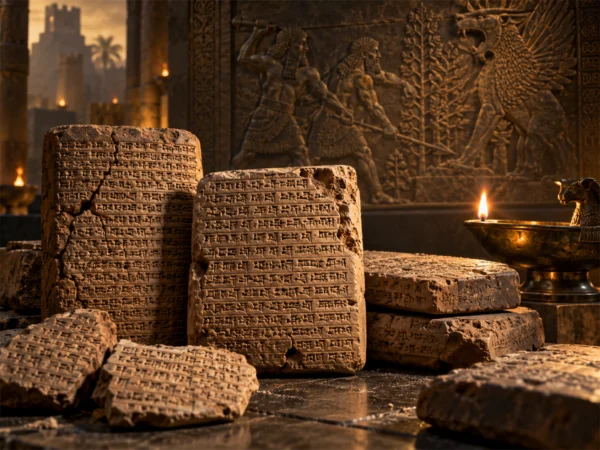
The best-known version is inscribed in cuneiform on 11 (or 12) clay tablets, discovered in the mid-19th century in the ruins of the library of King Ashurbanipal at Nineveh, capital of ancient Assyria.
The story
In his youth Gilgamesh was a tyrant who made the people of Uruk suffer. So the gods created Enkidu, a wild man as strong as Gilgamesh. After a fierce fight, the two became the closest of friends, defeated Humbaba, the monster of the Cedar Forest, and even struck down the “Bull of Heaven” sent by the goddess Ishtar.
But Enkidu, having angered the gods, fell ill and died. Faced with his friend’s death and now afraid of dying, Gilgamesh set out on a long journey to visit Utnapishtim, the immortal man living at the edge of the world, in search of the secret of eternal life.
A great flood story like Noah’s Ark
Utnapishtim told Gilgamesh that when the gods once tried to destroy humanity with a great flood, he followed a god’s advice, built a large boat, and survived with his family and animals aboard. Even details such as the boat coming to rest on a mountain and birds being released to check whether the waters had receded closely resemble Noah’s Ark in the Old Testament.
In 1872, when George Smith of the British Museum deciphered and announced this flood tablet, it caused a worldwide sensation as a flood story older than the Bible.
The plant of immortality and the ending
Gilgamesh obtains a plant of rejuvenation growing on the sea floor, but on the way home, while he is bathing, a snake eats it. This, the story says, is why snakes shed their skin and become young again. Unable to gain immortality, Gilgamesh looks upon the walls of Uruk and comes to understand the value of the works people leave behind, and the story ends. This tale of humans facing death has had a great influence on modern novels, games and anime. In Mesopotamian mythology, the gods called the Anunnaki also appear.