What are the Korpokkur?
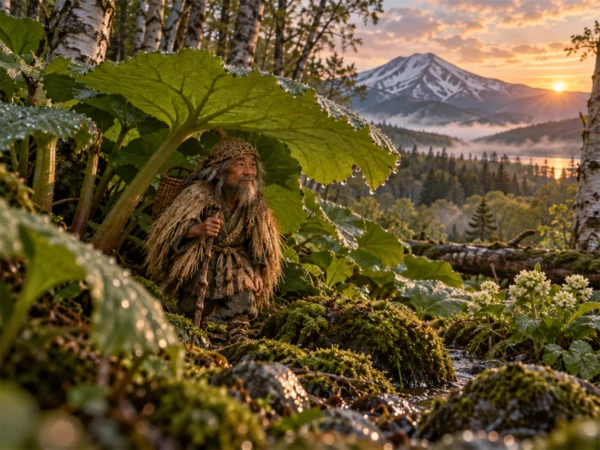
The Korpokkur are little people in the legends of the Ainu people of Hokkaido. The name is said to mean “people under the butterbur leaves” in the Ainu language; they were so small that several could fit under a single butterbur leaf, and on rainy days they used butterbur leaves as umbrellas, it is said. In some areas they are also called Toichiseunkur (people who live in earthen houses).
The legend of the Korpokkur
In the best-known story, the Korpokkur lived in the land before the Ainu and traded with them, bringing fish and game to Ainu houses in exchange for goods. However, they disliked being seen, so they quietly passed the goods in at night or from under the windows.
But one day, a young Ainu man who wanted to see what a Korpokkur looked like grabbed the hand passing in the goods and pulled it inside. It is said to have been a beautiful woman with tattoos on the back of her hand. The angry Korpokkur left the land and never showed themselves to the Ainu again. One story says that as they left they cursed the land, leaving the place name “Tokapchi” (the breasts wither), which became the origin of the name Tokachi.
The Korpokkur debate
In the Meiji period, over the question of who had left the pit-dwelling sites and pottery of Hokkaido and the Kuril Islands, the anthropologist Tsuboi Shogoro and others argued that “the Korpokkur were an indigenous people who lived there before the Ainu,” sparking an academic dispute with opposing scholars known as the “Korpokkur debate.” Today these sites are thought to belong to peoples including the ancestors of the Ainu.
The Korpokkur today
The Korpokkur became known throughout Japan through works such as the “Korobokkuru” series of children’s stories by Sato Satoru, beginning with Daremo Shiranai Chiisana Kuni (The Land Nobody Knows, 1959). In Hokkaido they are also loved as motifs for souvenirs and mascots. As little fairies, they are sometimes compared with the pixies and leprechauns of Europe and Japan’s chiisai ojisan.