What is the Namahage?
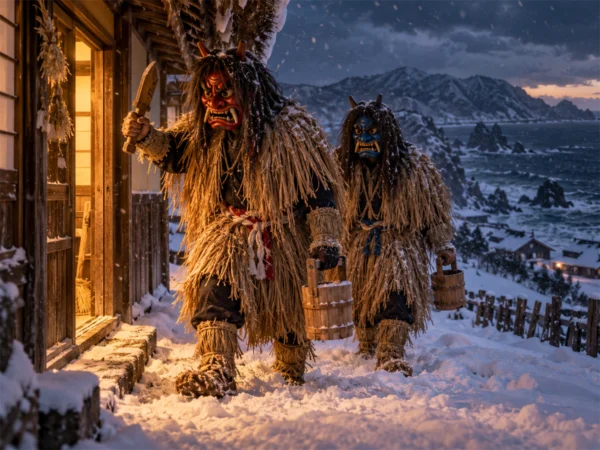
The Namahage are messengers of the gods who appear in a traditional event held on New Year’s Eve on the Oga Peninsula in Akita Prefecture and the surrounding area. Wearing terrifying demon-like masks and straw costumes called kede, and carrying (wooden) knives and sacred wands, they visit the houses of the village one by one.
Once inside a house, the Namahage roar “Are there any crybabies here? Any lazybones here?”, admonishing children and new members of the family. The head of the household entertains them with sake and food, and the Namahage leave after praying for the family’s health and for good harvests and catches.
Origin and meaning of the name
The name “Namahage” is said to come from namomi-hagi: peeling off (hagu) the namomi, the blotchy marks that form on the skin of people who sit by the hearth all winter, in other words punishing the lazy.
As for its origin, besides the idea that they are messengers of the mountain gods of Oga, the Namahage are linked with the legend of five oni brought by Emperor Wu of Han who ravaged the villages (the story of the 999 stone steps at Akagami Shrine Goshado in Oga). Similar visiting-deity events are held across Japan, such as the “Amamehagi” of Noto.
A UNESCO Intangible Cultural Heritage
“Oga no Namahage” was designated an Important Intangible Folk Cultural Property of Japan in 1978, and in 2018 it was inscribed on the UNESCO Intangible Cultural Heritage list, together with similar events from other regions, as “Raiho-shin, ritual visits of deities in masks and costumes.” Every February the Namahage Sedo Festival is held at Shinzan Shrine, and the Namahage Museum in Oga displays the many different masks of each village. Though they look like oni, the Namahage are really messengers of the gods who bring people good fortune.