Tsuchigumo (Earth Spider)

土蜘蛛

Yokai

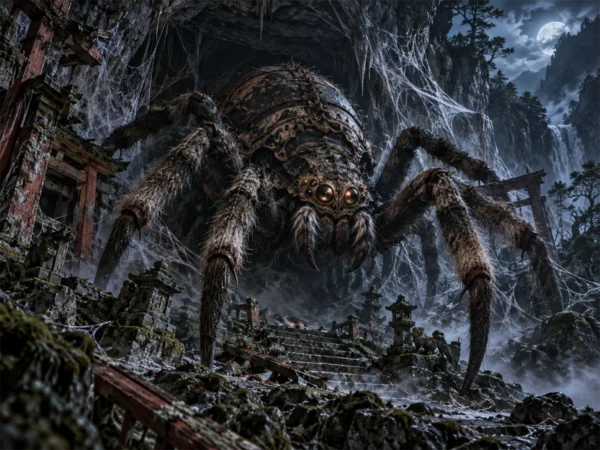
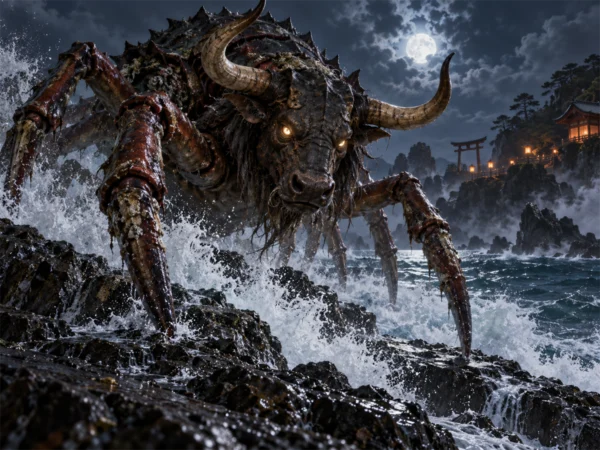
A yokai known as a giant spider. Originally, in the ancient chronicles and provincial records, "tsuchigumo" was a name for local peoples who would not submit to the imperial court. The legend of Minamoto no Raiko slaying the earth spider is famous.

Also known asTsuchi-gumo, Earth spider, Yamagumo
Era / first recordedNara period (Kojiki, Nihon Shoki and Fudoki)
OriginJapan
Related people
Stats
Rarity
Danger
Reality
Fame

Originally written in Japanese. 日本語版を読む (the Japanese page also has rankings and comments).

What is the tsuchigumo?

The tsuchigumo is known as a yokai in the form of a giant spider. It has been depicted in picture scrolls, Noh and kabuki as a fearsome creature that spits threads to entangle people and causes illness.

Originally a name for people who resisted the court

People called “tsuchigumo” appear in the Kojiki, the Nihon Shoki and the provincial Fudoki. The name is thought to have been a contemptuous term for local chieftains and groups who did not submit to the Yamato court. Descriptions of them living in pits and having long limbs later merged into the image of a spider yokai.

Minamoto no Raiko and the earth spider

In the medieval period, a legend arose that a suspicious monk appeared at the sickbed of Minamoto no Raiko and, when it revealed itself as a giant earth spider, Raiko slashed it with his famous sword. The story is told in the “Tsurugi no Maki” chapter of The Tale of the Heike, the picture scroll Tsuchigumo Zoshi and the Noh play Tsuchigumo, and a site said to be the earth spider’s mound remains in Kyoto.
Tsuchigumo (Earth Spider): Legend & Sighting Locations

Please note Trespassing on private property or restricted areas is prohibited by law. Please be considerate of local residents.

Positions on the map are a rough guide to the area where a legend or sighting is set. Most pins are placed at representative points of a municipality or prefecture (outside Japan, a city position rounded to about 10 km, or the country), not at the exact place.
Municipality points: Geolonia address data (CC BY 4.0), based on the Address Base Registry (Digital Agency of Japan) / Country points: Natural Earth

Sources & References

  1. 日本書紀 (720)
  2. 土蜘蛛草紙 (14世紀)

Please note The contents of this site introduce legends, eyewitness accounts and theories; they do not guarantee that anything described is true. The stats are our own rough guide. Trespassing on private property or restricted areas is prohibited by law. Please be considerate of local residents.

Related Entries