Vampires

吸血鬼

Mysteries & Phenomena

The dead said to rise from their graves at night and drink human blood. Derived from Eastern European folklore, they caused a "vampire panic" in the 18th century. Bram Stoker's novel Dracula fixed today's image.

Also known asVampire, Dracula, Vampyr, Upir
Era / first recorded18th century (panic) / 1897 (Dracula)
OriginEurope
Related people
Stats
Rarity
Danger
Reality
Fame

Originally written in Japanese. 日本語版を読む (the Japanese page also has rankings and comments).

What is a vampire?

A vampire is a being said to rise from its grave after death and drink the blood of the living night after night. Those whose blood is drunk are said to become vampires too. They are based on the folk traditions of Slavic peoples of Eastern Europe, such as in Serbia and Romania.

The vampire panic of the 18th century

In the early 18th century, reports came from villages in Serbia, then under Austrian rule, that people who should have been dead appeared at night and attacked villagers. Officials who dug up the graves recorded that the bodies had not decayed and had blood on their mouths. The reports caused a sensation across Europe and made the word “vampire” widely known. Today it is thought that changes that occur as bodies decompose, such as swelling and blood-like fluid coming from the mouth, were mistaken for evidence of rising from the dead.

Dracula and the image of the vampire

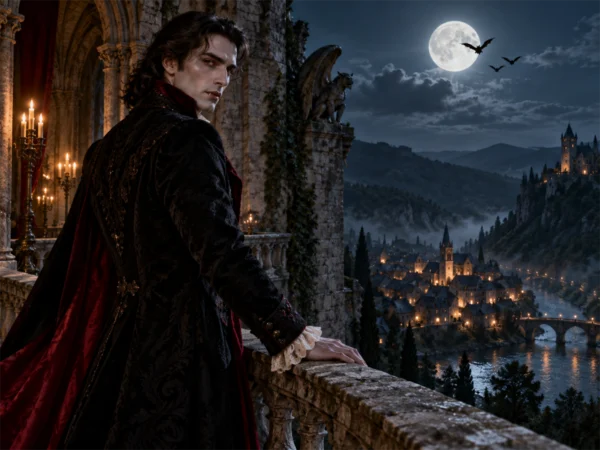
In 1897, the Irish writer Bram Stoker published the novel Dracula, making the noble vampire count in a black cloak world-famous. One of the models for Dracula is said to be Vlad III, the 15th-century ruler of Wallachia (in today’s Romania). Traits such as hating garlic and crosses, not showing in mirrors and turning to ash in sunlight were shaped through folklore, novels and films.

Vampires: Legend & Sighting Locations

  • Bran Castle Bran, Romania · Legend · 14th century (built)

Please note Trespassing on private property or restricted areas is prohibited by law. Please be considerate of local residents.

Positions on the map are a rough guide to the area where a legend or sighting is set. Most pins are placed at representative points of a municipality or prefecture (outside Japan, a city position rounded to about 10 km, or the country), not at the exact place.
Municipality points: Geolonia address data (CC BY 4.0), based on the Address Base Registry (Digital Agency of Japan) / Country points: Natural Earth

Sources & References

  1. 吸血鬼ドラキュラ (ブラム・ストーカー, 1897)

Please note The contents of this site introduce legends, eyewitness accounts and theories; they do not guarantee that anything described is true. The stats are our own rough guide. Trespassing on private property or restricted areas is prohibited by law. Please be considerate of local residents.

Related Entries