Who is Yallery Brown?
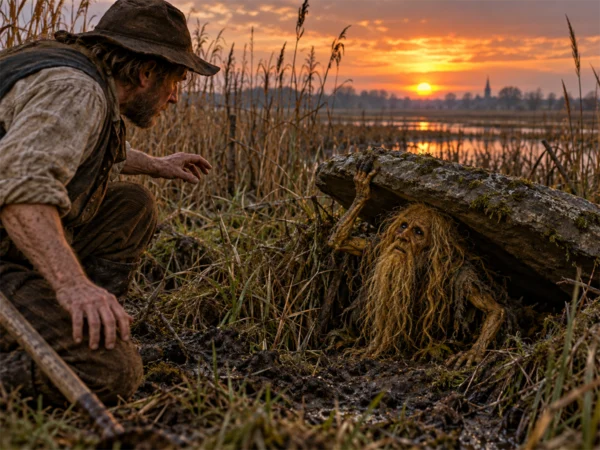
Yallery Brown is a fairy in a folktale from the fens of Lincolnshire in eastern England. He is said to be the size of a baby, with a wrinkled face like an old man’s, and long golden hair and beard covering his whole body.
The story
One day, as a young man named Tom rested in a field, he heard a voice like a crying child coming from under a large flat stone. When he lifted the stone, a small fairy sprang out, introduced himself as “Yallery Brown,” and said he would help Tom with his work in return for being rescued. But he warned him, “You must never thank me.” Tom, however, thanked him without thinking. The angry Yallery Brown began to ruin Tom’s work, and Tom was dogged by bad luck for the rest of his life.
How the tale was recorded
The story was recorded in Lincolnshire in 1891 by the folklorist M. C. Balfour and published in dialect in an academic journal. Later, Joseph Jacobs retold it in readable form in More English Fairy Tales (1894), making it widely known. It conveys a rule often found in European fairy lore: you must not say words of thanks to a fairy.