People in the Legends

Toriyama Sekien

  • Ukiyo-e artist
  • Japan
  • 1712–1788

Toriyama Sekien was an ukiyo-e artist of the mid-Edo period. He studied painting in the Kano school and is also known as the teacher of Kitagawa Utamaro.

Beginning with Gazu Hyakki Yagyo (The Illustrated Night Parade of a Hundred Demons) in 1776, his four illustrated books of yokai depicted creatures from folklore and classical literature across Japan one by one, each with its name. Much of how we picture yokai today, including the satori, tesso, ushi-oni, nure-onna and nurarihyon, comes from Sekien’s pictures, making him the founder of the yokai encyclopedia.
Entries Related to Toriyama Sekien

Entries: 36
Yokai ★★★★★ Japan

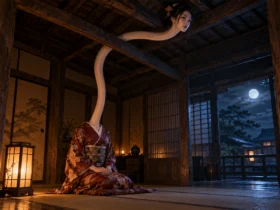
Rokurokubi

A female yokai whose neck stretches to great lengths at night. In the "nukekubi" type, the head detaches and flies around. It appears in Lafcadio Hearn's Kwaidan and was a popular sideshow attraction in the Edo period.

Yokai ★★★★★ Japan

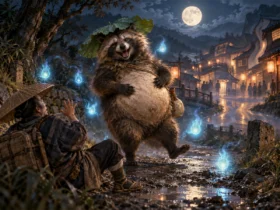
Bake-danuki (Shapeshifting Tanuki)

A tanuki (raccoon dog) yokai that tricks people and transforms into people and things. Legends of famous great tanuki abound in Shikoku and Sado, and it is beloved through folktales like Bunbuku Chagama and stories of tanuki drumming on their bellies.

Yokai ★★★★★ Japan

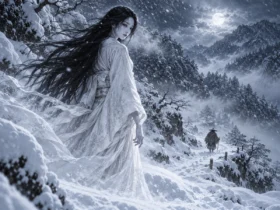
Yuki-onna (Snow Woman)

A beautiful female yokai in a white kimono who appears on snowy nights and freezes people with her icy breath. The version in Lafcadio Hearn's Kwaidan is the most famous, and legends of her are told throughout Japan's snow country.

Yokai ★★★★★ Japan

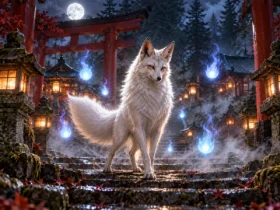
Yoko (Fox Spirit)

The general name for fox yokai that bewitch people or take human form. Foxes are said to grow more tails and power the longer they live. Both good foxes, revered as messengers of Inari, and bad foxes that possess people have been told of.

Yokai ★★★★★ Japan

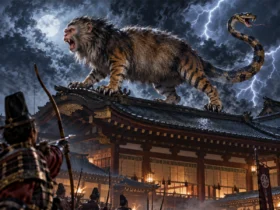
Nue

A monster with the face of a monkey, the body of a tanuki, the limbs of a tiger and a snake for a tail. It cried eerily at night, and in The Tale of the Heike it was shot down by Minamoto no Yorimasa. Its name became a word for anything of uncertain identity.

Yokai ★★★★★ Japan

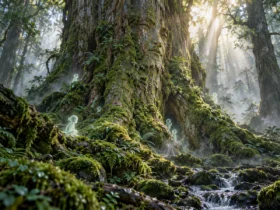
Kodama (Tree Spirit)

A spirit said to dwell in old trees. The echo heard in the mountains (kodama or yamabiko) was thought to be the voice of these spirits answering. Cutting down a tree with a kodama is said to bring a curse.

Yokai ★★★★★ Japan

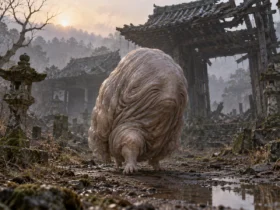
Nuppeppo

A yokai that looks like a flabby lump of flesh, with no distinction between face and body, said to smell like rotting flesh. Toriyama Sekien drew it, and it is linked with the tale of a "flesh man" that appeared at Sunpu Castle at the start of the Edo period.

Yokai ★★★★★ Japan

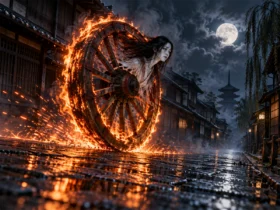
Katawaguruma (One-Wheeled Cart)

A yokai in which a woman rides along a night road in an ox-cart with a single wheel wrapped in flames. It was said to curse anyone who saw it, and appears in Edo-period ghost story collections and Toriyama Sekien's yokai pictures.

Yokai ★★★★★ Japan

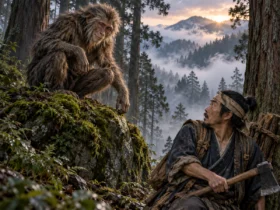
Satori

A mountain yokai that reads people's minds. It frightens people by guessing their thoughts one after another, but it is helpless against the unexpected. Told of in the mountains of Hida and Mino, it was also drawn by Toriyama Sekien.

Yokai ★★★★★ Japan

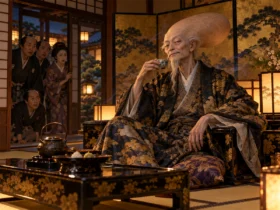
Nurarihyon

A yokai in the form of an old man with a large, protruding back of the head. It slips into houses during the busy evening hours and relaxes, drinking tea as if it were the master. Its image as the "supreme commander of the yokai" spread only in modern times.

Yokai ★★★★★ Japan

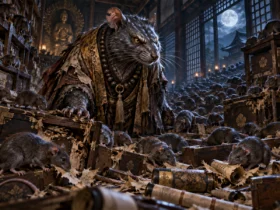
Tesso (Iron Rat)

A yokai born when the grudge of the Heian-period monk Raigo turned into a horde of rats with iron teeth. They are said to have devoured the scriptures and Buddhist statues of Enryakuji Temple on Mount Hiei. Toriyama Sekien also drew it in his yokai books.

Yokai ★★★★★ Japan

Nozuchi

A yokai said to live in the mountains and fields, with no eyes or nose, only a big mouth. It is said to roll down slopes to attack people. It is also known as one of the old names of the tsuchinoko.

Divine & Mythical Beasts ★★★★★ China

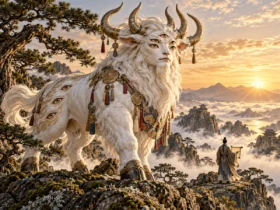
Hakutaku (Bai Ze)

A legendary sacred beast of China that speaks human language and knows about every yokai and calamity in the world. In Edo-period Japan, pictures of it became popular as charms against illness and disaster.

Yokai ★★★★★ Japan

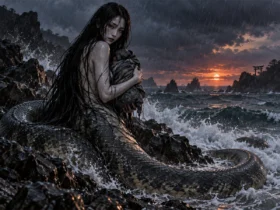
Nure-onna (Wet Woman)

A yokai with a woman's face and a long snake's body that appears by the sea and rivers. It is called "wet woman" because its hair is always wet. It is famous for the tale in which it makes people hold a baby so they cannot move, then attacks with the ushi-oni.

Yokai ★★★★★ Japan

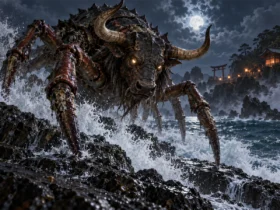
Ushi-oni

A fearsome yokai with the head of an ox and the body of an oni or a spider. It appears on coasts and in deep pools in western Japan and attacks people. It is known for the tale in which it teams up with the nure-onna, and for the Ushi-oni festival of Uwajima, Ehime Prefecture.

Yokai ★★★★★ Japan

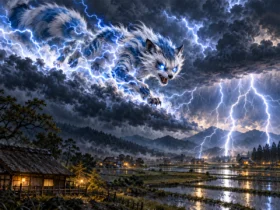
Raiju (Thunder Beast)

A beast yokai said to fall from the sky with lightning. It was thought to leave claw marks on trees struck by lightning. Records and pictures of raiju being caught survive from many parts of Edo-period Japan, and one theory is that they were really masked palm civets or similar animals.

All people ›