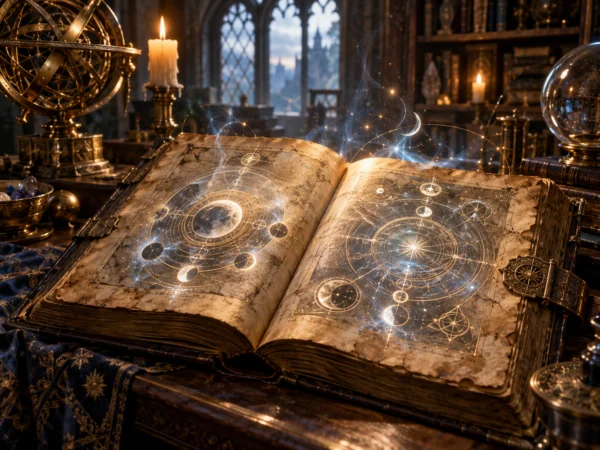
What is a grimoire?
Grimoire is a French word meaning “book of magic,” the general name for magical handbooks written in Europe. They record how to summon angels, demons and spirits to grant wishes, how to draw magic circles and amulets (talismans), and how to choose the tools and times for rituals.
Famous grimoires
Well-known grimoires include the Picatrix, a book of astrological magic translated from Arabic into Latin in the 13th century; the Key of Solomon (Greater Key) and the Lemegeton (Lesser Key of Solomon), bearing King Solomon’s name; the Grand Grimoire, which explains a pact with the demon Lucifuge Rofocale; and the Grimoire of Pope Honorius, which borrows a pope’s name.
Many of them present themselves as written by ancient kings, sages or saints, but in fact they are thought to have been written and added to by many hands from the Middle Ages on.
Why were books of magic made?
Grimoires were sometimes banned by the Church as dangerous books, but they were secretly copied by hand, and by around the 18th century they circulated among ordinary people as cheap printed books. They also included many ways to fulfill everyday wishes, such as finding treasure or charms for love.
Grimoires in fiction
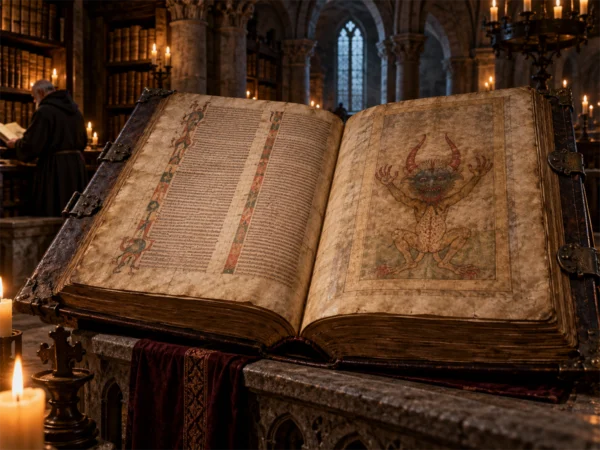
The “spellbooks” and “grimoires” of fantasy novels and games are modeled on these real grimoires. The Necronomicon, a fictional grimoire created by the writer Lovecraft, became so famous that it was mistaken for a real one. See also the Codex Gigas, known for its picture of the devil.