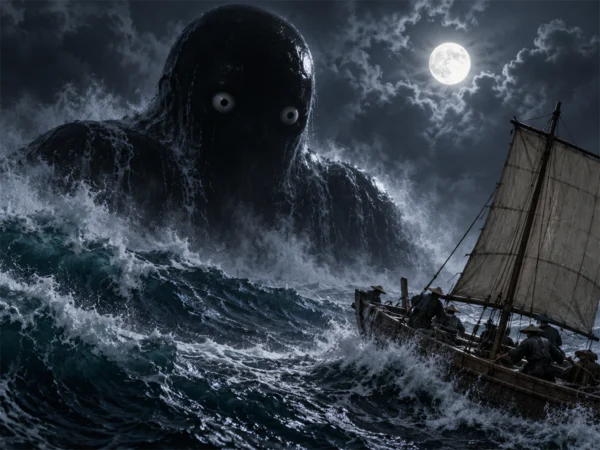
Kiyohime

清姫

Yokai

A young woman who, betrayed in her love for the monk Anchin, turned into a giant serpent and chased him. The "Legend of Anchin and Kiyohime," in which she burned him to death inside the bell of Dojoji Temple, is a celebrated subject of Noh and kabuki.

Also known asAnchin and Kiyohime, Legend of Dojoji, Dojoji
Era / first recordedHeian period (origin of the tale)
OriginJapan
Stats
Rarity
Danger
Reality
Fame

Originally written in Japanese. 日本語版を読む (the Japanese page also has rankings and comments).

Who is Kiyohime?

Kiyohime is the heroine of the “Legend of Anchin and Kiyohime” from Kii Province (today’s Wakayama Prefecture). It is known as a story of fierce passion, in which a girl who fell in love with a traveling monk turned into a giant serpent and chased him out of anger and grief at his betrayal.

The story of Anchin and Kiyohime

Kiyohime, the daughter of an inn, fell in love at first sight with Anchin, a young monk who stayed the night on his pilgrimage to Kumano. Anchin promised to come back on his return journey, but fled by another road. Realizing she had been deceived, Kiyohime chased him barefoot; when the Hidaka River blocked her way, she finally turned into a giant serpent and crossed it. Anchin fled into Dojoji Temple and hid inside the temple bell, which the monks lowered over him, but Kiyohime coiled around the bell, breathed fire and burned him to death inside it.

The Dojoji masterpieces

The original form of the story appears in Heian-period collections of Buddhist tales, and it later inspired many masterpieces known as “Dojoji pieces,” such as the Noh play Dojoji and the kabuki dance Kyokanoko Musume Dojoji. The legend is still told at Dojoji Temple in Hidakagawa, Wakayama Prefecture, where monks explain it using a picture scroll.

Kiyohime: Legend & Sighting Locations

  • Dojoji Temple Hidakagawa, Wakayama · Legend · Heian period (tale)

Please note Trespassing on private property or restricted areas is prohibited by law. Please be considerate of local residents.

Positions on the map are a rough guide to the area where a legend or sighting is set. Most pins are placed at representative points of a municipality or prefecture (outside Japan, a city position rounded to about 10 km, or the country), not at the exact place.
Municipality points: Geolonia address data (CC BY 4.0), based on the Address Base Registry (Digital Agency of Japan) / Country points: Natural Earth

Please note The contents of this site introduce legends, eyewitness accounts and theories; they do not guarantee that anything described is true. The stats are our own rough guide. Trespassing on private property or restricted areas is prohibited by law. Please be considerate of local residents.

Related Entries