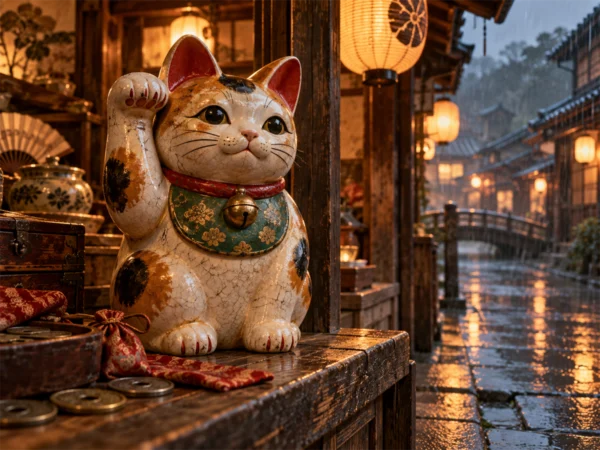
What is a maneki-neko? Right paw vs. left paw
The maneki-neko is a figurine of a cat beckoning with one front paw raised, loved as a lucky charm that brings prosperous business and family safety. Generally, a cat raising its right paw is said to invite money, and a cat raising its left paw to invite people (customers). Some maneki-neko raise both paws.
The colors are said to have meanings too: the calico is the classic, while white brings luck, black wards off evil, gold brings wealth and red protects against illness. September 29 is “Maneki-neko Day,” from a pun on the date’s numbers that sounds like “fortune comes” (kuru fuku).
Origin of the maneki-neko
There are several stories about its origin. The best known is that of Gotokuji Temple in Setagaya, Tokyo. In the Edo period, Ii Naotaka, lord of the Hikone domain, was passing the temple when the temple cat beckoned him inside the gate; just then a violent thunderstorm broke out, and he escaped the danger. The temple became the Ii family’s funerary temple, and countless donated maneki-neko now line its grounds.
Another story tells of an old woman in Imado, Asakusa, who was forced by poverty to give up her cat. The cat appeared in her dream and told her, “Make dolls in my likeness and sell them, and good fortune will come.” The Imado-ware cat dolls she sold became a hit, and Imado Shrine is counted as one of the birthplaces of the maneki-neko.
A lucky cat around the world
Maneki-neko have long been made in places such as Tokoname and Seto in Aichi Prefecture, and today they are displayed as “lucky cats” in restaurants and shops not only in Japan but across Asia, Europe and the Americas. Unlike the bakeneko and nekomata of ghost stories, this cat is loved as a bringer of happiness.