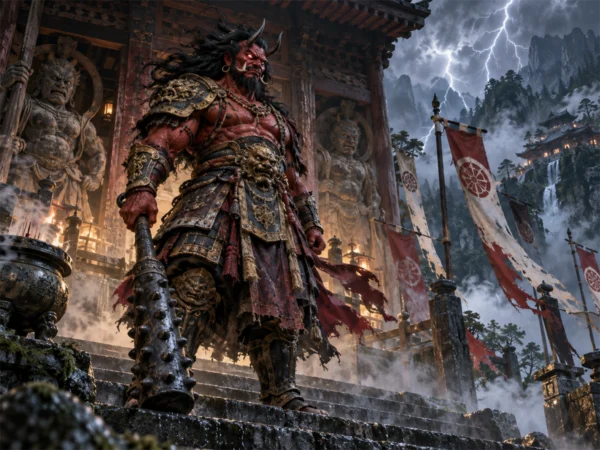
What is the rasetsu?
The rasetsu is the Rakshasa, the demon of ancient Indian mythology, transcribed into Chinese characters. It is a fearsome being that leads people astray, attacks them and eats their flesh and blood; it is said to wander graveyards and forests at night and to change its shape at will. Female rasetsu are called rasetsu-nyo (rakshasi) and were said to seduce men in the form of beautiful women.
The Rakshasa of Indian mythology
In the epic Ramayana, Ravana, the ten-headed, twenty-armed king of the rakshasas, torments the gods from his base on the island of Lanka (thought to be today’s Sri Lanka) and abducts Sita, wife of Prince Rama. With the help of heroes such as the monkey Hanuman, Rama fights the rakshasa army and defeats Ravana. Many rakshasas also appear in the Mahabharata.
The Buddhist rasetsu and the Japanese oni
The rasetsu was also adopted into Buddhism, and rasetsu who converted became protectors of the Buddhist law. Rasetsu-ten, one of the “Twelve Devas” guardian deities, is said to guard the southwest, and the Lotus Sutra features ten rakshasi who protect those who believe in it.
At the same time, the jailers who torment sinners in hell (the demons of hell) were also called rasetsu, and the ox-headed Gozu and horse-headed Mezu were called “abo-rasetsu.” This image of the rasetsu is thought to have greatly influenced the look of the Japanese oni.