What are tsukumogami?
Tsukumogami are tools and objects that have gained a spirit after many years and turned into yokai. A tool used for a hundred years is said to acquire a soul and transform. Tsukumo means ninety-nine, one short of a hundred, and is thought to express a long passage of time or old age.
The Tsukumogami-ki and the Night Parade
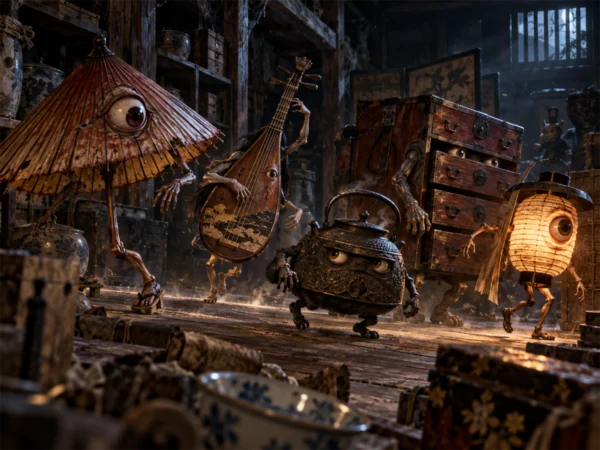
The Muromachi-period picture scroll Tsukumogami-ki tells of old tools thrown away during the year-end cleaning. Resentful at being discarded after serving people for so long, they become yokai and plot revenge on humans. The Hyakki Yagyo Emaki (Night Parade of a Hundred Demons) scroll at Shinju-an in Daitokuji, Kyoto, vividly depicts yokai of all kinds of tools, such as biwa lutes, koto harps, pots, umbrellas and shoes, marching in a line through the town at night.
Taking care of things
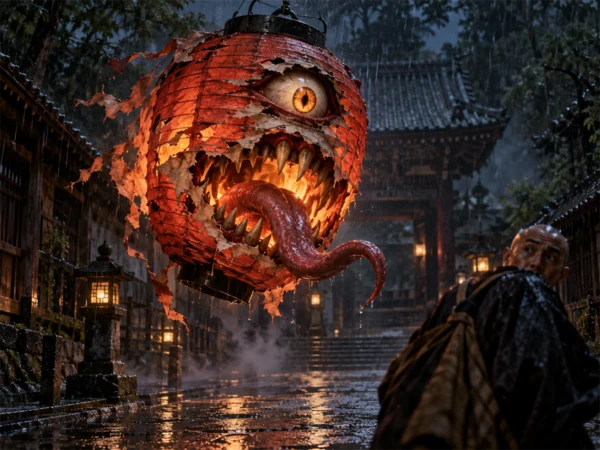
Many object-shaped yokai, such as the umbrella yokai (karakasa-kozo) and the lantern ghost (chochin-obake), belong to the tsukumogami family. Tsukumogami stories are said to carry the lesson that old tools should not be treated carelessly but cared for. The idea connects with Japanese customs of holding memorial services for objects to thank them, such as services for old needles and dolls.