What is a chochin-obake?
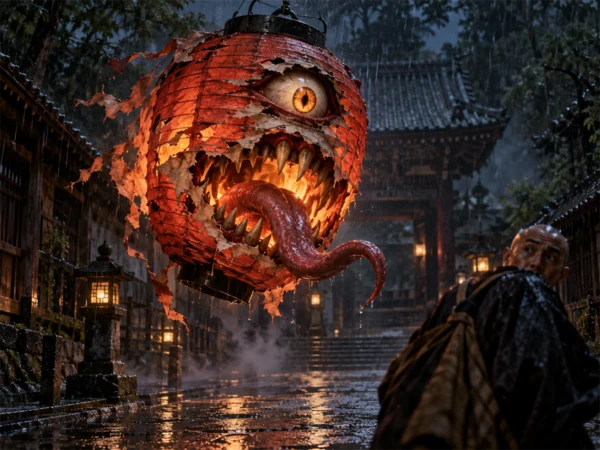
The chochin-obake is a yokai born from an old paper lantern. It is depicted with the torn part of the lantern turned into a large mouth with a long tongue lolling out, and eyes appearing to glare at people. Together with the karakasa-kozo, it is one of the best-known tsukumogami, yokai born from tools.
Katsushika Hokusai’s “Oiwa-san”
A famous lantern yokai is “Oiwa-san” from Hyaku Monogatari (One Hundred Ghost Tales) by the Edo-period ukiyo-e artist Katsushika Hokusai. It shows the face of Oiwa, who died bearing a grudge, emerging from a torn lantern. Oiwa is the woman in Tsuruya Nanboku’s kabuki play Tokaido Yotsuya Kaidan who dies after being betrayed by her husband and returns as a ghost to take revenge. On the kabuki stage, a trick in which Oiwa’s ghost bursts out of a lantern became famous.
A yokai of everyday tools
Paper lanterns were everyday tools for lighting night roads, and their flickering light in the darkness must sometimes have looked eerie. Like the karakasa-kozo, the chochin-obake has few specific legends and has been enjoyed mainly in pictures, toys and haunted houses.