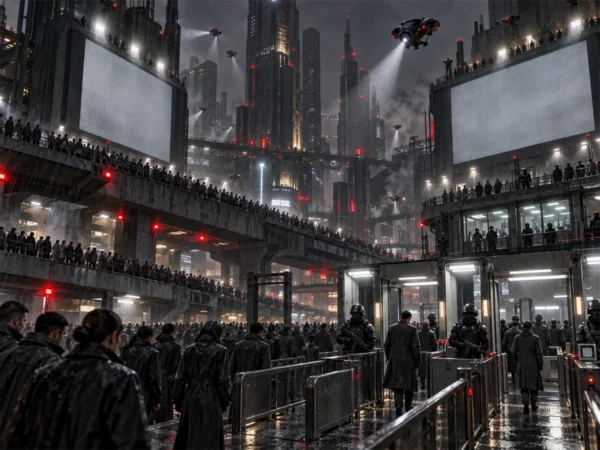
What is a dystopia?
A dystopia is the opposite of a “utopia,” an ideal society: a society that may appear orderly but where, in reality, people’s freedom and humanity have been taken away by total control, surveillance and oppression by the state or those in power.
Utopia comes from the book of the same name written in 1516 by the English thinker Thomas More and means “no place” in Greek. Dystopia is a coined word meaning “bad place,” and one of its earliest uses is said to be by the English thinker John Stuart Mill in a speech to Parliament in 1868.
Representative dystopian works
Dystopia has become a major genre of science fiction novels and films. Representative works include Aldous Huxley’s Brave New World (1932), in which humans are produced in factories and happiness is controlled by drugs; George Orwell’s Nineteen Eighty-Four (1949), in which the dictator “Big Brother” watches every citizen; and Ray Bradbury’s Fahrenheit 451 (1953), depicting a society where owning books is forbidden.
Dystopia as urban legend
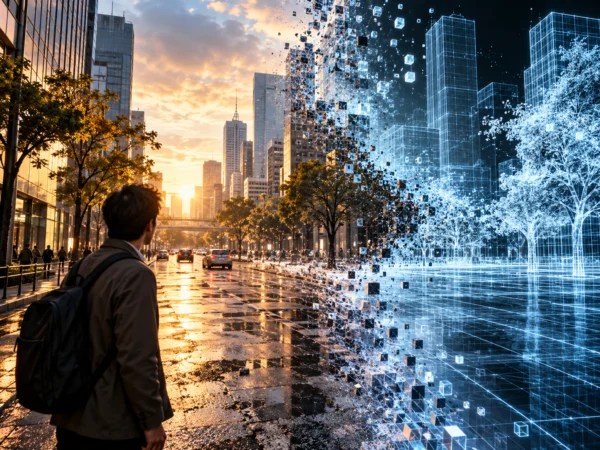
Today, as surveillance cameras, facial recognition and the collection of online activity spread, some say that “reality is already becoming a dystopia.” Such fears are linked with conspiracy theories such as the Illuminati and the deep state, which claim that secret societies or a “shadow government” are trying to control the world, and have become the subject of urban legends.
On the other hand, many dystopian works are “cautionary tales” depicting the dangers of misusing technology and power. Along with anxieties about the singularity, when AI surpasses humans, they continue to be read as a way to think about how to build the society of the future.