Was the gorilla a legendary wild man?
Stories of hairy “wild men,” bigger and stronger than humans, living in the forests of Africa have been told since ancient times. The account of the Carthaginian navigator Hanno, who sailed along the west coast of Africa around the 5th century BC, tells of meeting hairy wild people called “Gorillai” on an island.
How it was discovered and confirmed
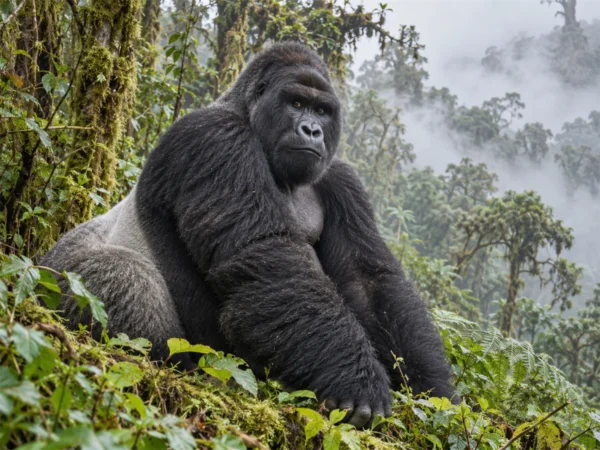
Rumors of giant apes in the forests of Africa reached Europeans too, but what they were was unclear. In 1847, Thomas Savage, an American missionary working in West Africa, described it as a new species together with the anatomist Jeffries Wyman, based on skulls and other remains obtained in Gabon. It was named “gorilla” after Hanno’s voyage account. The mountain gorilla, living in the highlands, was found in 1902.
What we know today
The gorilla is the largest primate, and in reality a gentle animal that eats leaves and fruit. In the 19th century it was exaggerated as a “ferocious monster,” an image said to have influenced the film King Kong. Today its numbers have fallen because of deforestation and poaching, and it is listed as Critically Endangered.