Onishigai Village

鬼死骸村

Mysteries & Phenomena

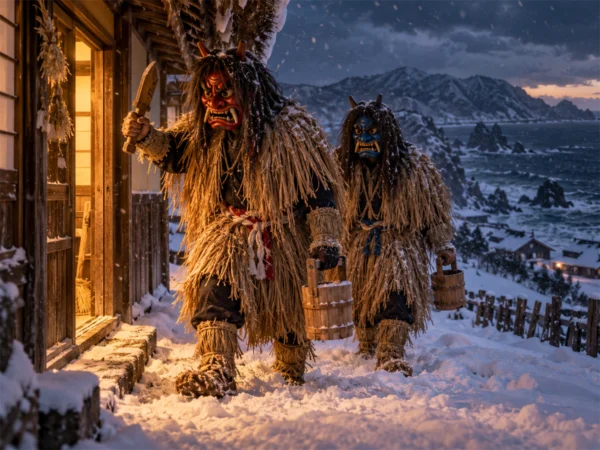
A village that once existed in Ichinoseki, Iwate Prefecture, with a legend that the corpse of an oni was buried there. It is said to be where an oni killed by Sakanoue no Tamuramaro was buried. Its name disappeared in a Meiji-era merger, but the legendary "oni stone" still remains.

Also known asOnishigai, Oni corpse village, Onishigai bus stop, Oni stone
Era / first recordedHeian period (legend) / merged in the Meiji era
OriginJapan (Iwate Prefecture)
Stats
Rarity
Danger
Reality
Fame

Originally written in Japanese. 日本語版を読む (the Japanese page also has rankings and comments).

What was Onishigai Village?

Onishigai Village (“oni corpse village”) was a village in Iwai District, Mutsu Province, in what is now Mashiba, Ichinoseki, Iwate Prefecture. In the early Meiji era it merged with neighboring villages to become Mashiba Village and its name disappeared, but its striking name makes it a topic online as “a village erased from the map.”

The legend of Onishigai

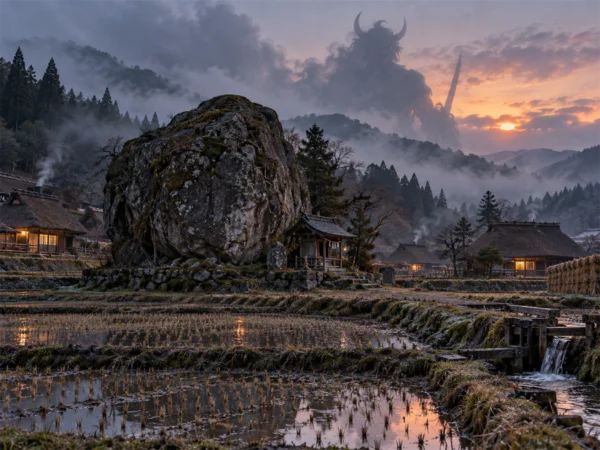
The legend behind the name says that in the early Heian period, Sakanoue no Tamuramaro, on his expedition to northern Japan to subdue the Emishi, killed an oni here (said by some to be an oni named Otakemaru) and buried its corpse. A large stone called the “oni stone” remains at the place where the oni is said to have been buried, and the oni’s corpse is said to lie beneath it.

The “oni” here may have referred to local powerful figures who did not submit to the imperial court, or to Emishi chieftains. Many place names linked to Tamuramaro’s oni-slaying remain across northern Japan, such as Onikobe (“oni head”) in Miyagi Prefecture.

The name that lives on

Though the village name vanished, the name “Onishigai” continued to be used locally and long survived as the name of a stop on a nearby bus route. The oni stone is still cared for as a local historic site. It is one of Japan’s strange place names, where legends of the oni and local history meet.


Onishigai Village: Legend & Sighting Locations

Please note Trespassing on private property or restricted areas is prohibited by law. Please be considerate of local residents.

Positions on the map are a rough guide to the area where a legend or sighting is set. Most pins are placed at representative points of a municipality or prefecture (outside Japan, a city position rounded to about 10 km, or the country), not at the exact place.
Municipality points: Geolonia address data (CC BY 4.0), based on the Address Base Registry (Digital Agency of Japan) / Country points: Natural Earth

Please note The contents of this site introduce legends, eyewitness accounts and theories; they do not guarantee that anything described is true. The stats are our own rough guide. Trespassing on private property or restricted areas is prohibited by law. Please be considerate of local residents.

Related Entries