Entries: 431

Divine & Mythical Beasts ★★★★★ China

Byakko (White Tiger)

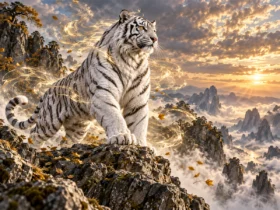
One of the Four Symbols, a sacred beast in the form of a white tiger that guards the west. It governs autumn and the element of metal. It is painted in the Kitora tomb and gave its name to the Byakkotai, the young samurai unit of the Aizu domain at the end of the Edo period.
Divine & Mythical Beasts ★★★★★ China

Genbu (Black Tortoise)

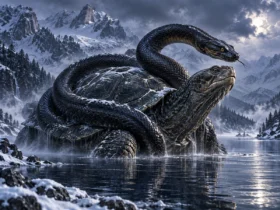
One of the Four Symbols, a sacred beast in the form of a tortoise entwined with a snake that guards the north. It governs winter and the element of water. Genbudo Cave in Hyogo Prefecture is named after it, and the cave in turn gave its name to basalt (genbugan).

Divine & Mythical Beasts ★★★★★ China

Suzaku (Vermilion Bird)

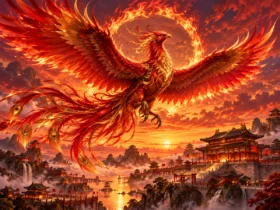
One of the Four Symbols, a sacred beast in the form of a red bird that guards the south. It governs summer and the element of fire. It is sometimes identified with the phoenix, and it gave its name to Suzaku Avenue, which ran through the center of the Heian capital.

Yokai ★★★★★ Japan

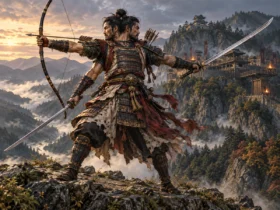
Ryomen Sukuna

A being said to have one body with two faces and four arms and four legs. The Nihon Shoki describes him as a bandit who defied the imperial court and was killed, but in the Hida region he is remembered as a hero who founded temples.

Yokai ★★★★★ Japan

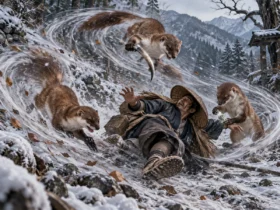
Kamaitachi

A yokai said to ride on whirlwinds and cut people's skin like a sickle. The cuts are said to be painless and barely bleed. One tradition says kamaitachi come in threes: one knocks you down, one cuts, and one applies medicine.

Divine & Mythical Beasts ★★★★★ China

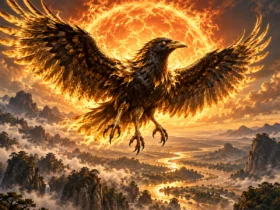
Kin'u (The Golden Crow)

A three-legged crow said in Chinese mythology to live in the sun. It is a symbol of the sun itself and is paired with the rabbit of the moon. "Kin'u gyokuto" (golden crow, jade rabbit) means the sun and the moon, and by extension the passing years.

Yokai ★★★★★ Japan

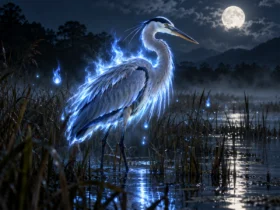
Aosagibi (Heron Fire)

A mysterious fire in which the body of a grey heron seems to glow pale blue at night. It was said to be light given off by old grey herons or night herons, and Toriyama Sekien drew it too. One theory says it was feathers lit by the moon.

Yokai ★★★★★ Japan

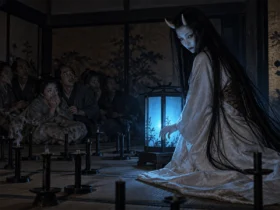
Aoandon (Blue Lantern)

A demon-woman yokai said to appear when the hundredth story has been told at a hyakumonogatari ghost-story gathering. It comes from an Edo-period game of telling ghost stories by the light of an andon lamp covered with blue paper.

Yokai ★★★★★ Japan

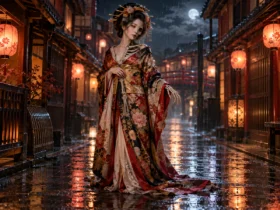
Hone-onna (Bone Woman)

A female yokai in the form of a skeleton, who visits her beloved in the form she had in life. Toriyama Sekien drew her, and she is linked with the ghost story Botan Doro, in which Otsuyu, who visits a man every night, turns out to be a skeleton.

Yokai ★★★★★ Japan

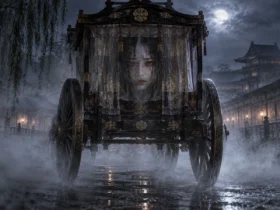
Oboroguruma (Hazy Carriage)

An ox-cart yokai with a giant face on its front that appears on nights when the moon is hazy. Drawn by Toriyama Sekien, it is said to be the grudge of a woman shamed in the "carriage quarrel" of The Tale of Genji, lodged in a carriage.

Yokai ★★★★★ Japan

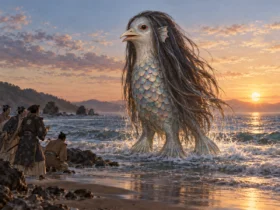
Amabie

A yokai said to have appeared in the sea off Higo Province (Kumamoto) in 1846, predicting good harvests and an epidemic. It told people to draw its image and show it to others. In 2020 it went viral as a charm against disease.

Yokai ★★★★★ Japan

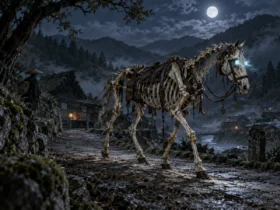
Bakotsu (Horse Bones)

A yokai in the form of horse bones drawn in the Edo-period yokai scroll Tosa Obake Zoshi. It is said to be a horse that burned to death in a fire. It is also linked with the Japanese expression "horse bones from who knows where."

Yokai ★★★★★ Japan

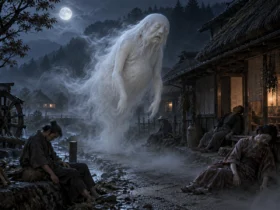
Shirokari

A mysterious yokai with a long, slender white body drawn in Edo-period yokai scrolls. What mischief it does is not recorded. Today it is sometimes said that anyone it possesses becomes absent-minded and loses all motivation.

Divine & Mythical Beasts ★★★★★ India

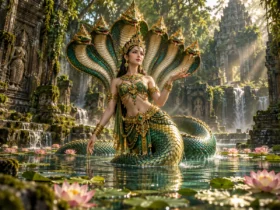
Naga

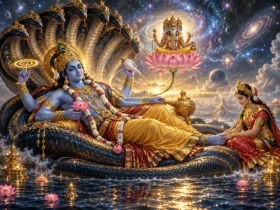
Serpent gods and spirits of Indian mythology, depicted as human above and snake below, or as a cobra with many heads. In Buddhism they became protectors of the Dharma, and in China and Japan they were translated as "dragons."

Urban Legends ★★★★★ Japan

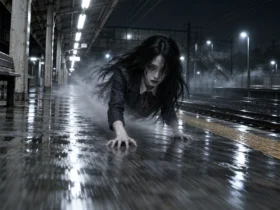
Teke Teke

An urban legend of the ghost of a woman who lost the lower half of her body, who chases people at terrifying speed on her elbows, making a "teke teke" sound. The story of a railway crossing accident in Hokkaido is famous, and the legend spread throughout Japan.

Urban Legends ★★★★★ Japan

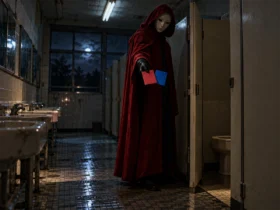
Aka Manto (Red Cape)

A rumor of a sinister figure in a red cape who kidnaps children. It spread in Tokyo in the early Showa era and caused an uproar. Later it changed into a school toilet ghost story in which a voice asks, "Red cape or blue cape?"

Urban Legends ★★★★★ Japan

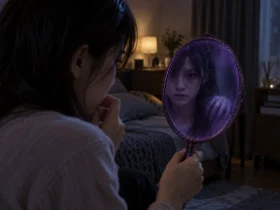
Murasaki Kagami (Purple Mirror)

An urban legend that if you still remember the words "purple mirror" when you turn 20, you will die or suffer misfortune. It spread among children from the Showa to the Heisei era, along with words said to cancel the curse.

Urban Legends ★★★★★ Japan

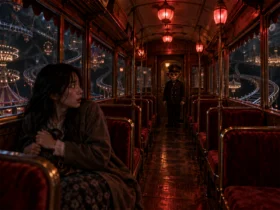
Saru Yume (The Monkey Dream)

A horror story in which, in a dream, you ride a monkey-conducted amusement-park train, and with each announcement a passenger is killed in a cruel way. It was posted to an internet message board around 2000 and became famous.

Urban Legends ★★★★★ Japan

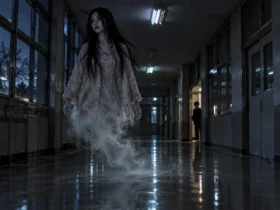
Kashima-san

An urban legend of a spirit that appears at night to anyone who has heard its story and tries to take their limbs or body. Unless you give the right answer or chant, your body will be taken; chants such as "ka for kamen (mask)" are told.

Ancient Civilizations ★★★★★ India

Narayanastra

One of the mightiest weapons in the Indian epic Mahabharata, imbued with the power of the god Vishnu. Its description of countless fiery arrows burning everything is cited as evidence for the ancient nuclear war theory.