Shichi
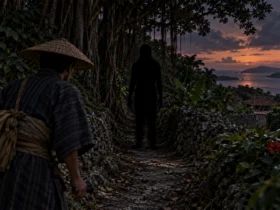
One of the most feared evil spirits (majimun) of Okinawa and Amami. It stands in the way on night roads like a black wall or pillar, growing tall enough to reach the sky, and once you meet it, there is no escape.
Supernatural creatures of Japanese folklore, such as the tengu and the kappa, passed down in every region of Japan.
Entries: 94
One of the most feared evil spirits (majimun) of Okinawa and Amami. It stands in the way on night roads like a black wall or pillar, growing tall enough to reach the sky, and once you meet it, there is no escape.
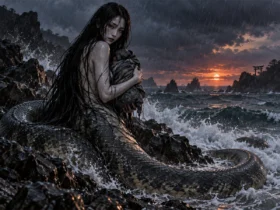
A yokai with a woman's face and a long snake's body that appears by the sea and rivers. It is called "wet woman" because its hair is always wet. It is famous for the tale in which it makes people hold a baby so they cannot move, then attacks with the ushi-oni.
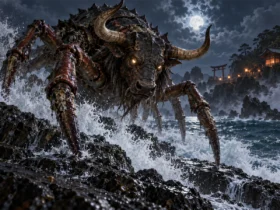
A fearsome yokai with the head of an ox and the body of an oni or a spider. It appears on coasts and in deep pools in western Japan and attacks people. It is known for the tale in which it teams up with the nure-onna, and for the Ushi-oni festival of Uwajima, Ehime Prefecture.
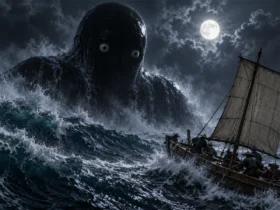
A giant, black, bald-headed yokai that suddenly appears on the sea at night. It is said to capsize ships or ask for a ladle to fill boats with water. Theories identify it as a sea turtle, a whale or a mirage.
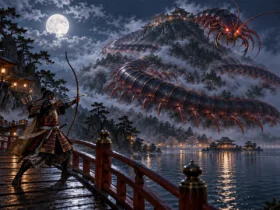
A centipede yokai so huge it could coil seven and a half times around Mount Mikami in Omi Province. It is known for the legend in which Fujiwara no Hidesato (Tawara Toda), at the request of the dragon god of Lake Biwa, shot it down with an arrow wet with his saliva.
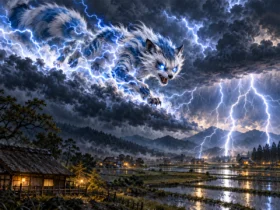
A beast yokai said to fall from the sky with lightning. It was thought to leave claw marks on trees struck by lightning. Records and pictures of raiju being caught survive from many parts of Edo-period Japan, and one theory is that they were really masked palm civets or similar animals.
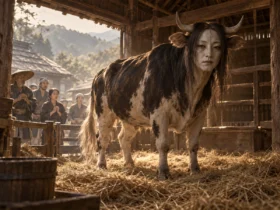
A "prophetic beast" said to be born with a human face and the body of a cow, deliver a prophecy and die soon after. Its prophecies are said to always come true. It is told of from Edo-period news sheets to Showa-era rumors.
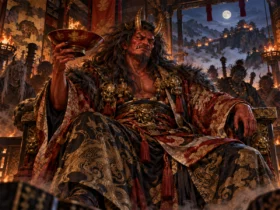
The leader of the oni who made Mount Oe his stronghold and abducted people from the capital. He is known from the legend in which Minamoto no Raiko and his Four Heavenly Kings, disguised as mountain ascetics, defeated him with poisoned sake.
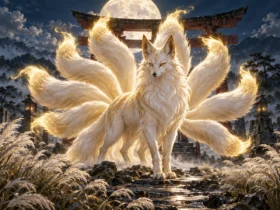
A fox yokai with nine tails. Legend says it took the form of the beautiful Tamamo-no-Mae to win over the retired Emperor Toba, was unmasked and killed on the plain of Nasu, and turned into the "Killing Stone". The stone split in 2022.
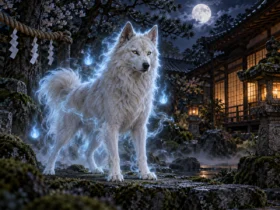
A dog-spirit possession believed to cause illness and misfortune. Belief in it was strongest in Shikoku, Chugoku and Kyushu, and there was also a folk belief that it was attached to certain families for generations, which caused discrimination.
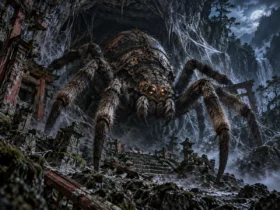
A yokai known as a giant spider. Originally, in the ancient chronicles and provincial records, "tsuchigumo" was a name for local peoples who would not submit to the imperial court. The legend of Minamoto no Raiko slaying the earth spider is famous.
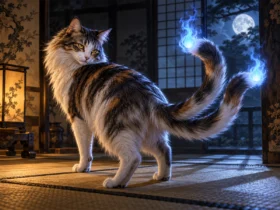
A yokai said to be a cat that has lived so long that its tail has split in two. It appears in the Kamakura-period classic Essays in Idleness, and is described both as a wild beast of the mountains and as a pet cat that transforms.
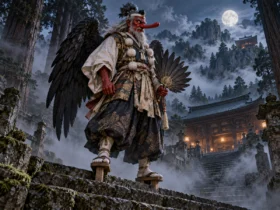
One of Japan's best-known yokai: a red-faced, long-nosed figure dressed as a mountain ascetic who flies through the sky. Tied to mountain gods and the Shugendo faith, it is linked with sacred mountains across Japan.
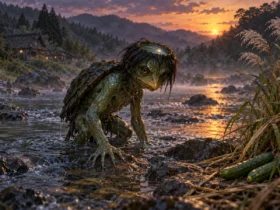
A water yokai said to live in rivers and ponds, with a dish of water on top of its head. Alongside frightening tales, it is known for friendlier ones, such as its love of sumo wrestling and cucumbers.