Kamikakushi (Spirited Away)

神隠し

Mysteries & Phenomena

The folk belief that people who suddenly vanish have been taken by gods, tengu or mountain spirits. Many stories tell of people returning years later, and records are found throughout Japan.

Also known asSpirited away, Tengu-kakushi, Kakushi-gami, Spirit abduction
Era / first recordedBefore the Edo period
OriginJapan
Related people
Stats
Rarity
Danger
Reality
Fame

Originally written in Japanese. 日本語版を読む (the Japanese page also has rankings and comments).

People who suddenly disappear

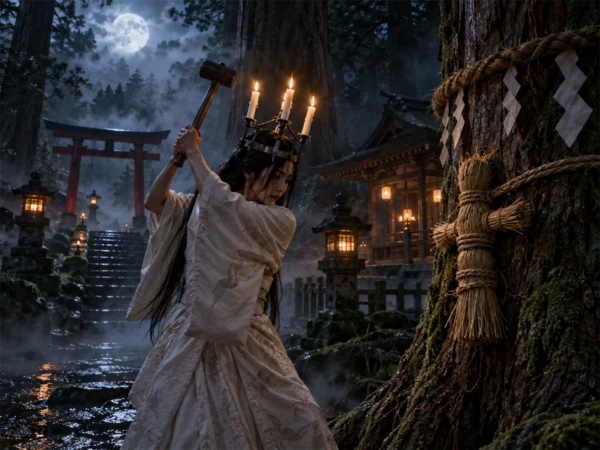
Kamikakushi (“hidden by the gods”) is the folk belief that when children or young people go missing without warning, they have been carried off by gods, tengu or mountain spirits. Warnings that a “hiding god” will take children who play outside at dusk survive all over Japan and have long served as cautions for children.

“The Old Woman of Samuto” in The Legends of Tono

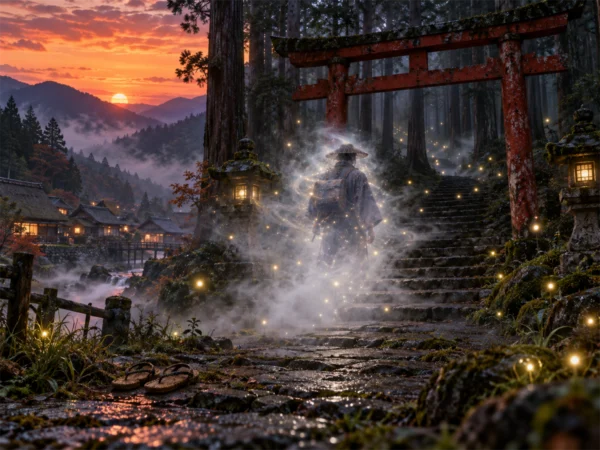
Yanagita Kunio’s The Legends of Tono includes the story of a young woman who disappeared, leaving her straw sandals under a pear tree, and returned more than thirty years later on a windy day as an old woman. Because of this story, the people of Tono were said to remark on windy days, “It’s the kind of day the old woman of Samuto might come back.”

The boy taken by tengu

In the late Edo period, a boy named Torakichi became famous for claiming that tengu had taken him to another world to train. The scholar Hirata Atsutane interviewed him and recorded his story in Senkyo Ibun (Strange Tidings from the Realm of Immortals). Real events such as accidents, children getting lost and running away from home are thought to lie behind kamikakushi, but people passed them down as mysteries that happen at the border with the otherworld. Modern stories such as Kisaragi Station carry on the same theme.

Kamikakushi (Spirited Away): Legend & Sighting Locations

Please note Trespassing on private property or restricted areas is prohibited by law. Please be considerate of local residents.

Positions on the map are a rough guide to the area where a legend or sighting is set. Most pins are placed at representative points of a municipality or prefecture (outside Japan, a city position rounded to about 10 km, or the country), not at the exact place.
Municipality points: Geolonia address data (CC BY 4.0), based on the Address Base Registry (Digital Agency of Japan) / Country points: Natural Earth

Sources & References

  1. 遠野物語 (柳田國男, 1910)
  2. 仙境異聞 (平田篤胤, 1822)

Please note The contents of this site introduce legends, eyewitness accounts and theories; they do not guarantee that anything described is true. The stats are our own rough guide. Trespassing on private property or restricted areas is prohibited by law. Please be considerate of local residents.

Related Entries