People in the Legends

Yanagita Kunio

  • Folklorist
  • Japan
  • 1875–1962

Yanagita Kunio was the folklorist who founded Japanese folklore studies. After serving as an official in the Ministry of Agriculture and Commerce, he researched and recorded the traditions and customs of villages all over Japan.

The Legends of Tono (1910) collects stories he heard from Sasaki Kizen, a native of the Tono region of Iwate Prefecture, including tales of the kappa, people spirited away, zashiki-warashi and mountain men. In works such as Yokai Dangi, he proposed that yokai were “fallen gods,” laying the foundations of yokai studies in Japan.


Entries Related to Yanagita Kunio

Entries: 11
Yokai ★★★★★ Japan (Tono area, Iwate Prefecture)

Mayoiga

A grand, empty mansion said to be found by people lost in the mountains; taking something from it is said to bring good fortune. Yanagita Kunio's The Legends of Tono includes the story of a woman who became wealthy thanks to a red bowl that floated down the river from it.

Yokai ★★★★★ Japan (Tokushima Prefecture)

Konaki-jijii

A yokai that looks like an old man yet cries like a baby on mountain roads at night. If you feel sorry for it and pick it up, it clings to you and grows heavier and heavier, and some say it takes your life. It is told of in the mountains of Tokushima Prefecture and became famous as one of Kitaro's allies in the manga GeGeGe no Kitaro.

Yokai ★★★★★ Japan (Nara, Hyogo and Shiga Prefectures)

Sunakake-babā

A yokai that startles people passing through deserted woods or near shrines by sprinkling sand on them from nowhere. It is told of in Nara, Hyogo and Shiga Prefectures. No one has ever seen it, but it became famous as an old woman in the manga GeGeGe no Kitaro. Some say it is the work of tanuki.

Yokai ★★★★★ Japan (Nara Prefecture)

Betobeto-san

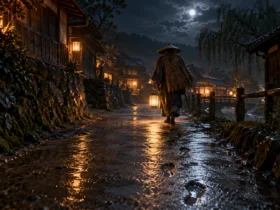
A yokai told of in Nara Prefecture and elsewhere: when you walk alone on a night road, "beto beto" footsteps follow you from behind. It is said that if you step to the side of the road and say "Betobeto-san, please go ahead," the footsteps disappear.

Yokai ★★★★★ Japan (Kanto region and elsewhere)

Hitotsume-kozo (One-Eyed Boy)

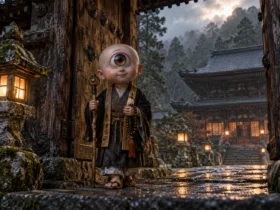
A child yokai with one large eye in the middle of its face. In the Kanto region and elsewhere it was said to visit houses on the "Koto-yoka" days of February 8 and December 8, and people drove it away by hanging many-eyed baskets from the eaves.

Yokai ★★★★★ Japan (Sado Island, Niigata Prefecture)

Miage-nyudo (Look-Up Monk)

A yokai that appears on a night slope in the form of a little monk and grows taller and taller as you look up. It is told of on Sado Island, Niigata Prefecture, and is said to vanish if you chant "Miage-nyudo, I saw over you" and lie face down. It is a relative of the mikoshi-nyudo.

Yokai ★★★★★ Japan (Iwate Prefecture)

Oshirasama

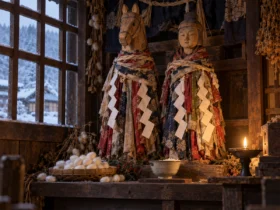
A household deity worshipped in old families of the Tohoku region: a pair of mulberry-wood figures with the faces of a horse and a girl, dressed in layers of cloth. The Legends of Tono records the tale of a tragic love between a horse and a girl from which silkworms were born.

Yokai ★★★★★ Japan

Zashiki-warashi

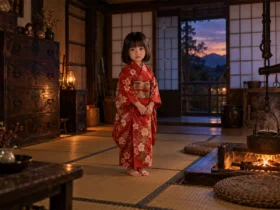
A child-like yokai said to live in old houses in northern Japan. A house with a zashiki-warashi prospers, and when it leaves, the family declines. Featured in The Legends of Tono, it is the best-known yokai of good fortune.

Yokai ★★★★★ Japan

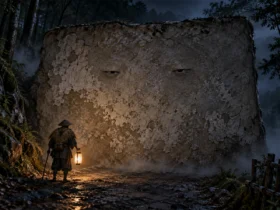
Nurikabe

A yokai that appears as an invisible wall on a night road, blocking the way forward. It comes from a Fukuoka legend introduced by Yanagita Kunio, and it is said to vanish if you sweep the bottom of the wall with a stick.

Yokai ★★★★★ Japan

Kappa

A water yokai said to live in rivers and ponds, with a dish of water on top of its head. Alongside frightening tales, it is known for friendlier ones, such as its love of sumo wrestling and cucumbers.

Mysteries & Phenomena ★★★★★ Japan

Kamikakushi (Spirited Away)

The folk belief that people who suddenly vanish have been taken by gods, tengu or mountain spirits. Many stories tell of people returning years later, and records are found throughout Japan.

All people ›