What is Konaki-jijii?
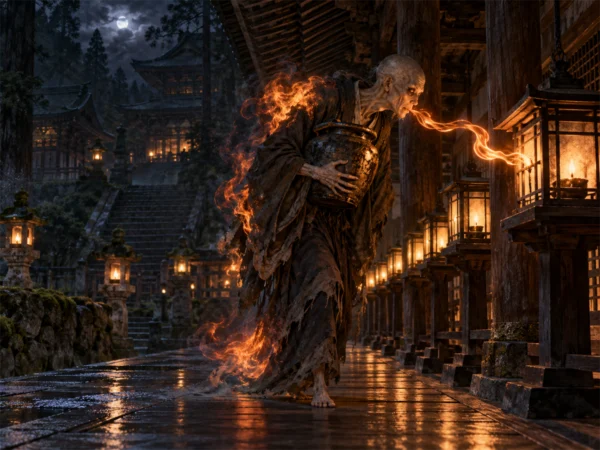
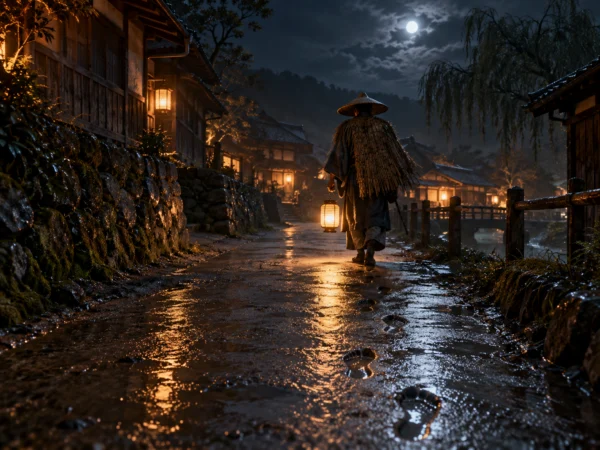
Konaki-jijii (“old man who cries like a baby”) is a yokai that looks like an old man yet wails like a baby on mountain roads at night. If someone feels sorry for it and picks it up, it clings to them and will not let go, growing heavier and heavier until it finally takes the person’s life. It is known as a yokai of the mountains of Tokushima Prefecture.
Introduced by Yanagita Kunio
Konaki-jijii became known after the folklorist Yanagita Kunio introduced it in his “Yōkai Meii,” a collection of yokai names from across Japan included in Yōkai Dangi. It was based on a record from a mountain village in Tokushima published in the folklore journal Minkan Denshō, where it was described as “a ghost that imitates the crying of a child.” Yanagita pointed out that its habit of growing heavy when held resembles tales of “obariyon,” which leaps onto people’s backs, and of Ubume, who makes people hold a baby.
Research in the area of origin
Local historians have studied the mountain area of Tokushima said to be the home of Konaki-jijii. According to their research, the Konaki-jijii story itself was not clearly remembered there. However, they recorded that a real old man in the area had been good at imitating a baby’s cry, and that parents used to scold children by saying, “That old man will come for you.” It is thought that the story of this real old man combined with tales of a voice-only yokai and of a yokai that grows heavy when held, giving birth to Konaki-jijii.
Konaki-jijii in GeGeGe no Kitaro
Konaki-jijii shot to fame through Mizuki Shigeru’s manga GeGeGe no Kitaro. In the story, he clings to enemies and becomes as heavy as stone to pin them down, making him one of Kitaro’s most dependable allies. He is also familiar as a partner of Sunakake-babā. Thanks to the manga, his image changed from a frightening yokai to a lovable, heroic one.
Obariyon, who leaps onto your back
Obariyon, which Yanagita Kunio named as a yokai close to Konaki-jijii, is a yokai from Niigata Prefecture. When you walk a road at night, it leaps onto your back crying “Obariyon!” (carry me piggyback), and grows heavier and heavier as you carry it. In some tales, however, those who endure the weight and carry it all the way home find that the thing on their back has turned into a lump of gold. Stories in which people who endure the weight are rewarded with treasure or great strength are shared with the legends of Ubume, and they may have been a folktale pattern praising patience and courage.
Ōboke, the “birthplace”
In 2001, the former town of Yamashiro (now Miyoshi City) in Tokushima Prefecture was recognized as the birthplace of the Konaki-jijii legend, and local people set up a stone statue and monument to him. In 2010, a yokai museum called “Konaki-jijii no Sato Yōkai Yashiki” opened at the roadside station in Ōboke, an area famous for its gorge, and it draws many visitors. The area now uses yokai to promote itself as a “home of yokai.”
Tales of yokai that weigh down those who carry them may be how people once expressed the exhaustion and anxiety of walking mountain roads at night. Other yokai made famous by Mizuki Shigeru’s manga include Ittan-momen and Nurikabe.