Burrunjor
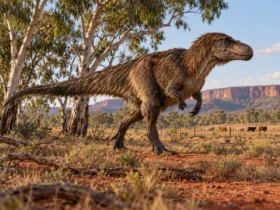
A cryptid like a giant, bipedal carnivorous dinosaur said to live in Arnhem Land in northern Australia. It appears in Aboriginal folklore and is also said to attack livestock.
Unidentified Mysterious Animals: creatures such as Tsuchinoko and Nessie that have been reported by witnesses but never confirmed to exist.
Entries: 51
A cryptid like a giant, bipedal carnivorous dinosaur said to live in Arnhem Land in northern Australia. It appears in Aboriginal folklore and is also said to attack livestock.
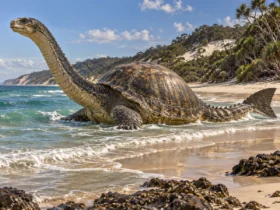
A sea cryptid said to have been sighted around the Great Barrier Reef in Australia, with a turtle-like body, a long neck and a fish-like tail. A sighting was reported to a museum at the end of the 19th century.
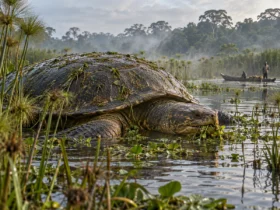
A giant turtle cryptid with a shell several meters across, said to live in the lakes and swamps of the Congo in central Africa. It is told of in the same region as Mokele-mbembe.
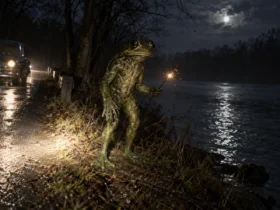
A bipedal creature with a frog-like face sighted in Loveland, Ohio. It became famous in 1972 when police officers reported seeing it on a road.
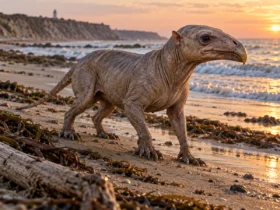
The carcass of a strange animal with a beak-like mouth that washed up on a beach in Montauk, New York, in 2008. Its photo spread online, but it is thought to have been a decomposed raccoon.
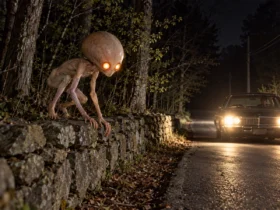
A small humanoid creature with a large head and glowing eyes seen by young people in Dover, Massachusetts, in 1977. It was sighted for only two days, and its identity remains a mystery.
Flying cryptids shaped like people that seem to float through the air. Sightings and footage came one after another mainly in Mexico from the late 1990s. The leading theory is that they are balloons or kites.
Strange creatures caught on a home security camera in Fresno, California, in 2007, looking like pairs of white pants walking by themselves. Their form, seemingly nothing but two long, thin legs, became a sensation.
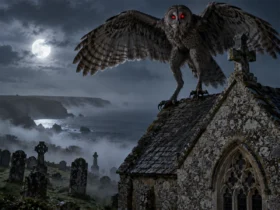
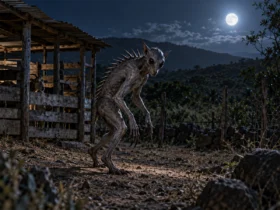
An owl-like monster as big as a human, sighted near the church in the village of Mawnan in Cornwall, England, in 1976. It was said to have glowing red eyes and sharp claws.
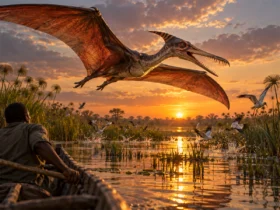
A pterosaur-like flying cryptid told of in the wetlands of Zambia in southern Africa. Its name is said to mean "overwhelmer of boats" in a local language. It was introduced in a book by an Englishman in the 1920s.
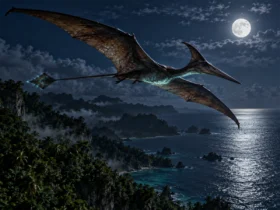
A flying cryptid that looks like a pterosaur, sighted on the islands of Papua New Guinea. It has a long tail and is said to glow at night. It drew attention as a possible surviving pterosaur.
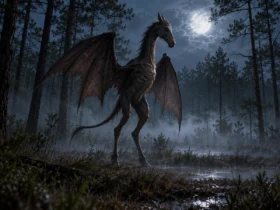
A monster of the New Jersey forests with a horse-like head and bat wings. The legend dates back to the 18th century, and a wave of sightings swept the region in 1909.
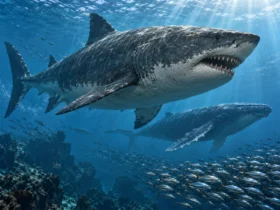
One of the largest sharks in history, reaching 15 m or more, thought to have gone extinct about 3.6 million years ago. Survival theories that it still lives in the deep sea are told as a cryptid story, but there is no scientific evidence.
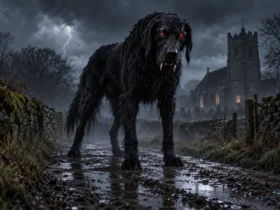
A giant black dog with fiery eyes from the folklore of eastern England. A record survives of it appearing in churches and attacking people in 1577. It is the leading example of Britain's many "black dog" legends.
A gigantic sea monster said to appear in Scandinavian waters and sink ships, so large it could be mistaken for an island. The leading theory identifies it as the real giant squid.
A rod-shaped cryptid that flies through the air too fast to see with the naked eye. "Discovered" in video footage in the 1990s, it became popular on TV. It has been shown to be insects captured as rod shapes by camera blur.
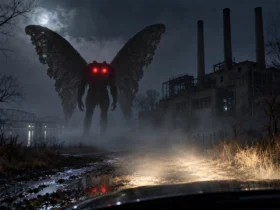
A humanoid cryptid with glowing red eyes and large wings, sighted in West Virginia in 1966. It is said by some to have foretold a bridge collapse the following year. One explanation is a large bird.
A blood-sucking cryptid said to drain the blood of livestock. It caused a sensation in Puerto Rico in 1995 and spread to Latin America and the United States. The leading explanation is coyotes or feral dogs suffering from mange.
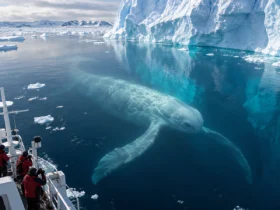
A giant white humanoid creature tens of meters long said to be seen in the Antarctic Ocean. A cryptid that spread on internet message boards in the early 2000s, it is told of as a sighting by crew members of a research whaling ship.
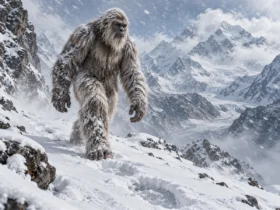
A large, hairy, ape-like "snowman" said to live in the Himalayas. It became world-famous with a footprint photograph in 1951. Recent DNA studies have found that most samples attributed to it came from bears.