Oberon
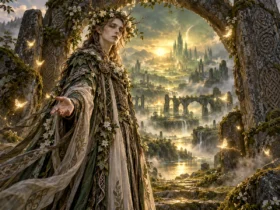
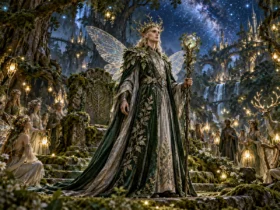
The king of the fairies in European folklore. He appears as a dwarf king in a medieval French romance and became widely known as the fairy king in Shakespeare's A Midsummer Night's Dream.
Mystery Timeline|1185–1602
Yokai and strange tales from the age of the samurai, alongside the mysterious books and legends of medieval Europe, from the Kamakura period to the Warring States era.
The king of the fairies in European folklore. He appears as a dwarf king in a medieval French romance and became widely known as the fairy king in Shakespeare's A Midsummer Night's Dream.
The elemental spirit of water among the four elemental spirits. Undines were said to gain a soul by marrying a human, and the idea spread as a tragic love story through Fouque's novel Undine. It also gave its name to the medical term "Ondine's curse."
The elemental spirit of fire among the four elemental spirits, depicted as a lizard living in fire. Since ancient times it has been believed to be "a creature that can live even in fire," and its name is also the English name of real amphibians.
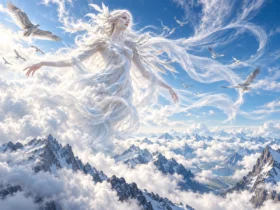
The elemental spirit of wind (air) among the four elemental spirits, described by the 16th-century physician Paracelsus. Sylphs are said to be slender and beautiful, and the feminine form "sylphide" also became the subject of a ballet.
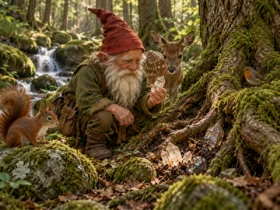
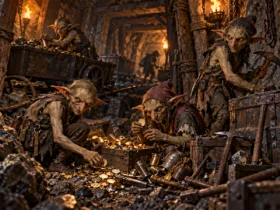
The elemental spirit of earth among the four elemental spirits. Gnomes are little people said to move freely underground and guard minerals and treasure. They are also known from the ceramic "garden gnome" figures that originated in 19th-century Germany.
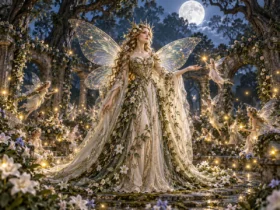
The queen of the fairies in Shakespeare's comedy A Midsummer Night's Dream. Through a trick played by her husband, the fairy king Oberon, she falls in love with a craftsman whose head has been turned into a donkey's. A moon of Uranus is named after her.
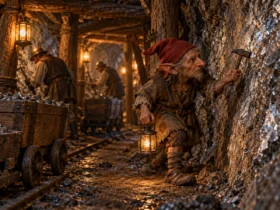
A household or mine spirit of German folklore. In houses kobolds helped with chores, while in mines they were said to lead miners astray. A troublesome ore named after them gave the element "cobalt" its name.
An ugly, mischievous little creature of European folklore. There are also friendly hobgoblins that live in houses. Through Tolkien's works, goblins became standard enemy characters in games.
An old word for the fairies of Europe. It comes from the Latin for "fate" and is the origin of the English "fairy." Sometimes, as with Morgan le Fay of Arthurian legend, it refers to a woman with magical powers.