Ariel
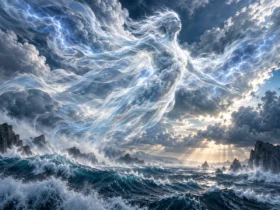
An air spirit in Shakespeare's play The Tempest. Serving the magician Prospero, Ariel raises a storm and is finally granted freedom. A moon of Uranus is named after this spirit.
Mystery Timeline|1603–1867
The era when Toriyama Sekien's yokai paintings and ghost stories such as Yotsuya Kaidan flourished, and countless yokai were depicted in art and tales.
An air spirit in Shakespeare's play The Tempest. Serving the magician Prospero, Ariel raises a storm and is finally granted freedom. A moon of Uranus is named after this spirit.
A ghost-cat story set in the Nabeshima household of the Saga domain. To avenge the mother of a retainer killed by the lord, her pet cat becomes a bakeneko and torments him. It was a huge hit in late Edo-period storytelling and kabuki, and is counted first among Japan's three great ghost-cat disturbances.
A Western grimoire compiled around the 17th century. Based on the legend that King Solomon commanded 72 demons, its first part, the "Goetia," records the names, appearances, seals (sigils) and summoning methods of 72 demons. It is famous as the source of demons in games and manga.
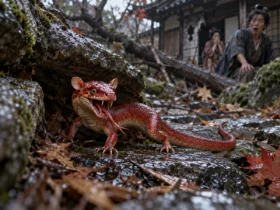
A tiny, deadly venomous snake whose bite kills before you can walk seven steps. It appears in Asai Ryoi's Edo-period Otogi Boko. Only about a dozen centimeters long, it looked like a dragon, it is said.
A tale of a vengeful spirit set in Hanyu Village, Shimousa Province (today's Joso, Ibaraki Prefecture), in the Edo period. The spirit of Kasane, murdered by her husband, haunted two generations until the high priest Yuten Shonin laid it to rest. It is also known from the rakugo epic Shinkei Kasanegafuchi.
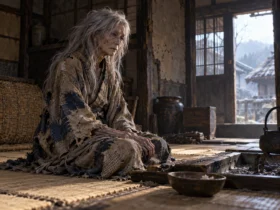
A god said to attach itself to a house or person and make that house poor. It is described as a thin old man holding a torn fan. There are rituals for driving it away, yet stories also tell of people who worshipped it devotedly and gained good fortune.
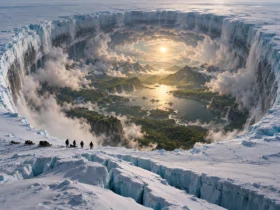
The theory that the Earth's interior is hollow, with a sun or another civilization underground. It is said to have begun with a hypothesis by the astronomer Halley in the 17th century. It is told together with rumors of entrances to the underworld at the poles and stories of subterranean people and UFOs.
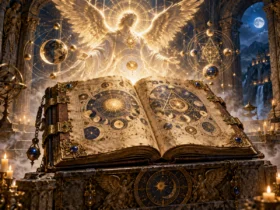
A book said to have been given to Adam, the first man, by the angel Raziel, containing all the secrets of the universe. Legend says it later passed to Noah and King Solomon. In reality it is a work of Jewish mysticism compiled in the Middle Ages, first printed in 1701 and treasured as a protective charm.
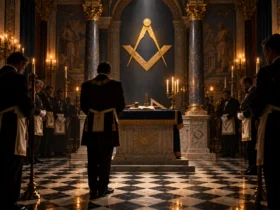
A fraternal organization with members around the world, said to have its roots in medieval stonemasons' guilds. The first Grand Lodge was founded in London in 1717. Because it has kept its rituals private, conspiracy theories arose claiming it is a secret society controlling the world from behind the scenes.
A mysterious figure who appeared at the courts of 18th-century Europe. He spoke several languages, was versed in alchemy, and was rumored never to age. Records say he died in 1784, but sightings continued to be told afterward, and he became legendary as an "immortal man" and "time traveler."
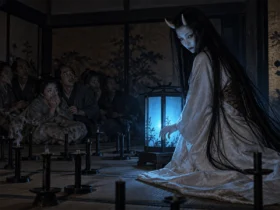
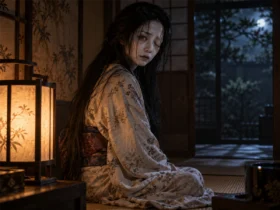
A demon-woman yokai said to appear when the hundredth story has been told at a hyakumonogatari ghost-story gathering. It comes from an Edo-period game of telling ghost stories by the light of an andon lamp covered with blue paper.
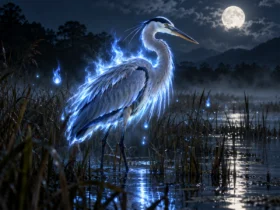
A mysterious fire in which the body of a grey heron seems to glow pale blue at night. It was said to be light given off by old grey herons or night herons, and Toriyama Sekien drew it too. One theory says it was feathers lit by the moon.
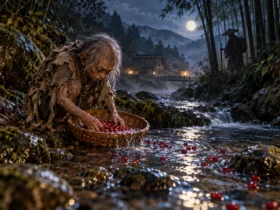
A yokai that makes a "shoki shoki" sound like washing azuki beans by the river. Usually only the sound is heard, with nothing to be seen. It is said to sing, "Shall I wash beans, or catch a person and eat them?", and legends of it are found throughout Japan.
A mysterious fire told of in Omi Province (Shiga Prefecture) and elsewhere. It is said to be a monk who stole lamp oil from a temple, wandering as a fireball after death. It was said to appear at the foot of Mount Hiei on summer nights.
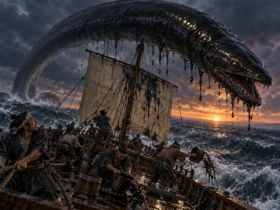
A huge sea monster off the coast of Hitachi Province (Ibaraki Prefecture) described in Edo-period essays. It took hours to pass over a ship, and oil dripped from its body.
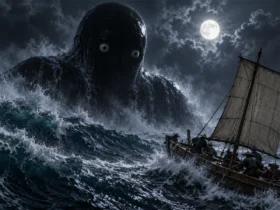
A giant, black, bald-headed yokai that suddenly appears on the sea at night. It is said to capsize ships or ask for a ladle to fill boats with water. Theories identify it as a sea turtle, a whale or a mirage.
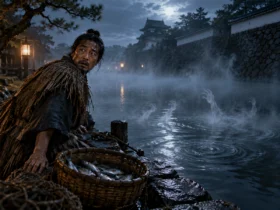
One of the "Seven Wonders of Honjo," ghost stories of Honjo in Edo (today's Sumida, Tokyo). When anglers tried to take home fish caught in the moat, a voice from the water said "Leave it, leave it," and the fish vanished. It is said to be the origin of the Japanese expression "oitekebori" (being left behind).
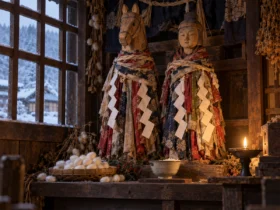
A household deity worshipped in old families of the Tohoku region: a pair of mulberry-wood figures with the faces of a horse and a girl, dressed in layers of cloth. The Legends of Tono records the tale of a tragic love between a horse and a girl from which silkworms were born.
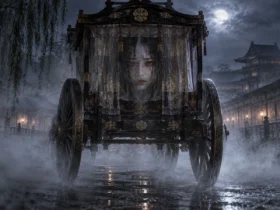
An ox-cart yokai with a giant face on its front that appears on nights when the moon is hazy. Drawn by Toriyama Sekien, it is said to be the grudge of a woman shamed in the "carriage quarrel" of The Tale of Genji, lodged in a carriage.
A children's song for a game in which children circle a blindfolded "it," who must guess who is standing directly behind. Because of its cryptic words, many dark meanings have been suggested: the sorrow of a courtesan, a miscarriage, a prisoner, an execution, even a code for the hiding place of the Tokugawa treasure.
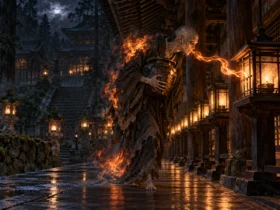
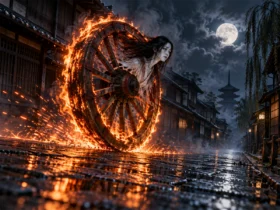
A yokai in which a woman rides along a night road in an ox-cart with a single wheel wrapped in flames. It was said to curse anyone who saw it, and appears in Edo-period ghost story collections and Toriyama Sekien's yokai pictures.
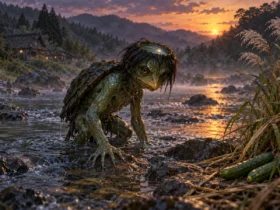
A water yokai said to live in rivers and ponds, with a dish of water on top of its head. Alongside frightening tales, it is known for friendlier ones, such as its love of sumo wrestling and cucumbers.
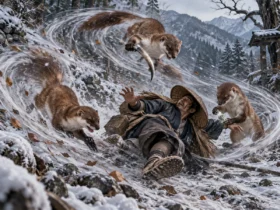
A yokai said to ride on whirlwinds and cut people's skin like a sickle. The cuts are said to be painless and barely bleed. One tradition says kamaitachi come in threes: one knocks you down, one cuts, and one applies medicine.
The folk belief that people who suddenly vanish have been taken by gods, tengu or mountain spirits. Many stories tell of people returning years later, and records are found throughout Japan.
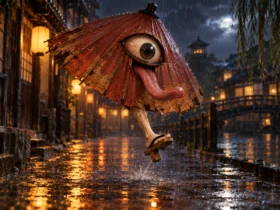
A yokai born from an old umbrella, with one eye, a long tongue and a single leg on which it hops about. A classic example of the tsukumogami (tool yokai), also called kasa-obake, it is a familiar figure in haunted houses.
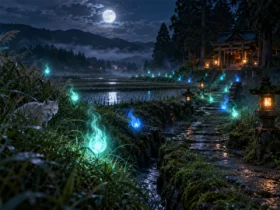
Ghostly balls of light that appear in rows, flickering across the fields and mountains at night. They were said to be lit by foxes and to be the lanterns of a fox wedding procession. At Oji Inari in Edo, foxes from all over the Kanto region were said to gather on New Year's Eve and light fox fires.
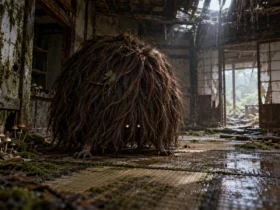
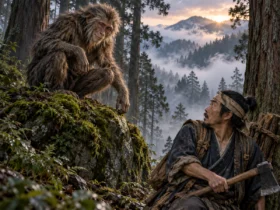
A hairy yokai covered all over in long hair. It lives in damp places such as under floors, and sickness is said to come to the house where it settles. Its name is also written with characters meaning "rarely seen."
Little people of Ainu folklore, whose name is said to mean "people under the butterbur leaves" in the Ainu language. They once traded with the Ainu but are said to have left after being seen. It is one of the best-known legends of Hokkaido.
A mountain yokai that reads people's minds. It frightens people by guessing their thoughts one after another, but it is helpless against the unexpected. Told of in the mountains of Hida and Mino, it was also drawn by Toriyama Sekien.
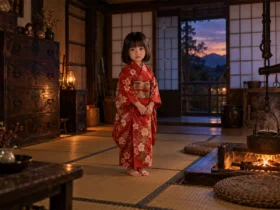
A child-like yokai said to live in old houses in northern Japan. A house with a zashiki-warashi prospers, and when it leaves, the family declines. Featured in The Legends of Tono, it is the best-known yokai of good fortune.
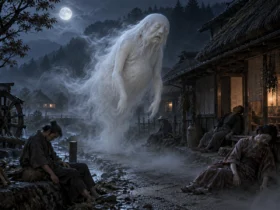
A mysterious yokai with a long, slender white body drawn in Edo-period yokai scrolls. What mischief it does is not recorded. Today it is sometimes said that anyone it possesses becomes absent-minded and loses all motivation.
A serpent-like cryptid said to live in Lake Seljord in southern Norway. Sightings have been told since the 18th century, and international expeditions searched for it at the end of the 20th century.
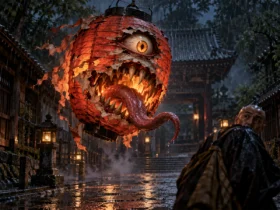
A yokai born from an old paper lantern, depicted with its torn part turned into a mouth, eyes appearing and a long tongue hanging out. Katsushika Hokusai's picture of Oiwa's face appearing on a lantern is also famous.
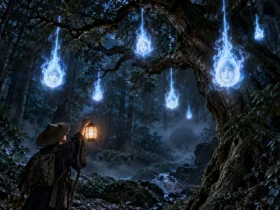
A pale, bluish fire yokai that bobs up and down on a night mountain road, as if hanging from a tree branch. A human face sometimes appears in the flame. Its name comes from moving up and down like a well bucket (tsurube).
A children's song about an exchange between a parent and child walking the narrow path to a Tenjin shrine and the gatekeeper. Because it says going is fine but coming back is scary, many dark meanings have been suggested, such as abandoning children, human sacrifice and checkpoint inspections.
The phenomenon of seeing another self that looks exactly like you. The German word means "double walker." It is said that seeing your own doppelganger means your death is near, and there are accounts of sightings by Goethe and Akutagawa Ryunosuke.
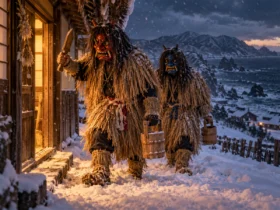
A visiting deity of a traditional New Year's Eve event on the Oga Peninsula in Akita Prefecture. Wearing demon-like masks and straw costumes called kede, Namahage go from house to house shouting "Are there any crybabies here?", scolding the lazy and bringing good fortune.
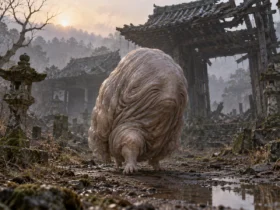
A yokai that looks like a flabby lump of flesh, with no distinction between face and body, said to smell like rotting flesh. Toriyama Sekien drew it, and it is linked with the tale of a "flesh man" that appeared at Sunpu Castle at the start of the Edo period.
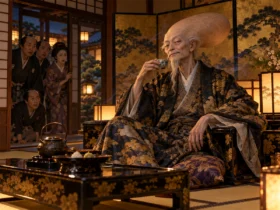
A yokai in the form of an old man with a large, protruding back of the head. It slips into houses during the busy evening hours and relaxes, drinking tea as if it were the master. Its image as the "supreme commander of the yokai" spread only in modern times.
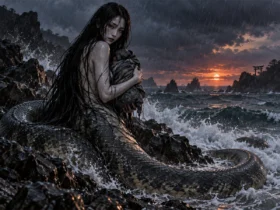
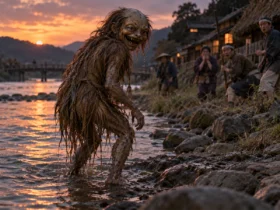
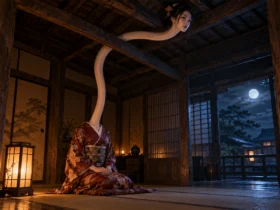
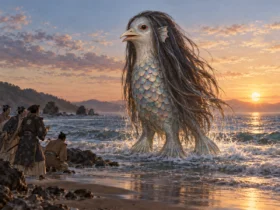
A yokai with a woman's face and a long snake's body that appears by the sea and rivers. It is called "wet woman" because its hair is always wet. It is famous for the tale in which it makes people hold a baby so they cannot move, then attacks with the ushi-oni.
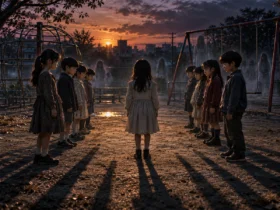
A children's song for a game in which two teams take turns claiming children from the other side while singing. Because "ichi monme" was an old unit of money and weight, a dark theory says the song depicts child traders buying children cheaply.
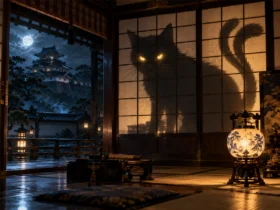
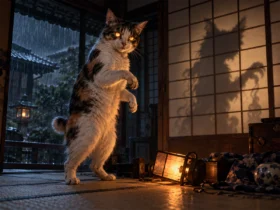
A yokai cat that has lived long enough to gain supernatural powers, taking human form or cursing people. The "Nabeshima Bakeneko Disturbance" of Saga is especially famous, and bakeneko tales were hugely popular in Edo-period kabuki and storytelling.
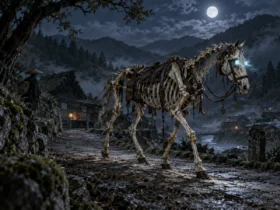
A yokai in the form of horse bones drawn in the Edo-period yokai scroll Tosa Obake Zoshi. It is said to be a horse that burned to death in a fire. It is also linked with the Japanese expression "horse bones from who knows where."
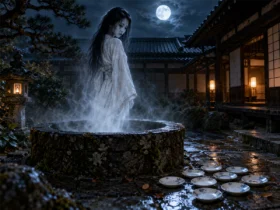
A ghost story set in Bancho, Edo. Okiku, a maid in a samurai mansion, was killed for breaking a treasured plate and thrown into a well, and from then on a voice counting plates was heard from the well every night. It is one of Japan's most famous ghost stories.
A kappa-like yokai told of in Saga Prefecture and elsewhere in Kyushu. It cries "hyo hyo," loves eggplants and ravages fields. Anyone who sees it is said to come down with a fever.
A female yokai with a second, large mouth on the back of her head. She is said to move her hair like hands to carry food to the mouth behind. She is known from the Edo-period Ehon Hyaku Monogatari and the folktale "The Wife Who Doesn't Eat."
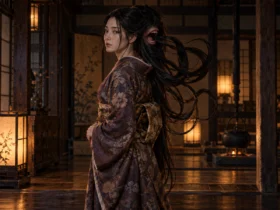
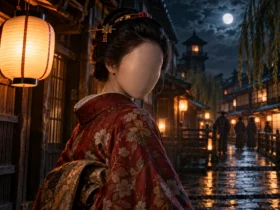
A female yokai in the form of a skeleton, who visits her beloved in the form she had in life. Toriyama Sekien drew her, and she is linked with the ghost story Botan Doro, in which Otsuyu, who visits a man every night, turns out to be a skeleton.
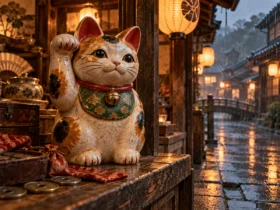
A cat figurine with one paw raised, beckoning customers and good fortune. A raised right paw is said to invite money, a raised left paw customers. Its origin is told in several stories, such as Ii Naotaka at Gotokuji Temple in Tokyo, and the lucky charm has spread worldwide.
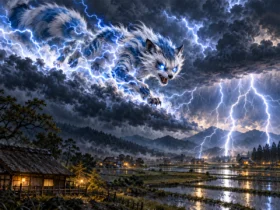
A beast yokai said to fall from the sky with lightning. It was thought to leave claw marks on trees struck by lightning. Records and pictures of raiju being caught survive from many parts of Edo-period Japan, and one theory is that they were really masked palm civets or similar animals.
A female yokai whose neck stretches to great lengths at night. In the "nukekubi" type, the head detaches and flies around. It appears in Lafcadio Hearn's Kwaidan and was a popular sideshow attraction in the Edo period.
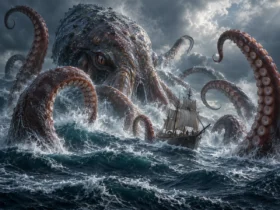
A gigantic sea monster said to appear in Scandinavian waters and sink ships, so large it could be mistaken for an island. The leading theory identifies it as the real giant squid.
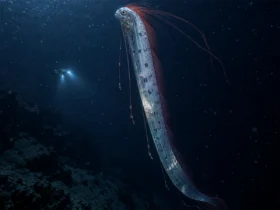
A long, slender silver deep-sea fish over 3 meters long. It is thought to be behind sea serpent and mermaid legends, and is known in Japan for the folk belief that it heralds earthquakes. Research has found no link to earthquakes.
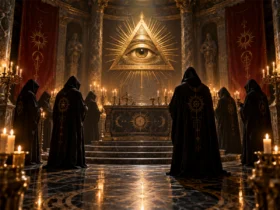
A real secret society founded in Bavaria, Germany, in 1776 and dissolved only about ten years later. Even after its dissolution, conspiracy theories that it "survived and controls the world from behind the scenes" have been passed down, making it a byword for urban legends.
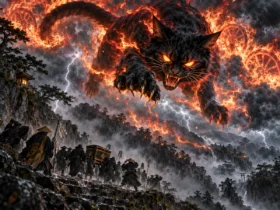
A yokai that appears at funerals and graveyards and steals the bodies of the dead. It is said to target the remains of those who did many evil deeds, and is often described as a cat yokai. Its name is said to come from the "fire cart" that carries sinners to hell.
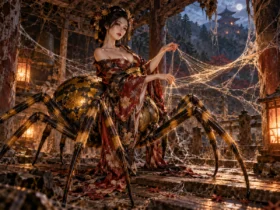
A spider yokai that turns into a beautiful woman to lure men and drag them into waterfall basins and deep pools. Legends of it remain at Jōren Falls on the Izu Peninsula and at Kashikobuchi pool in Sendai. Toriyama Sekien drew it as a spider woman controlling fire-breathing baby spiders.
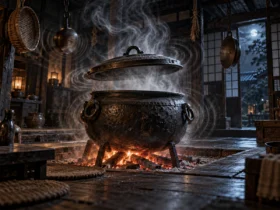
A Shinto ritual at Kibitsu Shrine in Okayama Prefecture in which fortunes are told by the sound of a cauldron, and the supernatural tales around it. It is known from "The Cauldron of Kibitsu" in Ueda Akinari's Ugetsu Monogatari, and Toriyama Sekien also drew it as a cauldron yokai.
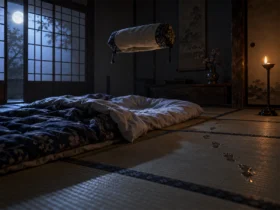
A yokai that comes at night to turn sleepers' pillows over or reverse the direction of their head and feet. In northeastern Japan it is often said to be the mischief of a zashiki-warashi. People once believed the soul left the body during sleep, and feared that if the pillow were moved, the soul could not return.
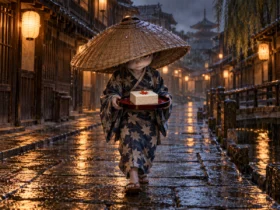
A yokai in the form of a child wearing a large straw hat and carrying a block of tofu on a tray. It appeared in illustrated popular books (kusazōshi) in the late Edo period and became a favorite of the people of Edo. Doing no real harm, it was loved as a timid, clumsy "character yokai" of Edo.
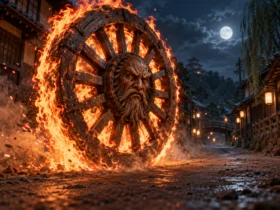
A yokai with a terrifying man's face in the center of a flaming ox-cart wheel. It is said to steal the soul of anyone who sees it, but cannot approach a house with a charm reading "This is the village of Shobo" on the door. Toriyama Sekien drew it.
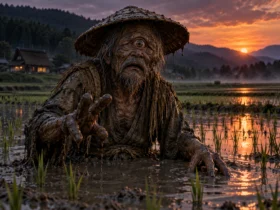
A one-eyed, three-fingered yokai that rises from a muddy rice field to the waist and cries "Give back my field!" It is said to appear because the son of an old man who left rice fields for his descendants betrayed his wishes by drinking and selling the fields.
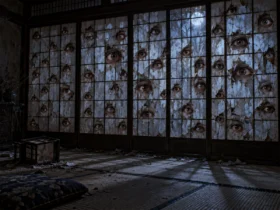
A yokai in which countless eyes appear in every square of the paper screens of a ruined house. Toriyama Sekien drew it and explained it as the intense focus a go player once directed at his board, spreading through the whole house. An optical illusion on moonlit screens has been suggested as its true nature.
An egg-laying mammal with a duck's bill. When a specimen reached Britain in 1798, it was so strange that scientists suspected it was a stitched-together fake. We explain how it came to be accepted as real.
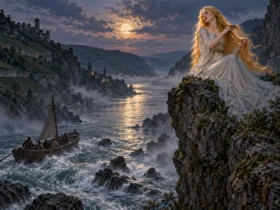
A rock towering over the banks of the Rhine in Germany, and the legend of a beautiful maiden who sings there and lures boatmen to their doom. The song "Die Lorelei," Silcher's setting of Heine's poem, was also loved in Japan as a school song.
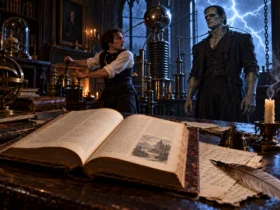
The novel published in 1818 by Mary Shelley of England. The young scientist Frankenstein creates an artificial human from corpses but is tormented by the monster he made. Frankenstein is the name of the scientist, not the monster. It is often called the first work of science fiction.
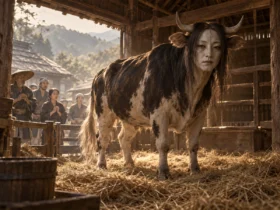
A "prophetic beast" said to be born with a human face and the body of a cow, deliver a prophecy and die soon after. Its prophecies are said to always come true. It is told of from Edo-period news sheets to Showa-era rumors.
A water yokai said to live in Chinese rivers, the size of a child and covered in hard scales. In Edo-period Japan it was treated as a relative or another name of the kappa, and a kappa encyclopedia called Suiko Koryaku was compiled.
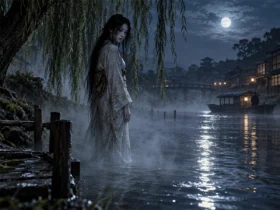
Japan's most famous ghost story, told in the Edo-period kabuki play Tokaido Yotsuya Kaidan. Betrayed by her husband Iemon and poisoned so that her face is disfigured, Oiwa returns as a vengeful ghost. It is said that a curse falls on productions whose members do not first visit the shrine dedicated to Oiwa.
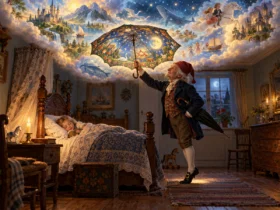
A sleep spirit of Danish folklore, made famous by Andersen's fairy tale "Ole Lukoje." Over good children he opens an umbrella with pictures on it and shows them pleasant dreams.
A yokai said to have appeared in the sea off Higo Province (Kumamoto) in 1846, predicting good harvests and an epidemic. It told people to draw its image and show it to others. In 2020 it went viral as a charm against disease.
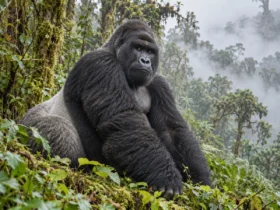
An ape long told of in legends and rumors as a hairy giant of the forest. It was scientifically described in 1847. Its name comes from "Gorillai," a word in an ancient Carthaginian voyage account.
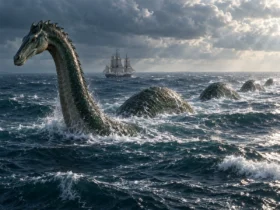
A giant, snake-like sea monster sighted in oceans around the world since ancient times. Sighting reports by warship crews survive from the 19th century. Theories about its true identity include the oarfish.
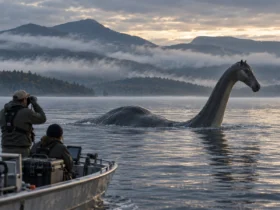
A plesiosaur-like cryptid said to live in Lake Champlain, which straddles the border of the United States and Canada. A photo taken in 1977 is famous, and it is called "America's Nessie."
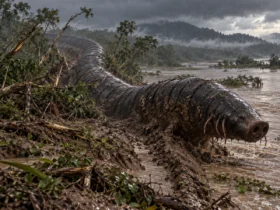
A cryptid like a giant earthworm tens of meters long, said to live underground and in rivers in Brazil and elsewhere in South America. It is said to leave deep trenches in the ground and drag livestock under.
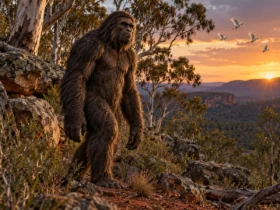
A hairy hominid-type cryptid said to live in the mountains and forests of eastern Australia. It derives from Aboriginal folklore, and sightings have been reported since the 19th century. It is Australia's Bigfoot.
A phantom continent said to have once existed in the Indian Ocean. It was a hypothesis proposed by a scientist in the 19th century to explain the distribution of lemur fossils, later tied to mystical thought and told of as a "lost civilization."
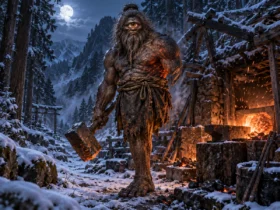
A one-eyed, one-legged mountain yokai. Told of in the Hatenashi Mountains on the border of Nara and Wakayama Prefectures and on Mount Obagamine, it was said to appear on December 20, the "Hate no Hatsuka," and people were warned not to enter the mountains that day. One theory links its name to the smiths of tatara ironmaking.
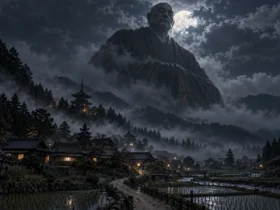
A yokai in the form of a towering, shaven-headed monk who suddenly appears on night roads to frighten people. Told of throughout Japan, it is often said to be a tanuki, fox or otter in disguise. It is considered a relative of the mikoshi-nyūdō, which keeps growing taller.
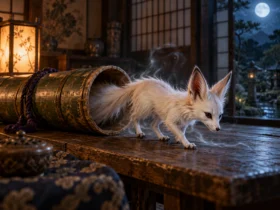
A possessing fox spirit said to be small enough to fit inside a bamboo pipe. Izuna practitioners and mountain ascetics were believed to control it, making it possess people or using it for divination. It is told of mainly in the Chubu, Kanto and Tokai regions.
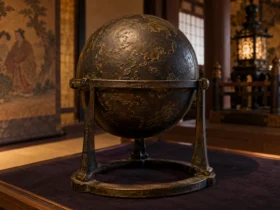
A small globe called the "Chichuseki" kept at Ikarugadera Temple in Taishi, Hyogo Prefecture. Because it shows the Americas and a southern continent unknown in the Asuka period, it became famous as a Japanese OOPArt. Its material and the place names on it suggest it was made in the Edo period.
A yokai with a smooth face that has no eyes, nose or mouth. It became famous worldwide through "Mujina" in Lafcadio Hearn's Kwaidan. The story pattern of "startling you twice," in which you flee only to meet another faceless figure, is famous.
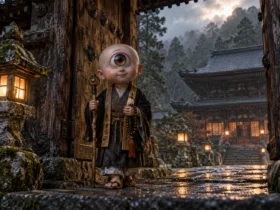
A child yokai with one large eye in the middle of its face. In the Kanto region and elsewhere it was said to visit houses on the "Koto-yoka" days of February 8 and December 8, and people drove it away by hanging many-eyed baskets from the eaves.
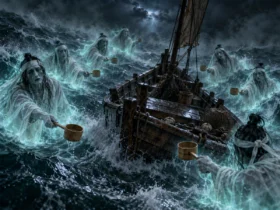
Ghosts of people who died at sea that approach boats and say, "Lend us a ladle," then use it to scoop seawater into the boat until it sinks. It is said you can escape by handing over a ladle with the bottom knocked out. They were believed to appear on stormy or foggy nights and around the Obon season.