What is Makura-gaeshi?
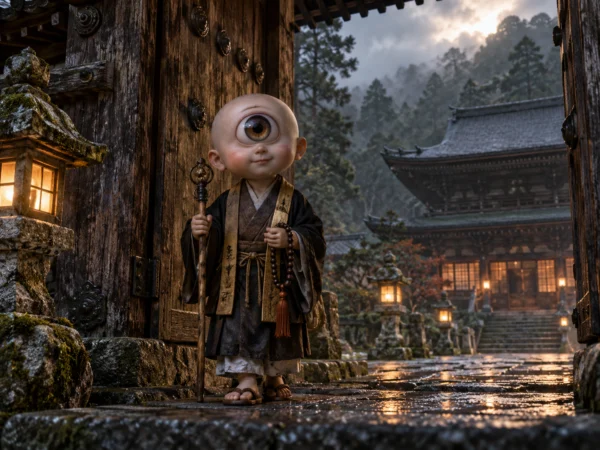
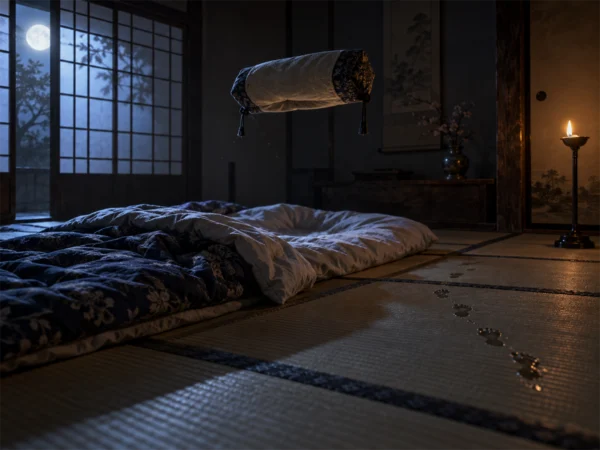
Makura-gaeshi (“pillow-turner”) is a yokai that visits people at night while they sleep and flips their pillow over, or turns their whole body around so that their head and feet are reversed. It explains something almost everyone has experienced: waking up with the pillow at your feet, or facing a different direction from when you went to sleep. Its appearance is unclear, though it is sometimes described as a child or a young monk.
The Edo-period artist Toriyama Sekien depicted Makura-gaeshi in his 1776 yokai picture book Gazu Hyakki Yagyō as a small figure resembling a Niō guardian statue, standing by a sleeper’s pillow.
Makura-gaeshi around Japan
In northeastern Japan, pillow-turning is often blamed on zashiki-warashi. In houses with a zashiki-warashi, people tell of having their pillows turned, being pushed, or having the tatami mats lifted while they slept. In Shizuoka Prefecture there is a tale of a “makura-kozō,” a child-like figure about 90 cm tall.
Temples have their stories too. At Daichū-ji temple in Tochigi Prefecture, the “pillow-turning room,” where a traveling monk woke to find his pillow facing the main Buddha image, is told as one of the temple’s seven wonders.
A deadly Makura-gaeshi
It is not always a harmless prankster. In Wakayama Prefecture there is a tale of woodcutters who felled a great tree in the mountains; that night, the spirit of the tree turned their pillows, and all of them died. Only one woodcutter, who had been chanting a sutra, survived.
Pillows and the soul
Behind the fear of Makura-gaeshi lies an old belief about pillows and the soul. People once thought that while a person dreamed, their soul left the body and wandered elsewhere. If the pillow was moved or the body turned around during sleep, the returning soul might not find its body, and the person would die.
The Heian-period historical tale Ōkagami records that a pillow was turned at a funeral so that the dead person would not come back to life. The pillow was considered a special object that linked the world of sleep with waking life, and this world with the next. The custom of laying the dead with their heads to the north also shows the special meaning given to which way a pillow faced.
Customs about pillows
There have long been many customs concerning the direction and handling of pillows. Because the dead are laid with their heads to the north, sleeping that way in everyday life is considered unlucky. Many places also handed down warnings not to step on or step over a pillow. On the other hand, to make sure the first dream of the New Year was a good one, people would sleep with a picture of the treasure ship of the Seven Lucky Gods tucked under their pillow. It was precisely because pillows were thought to be important objects connected with dreams and the soul that yokai stories like Makura-gaeshi were born.
From fearsome spirit to prankster
As these beliefs faded, Makura-gaeshi changed from a fearsome being that could take lives into a mischievous yokai, almost a joke about restless sleepers. Sleep paralysis, in which the body cannot move, has also long been blamed on yokai and spirits. See also the baku, the creature that eats bad dreams.