1. 1868 (said to be the first use of the word)
    Urban Legends ★★★★★ United Kingdom

    Dystopia

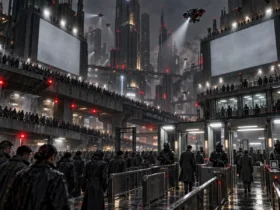
    The opposite of utopia: a society in which people's freedom has been taken away by total control, surveillance and oppression. Known through novels such as Nineteen Eighty-Four, it is sometimes told like an urban legend, linked with real surveillance technology and conspiracy theories.

  2. End of the Edo period (around 1868)
    Urban Legends ★★★★★ Japan (Gunma Prefecture)

    Tokugawa Buried Treasure

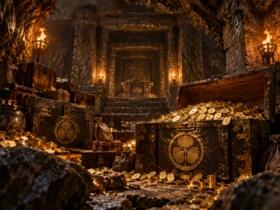
    A legend that just before the fall of the Edo shogunate, its huge war chest was secretly buried somewhere. The theory that the shogunate's finance commissioner Oguri Kozukenosuke hid it on Mount Akagi in Gunma Prefecture is famous, and large TV excavations drew attention, but nothing has been found.

  3. 1869 (introduced to the West)
    Confirmed Cryptids ★★★★★ China

    Giant Panda

    A member of the bear family known for its black-and-white coat. It became known to Western science only in 1869 and was long considered a "phantom animal." It is one of the world's three great rare animals; we explain its discovery and what we know today.

  4. 1872 (found)
    OOPArts ★★★★★ United States

    Lake Winnipesaukee Mystery Stone

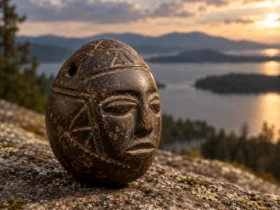
    A dark, egg-shaped stone found near Lake Winnipesaukee, New Hampshire, in 1872. It is carved with a human face, ears of corn, arrowheads and moons, and has holes drilled through both ends. Who made it, when and why remain unknown.

  5. 1872
    Mysteries & Phenomena ★★★★★ United States

    Mary Celeste

    A sailing ship found drifting in the Atlantic in 1872. Its cargo and food were still aboard, but the captain's family and the entire crew had vanished. It is history's most famous "ghost ship" mystery.

  6. Late 19th century
    Ancient Civilizations ★★★★★ Underground (legendary)

    Agartha

    A legendary underground world said to spread through the interior of the Earth. People with an advanced civilization are said to live there, with a capital called Shambhala. It spread through the writings of a 19th-century mystic.

  7. 1876 (said to be the first use of the term)
    Mysteries & Phenomena ★★★★★ France

    Deja Vu

    The strange feeling of strongly sensing "this has happened before" in a place you are visiting for the first time or during a new experience. It means "already seen" in French. Many people are said to experience it, and it is sometimes linked with memories of past lives or precognitive dreams.

  8. 1884 (described)
    Confirmed Cryptids ★★★★★ Deep seas worldwide

    Frilled Shark

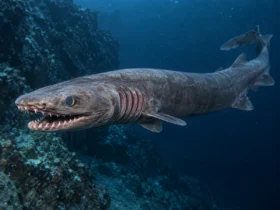
    A deep-sea shark that retains a primitive form. Long and slender like an eel, it has been suggested as the true identity of sea serpents. It was described as a new species in 1884 from specimens from Sagami Bay, Japan.

  9. Meiji era onward
    Urban Legends ★★★★★ Japan

    Kokkuri-san

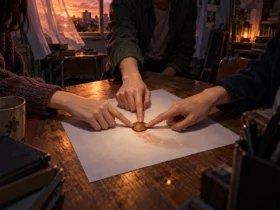
    A form of divination and spirit summoning in which a 10-yen coin moves across a sheet of written characters to answer questions. It became popular when Western "table turning" reached Japan in the Meiji era, and it was a huge craze among children in the 1970s.

  10. Around 1890
    Cryptids ★★★★★ Australia

    Moha-moha

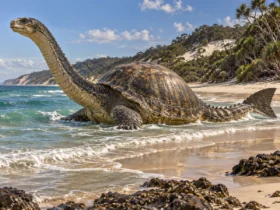
    A sea cryptid said to have been sighted around the Great Barrier Reef in Australia, with a turtle-like body, a long neck and a fish-like tail. A sighting was reported to a museum at the end of the 19th century.

  11. 1891 (recorded)
    Spirits & Fairies ★★★★★ United Kingdom

    Yallery Brown

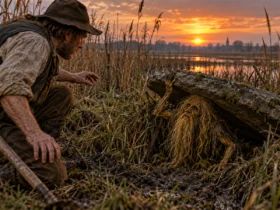
    A small, wrinkled fairy in a folktale from Lincolnshire, England. He repays the young man who helps him, but because the young man breaks the promise "never thank me," he brings him misfortune for the rest of his life.

  12. 18th century (panic) / 1897 (Dracula)
    Mysteries & Phenomena ★★★★★ Europe

    Vampires

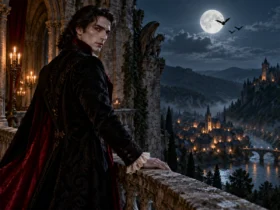
    The dead said to rise from their graves at night and drink human blood. Derived from Eastern European folklore, they caused a "vampire panic" in the 18th century. Bram Stoker's novel Dracula fixed today's image.

  13. Late 19th century (appeared on the market)
    OOPArts ★★★★★ Mexico (claimed)

    Crystal Skulls

    Rock crystal carved into the shape of a human skull. Presented as relics of the ancient Maya or Aztecs, they inspired legends such as "when thirteen are gathered, humanity's secrets will be revealed." Studies by the British Museum and others found marks of modern tools, and they are now thought to date from the 19th century or later.

  14. 1901 (discovered)
    Confirmed Cryptids ★★★★★ Democratic Republic of the Congo

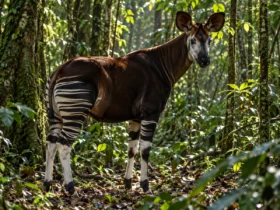
    Okapi

    A relative of the giraffe with zebra-like stripes. Rumored as a "phantom animal" of the Congo rainforest, it was discovered in 1901. It is one of the world's three great rare animals.

  15. 1902
    Mysteries & Phenomena ★★★★★ United Kingdom

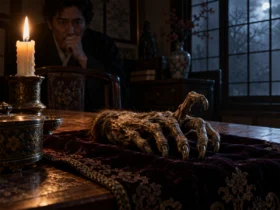
    The Monkey's Paw

    A mummified monkey's paw that grants its owner three wishes, but at a terrible price. It is world-famous from the 1902 horror short story by the English writer W. W. Jacobs.

  16. Late 19th to early 20th century
    Urban Legends ★★★★★ Europe and America (influenced by Indian thought)

    Akashic Records

    A "library of cosmic memory" said to record every event since the beginning of the universe, down to people's thoughts and feelings. Talked about in 19th-century Theosophy, it spread in the spiritual world as a way to learn about past lives and the future. There is no scientific support for it.

  17. 18th century (legend); 1909
    Cryptids ★★★★★ United States

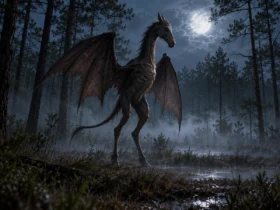
    Jersey Devil

    A monster of the New Jersey forests with a horse-like head and bat wings. The legend dates back to the 18th century, and a wave of sightings swept the region in 1909.

  18. 1910s (living animal captured)
    Confirmed Cryptids ★★★★★ Liberia

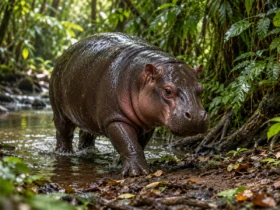
    Pygmy Hippopotamus

    A small hippopotamus of the forests of West Africa. Its skull was known in the 19th century, but its living form was a mystery and it was considered a "phantom animal" until one was captured in the early 20th century. It is one of the world's three great rare animals, with the okapi and giant panda.

  19. 1910 (confirmed)
    Confirmed Cryptids ★★★★★ Indonesia

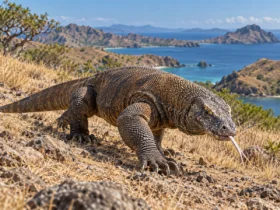
    Komodo Dragon

    The world's largest lizard, living on islands in Indonesia. It was told of in rumors as a "land crocodile," confirmed by Europeans in 1910 and described as a new species in 1912.

  20. Recorded in the Meiji period (The Legends of Tono, 1910)
    Yokai ★★★★★ Japan (Tono area, Iwate Prefecture)

    Mayoiga

    A grand, empty mansion said to be found by people lost in the mountains; taking something from it is said to bring good fortune. Yanagita Kunio's The Legends of Tono includes the story of a woman who became wealthy thanks to a red bowl that floated down the river from it.

  21. 1917
    Spirits & Fairies ★★★★★ United Kingdom

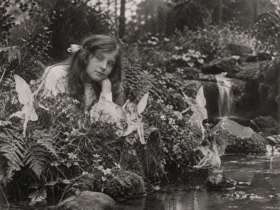
    Cottingley Fairies

    "Photos with fairies" taken by two girls in the English village of Cottingley in 1917. Arthur Conan Doyle, creator of Sherlock Holmes, presented them as genuine, sparking great controversy, but in 1983 the two confessed they had used cut-out drawings.

  22. 1920s–1950s
    Cryptids ★★★★★ Nepal

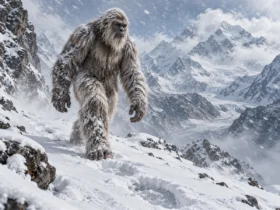
    Yeti

    A large, hairy, ape-like "snowman" said to live in the Himalayas. It became world-famous with a footprint photograph in 1951. Recent DNA studies have found that most samples attributed to it came from bears.

  23. Taisho era
    Mysteries & Phenomena ★★★★★ Japan (Hokkaido)

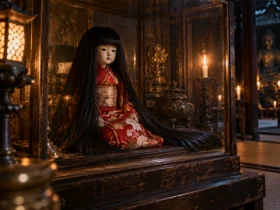
    Okiku Doll

    A Japanese doll kept at Mannenji Temple in Iwamizawa, Hokkaido, whose hair is said to grow. It belonged to Kikuko, a little girl who died young, and after her death the doll's bobbed hair began to grow, it is said. It is one of the most famous mysterious dolls in Japan.

  24. 1920s (introduced to the West)
    Cryptids ★★★★★ Zambia

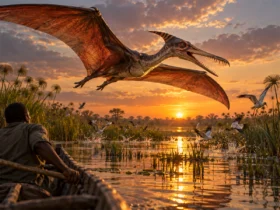
    Kongamato

    A pterosaur-like flying cryptid told of in the wetlands of Zambia in southern Africa. Its name is said to mean "overwhelmer of boats" in a local language. It was introduced in a book by an Englishman in the 1920s.

  25. 1920s
    Ancient Civilizations ★★★★★ Pacific Ocean

    Pacifis

    A phantom continent hypothesized to have once existed in the middle of the Pacific Ocean. Proposed in the 1920s to explain the shared culture of the Polynesian islands, it has no geological evidence and has been rejected.

  26. Late 19th century to the 1920s
    Ancient Civilizations ★★★★★ Pacific Ocean

    Mu (Lost Continent)

    A phantom continent said to have existed in the Pacific and sunk into the sea along with its advanced civilization. It became known worldwide through books written in the early 20th century.

  27. 1920s (introduced to the West)
    Cryptids ★★★★★ Mongolia

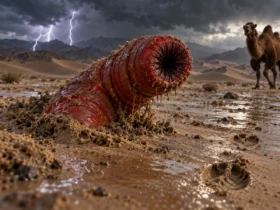
    Mongolian Death Worm

    A cryptid like a thick red worm said to live in the Gobi Desert of Mongolia. Locally called "olgoi-khorkhoi," it is feared for killing people by spitting venom or discharging electricity.

  28. Edo period (custom) / 1921 (song)
    Urban Legends ★★★★★ Japan

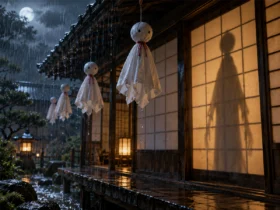
    Teru Teru Bozu

    An urban legend about the doll hung from the eaves to wish for sunny weather, and the children's song about it. Because the song's third verse says the doll's head will be cut off if it doesn't clear up, frightening stories about its origin are told.

  29. 1922 (song published)
    Urban Legends ★★★★★ Japan (Kanagawa Prefecture)

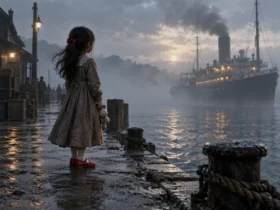
    The Girl in Red Shoes (Akai Kutsu)

    An urban legend about the children's song "Akai Kutsu" (Red Shoes). There are rumors that the girl taken away by a foreigner was kidnapped, or that the "foreigner" in the lyrics was really a "great-grandfather." A sad true story is told about the girl said to be its model.

  30. 1920s (first appearance in fiction)
    Mysterious Books ★★★★★ United States

    Necronomicon

    A fictional grimoire created by the American horror writer H. P. Lovecraft in his stories. A forbidden book written by the mad Arab Abdul Alhazred, it is said to drive its readers insane. It became a central item of the Cthulhu Mythos, and fake books claiming to be "the real thing" have even been published.
  31. 1928 (made public)
    Ancient Civilizations ★★★★★ Japan

    Takeuchi Documents (Takeuchi Monjo)

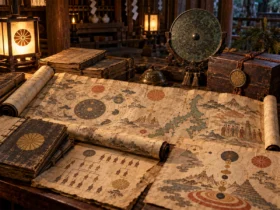
    Ancient documents said to have been handed down in the Takeuchi family of Ibaraki Prefecture. They describe super-ancient dynasties before Emperor Jimmu and a story that Christ died in Japan. Made public in 1928, they are considered modern forgeries.
  32. 1929 (described)
    Confirmed Cryptids ★★★★★ Democratic Republic of the Congo

    Bonobo

    An ape very similar to the chimpanzee. Long not distinguished from chimpanzees, it was recognized as a different animal from a museum skull only in 1929. We explain the story of "the last ape to be discovered."

  33. 1930s (early Showa era)
    Urban Legends ★★★★★ Japan

    Aka Manto (Red Cape)

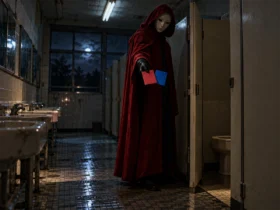
    A rumor of a sinister figure in a red cape who kidnaps children. It spread in Tokyo in the early Showa era and caused an uproar. Later it changed into a school toilet ghost story in which a voice asks, "Red cape or blue cape?"

  34. 1930s
    Cryptids ★★★★★ Canada

    Caddy (Cadborosaurus)

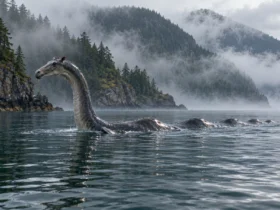
    A sea-serpent-type cryptid sighted off the coast of British Columbia on Canada's west coast. It was named by a newspaper in the 1930s, and a photo survives of a carcass said to have been found in a whale's stomach. Its identity is debated.

  35. 1930s (older legends from around the 6th century)
    Cryptids ★★★★★ United Kingdom (Scotland)

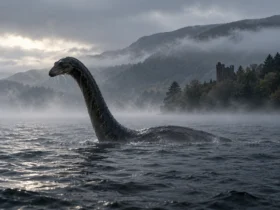
    Nessie (Loch Ness Monster)

    A long-necked monster said to live in Loch Ness, Scotland. Sightings increased from the 1930s, making it one of the most famous cryptids in the world.

  36. 1938 (discovered)
    Confirmed Cryptids ★★★★★ South Africa

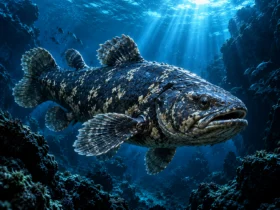
    Coelacanth

    An ancient fish thought to have gone extinct about 66 million years ago. A living one was found off South Africa in 1938, astonishing the world; it is the classic "living fossil." We explain how it was discovered.

  37. 1930s (became known) / Cretaceous period (tracks)
    OOPArts ★★★★★ United States

    Paluxy "Man Tracks"

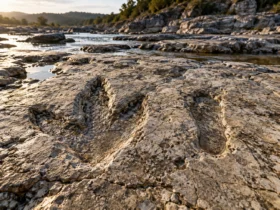
    Fossil dinosaur footprints from the Cretaceous on the bed of the Paluxy River in Texas. Some claimed giant human-like footprints beside them proved dinosaurs and humans coexisted. Research has shown they are elongated dinosaur tracks or fakes carved later.

  38. Recorded in the early Showa era (Yanagita Kunio's "Yokai Meii")
    Yokai ★★★★★ Japan (Nara Prefecture)

    Betobeto-san

    A yokai told of in Nara Prefecture and elsewhere: when you walk alone on a night road, "beto beto" footsteps follow you from behind. It is said that if you step to the side of the road and say "Betobeto-san, please go ahead," the footsteps disappear.

  39. 1940s
    Spirits & Fairies ★★★★★ United Kingdom

    Gremlin

    A little creature said to tamper with aircraft machinery and cause breakdowns, talked about among Royal Air Force pilots during World War II. It became world-famous through Roald Dahl's book and the 1984 film.

  40. 1943 (claimed)
    Urban Legends ★★★★★ United States

    Philadelphia Experiment

    An urban legend that in 1943 the U.S. Navy conducted a secret experiment to make the destroyer USS Eldridge invisible, and that the ship vanished, teleported to another port, and crew members ended up fused into the walls. The Navy says no such experiment took place.

  41. 1940s (collected)
    OOPArts ★★★★★ Mexico

    Acambaro Figures

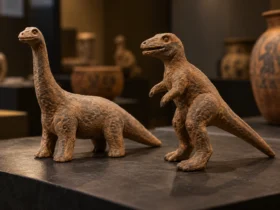
    More than 30,000 clay figures collected in Acambaro, Mexico, in the 1940s by the German-born businessman Waldemar Julsrud. Many look just like dinosaurs, and they were hailed as evidence that dinosaurs and humans coexisted, but most archaeologists think they were made in modern times.
  42. 1944–1945
    UFOs ★★★★★ United States

    Foo Fighters

    Mysterious balls of light seen by Allied pilots during World War II, which seemed to follow their aircraft. Suspected of being new enemy weapons, they remained unexplained.

  43. Recorded in modern folklore sources
    Yokai ★★★★★ Japan (Tokushima Prefecture)

    Konaki-jijii

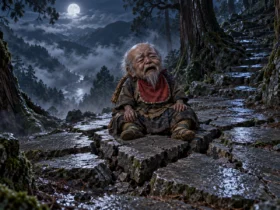
    A yokai that looks like an old man yet cries like a baby on mountain roads at night. If you feel sorry for it and pick it up, it clings to you and grows heavier and heavier, and some say it takes your life. It is told of in the mountains of Tokushima Prefecture and became famous as one of Kitaro's allies in the manga GeGeGe no Kitaro.

  44. Recorded in modern folklore sources
    Yokai ★★★★★ Japan (Nara, Hyogo and Shiga Prefectures)

    Sunakake-babā

    A yokai that startles people passing through deserted woods or near shrines by sprinkling sand on them from nowhere. It is told of in Nara, Hyogo and Shiga Prefectures. No one has ever seen it, but it became famous as an old woman in the manga GeGeGe no Kitaro. Some say it is the work of tanuki.