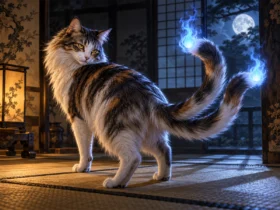
Nekomata
A yokai said to be a cat that has lived so long that its tail has split in two. It appears in the Kamakura-period classic Essays in Idleness, and is described both as a wild beast of the mountains and as a pet cat that transforms.
Mystery Timeline|1185–1602
Yokai and strange tales from the age of the samurai, alongside the mysterious books and legends of medieval Europe, from the Kamakura period to the Warring States era.
A yokai said to be a cat that has lived so long that its tail has split in two. It appears in the Kamakura-period classic Essays in Idleness, and is described both as a wild beast of the mountains and as a pet cat that transforms.
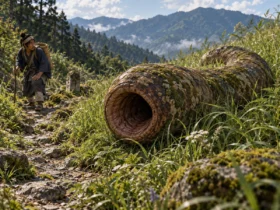
A yokai said to live in the mountains and fields, with no eyes or nose, only a big mouth. It is said to roll down slopes to attack people. It is also known as one of the old names of the tsuchinoko.
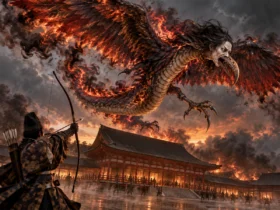
A monstrous bird that eerily cries "itsumade, itsumade" ("until when, until when"). The Taiheiki tells of one appearing over the palace in a year of epidemic and being shot down by a master archer. Toriyama Sekien named it "Itsumade" and drew it.
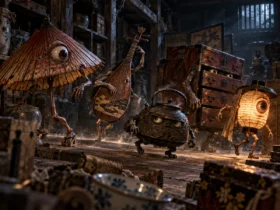
Tools and objects that have acquired a spirit after many years and become yokai. Tools used for a hundred years are said to transform. They are depicted in the Muromachi-period Tsukumogami-ki and in "night parade of a hundred demons" scrolls.
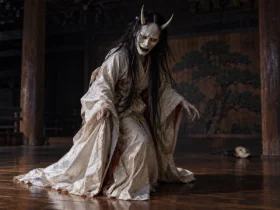
A Noh mask showing the face of a woman turned into a demon by jealousy and resentment, with two horns and a wide, gaping mouth. It is used in plays such as Aoi no Ue, which depicts the living spirit of Lady Rokujo from The Tale of Genji.
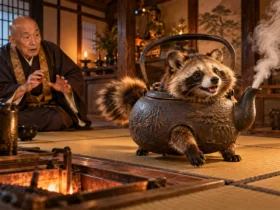
The legend of a magical tea kettle at Morinji Temple in Tatebayashi, Gunma Prefecture, that never ran out of hot water however much was drawn from it. The monk who used it turned out to be a tanuki. It later spread as the folktale of a tanuki that turned into a tea kettle and walked a tightrope.
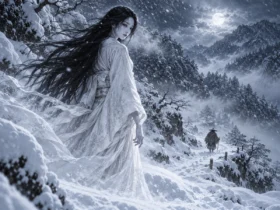
A beautiful female yokai in a white kimono who appears on snowy nights and freezes people with her icy breath. The version in Lafcadio Hearn's Kwaidan is the most famous, and legends of her are told throughout Japan's snow country.
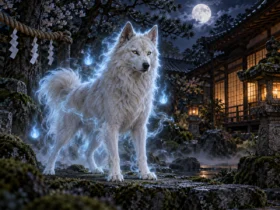
A dog-spirit possession believed to cause illness and misfortune. Belief in it was strongest in Shikoku, Chugoku and Kyushu, and there was also a folk belief that it was attached to certain families for generations, which caused discrimination.
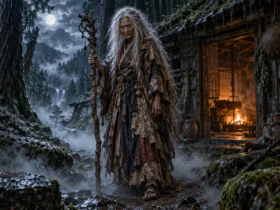
An old woman yokai who lives deep in the mountains. She is told of as a terrifying hag who eats people, yet she also appears as a mountain goddess and as the mother of Kintaro. She is familiar from folktales such as "The Three Charms."