1. Around 1600 BC (Bronze Age)
    OOPArts ★★★★★ Germany

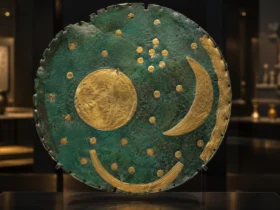
    Nebra Sky Disc

    A bronze disc about 32 cm across, found near Nebra, Germany, with the sun (or full moon), a crescent moon and stars depicted in gold. Dated to around 1600 BC in the Bronze Age, it is one of the oldest concrete depictions of the cosmos in the world. The story from looting to recovery also drew attention.
  2. Around the 8th century BC
    OOPArts ★★★★★ Iraq (ancient Assyria)

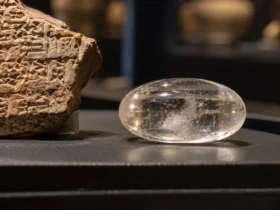
    Nimrud Lens

    A piece of rock crystal from around the 8th century BC, found in 1850 in the palace ruins of Nimrud, a capital of ancient Assyria in today's Iraq. Because it works like a convex lens, it was hailed as an ancient magnifying glass or telescope. It is held at the British Museum. Some see it as part of an ornament.

  3. 2nd–1st century BC
    OOPArts ★★★★★ Greece

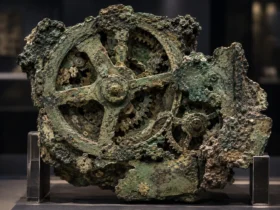
    Antikythera Mechanism

    A bronze geared device from around the 2nd–1st century BC, recovered in 1901 from a shipwreck off the Greek island of Antikythera. An astronomical calculator that could predict the movements of the sun and moon and eclipses, it is called "the world's oldest computer." It is a genuine ancient artifact.

  4. Around the 1st century BC (late Ptolemaic period)
    OOPArts ★★★★★ Egypt

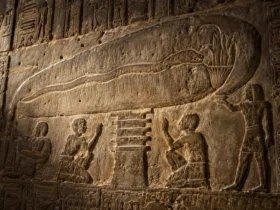
    Dendera Light

    A relief carved on the wall of a crypt in the Temple of Hathor at Dendera, Egypt, that looks like a giant light bulb. It was hailed as "proof of electricity in ancient Egypt," but Egyptologists read it as a mythological scene of a snake born from a lotus flower.