1. c. 2000 BC (Sumerian tales)
    Divine & Mythical Beasts ★★★★★ Iraq (ancient Mesopotamia)

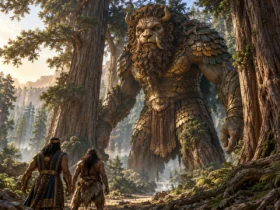
    Humbaba

    The monstrous guardian of the Cedar Forest in the Epic of Gilgamesh of ancient Mesopotamia. Ordered by the god Enlil to guard the forest, he had a terrifying face and seven radiant auras. He was slain by the hero Gilgamesh and his friend Enkidu.
  2. 2nd millennium BC (Enuma Elish)
    Divine & Mythical Beasts ★★★★★ Iraq (ancient Mesopotamia)

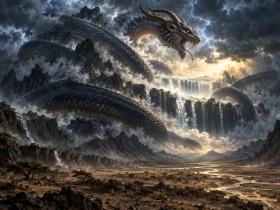
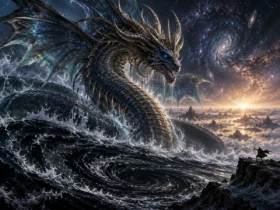
    Tiamat

    The primordial goddess of the sea in the Babylonian creation myth Enuma Elish. She created an army of monsters and fought the young gods, but was defeated by the hero god Marduk, who split her body in two to make heaven and earth.

  3. Around the 14th century BC (ancient Egypt)
    Divine & Mythical Beasts ★★★★★ Egypt

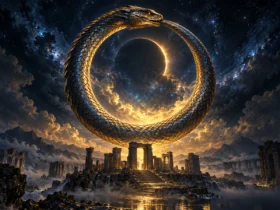
    Ouroboros

    The image of a serpent (or dragon) that forms a circle by biting its own tail. Originating in ancient Egypt, it was handed down in alchemy and Gnosticism. Having no beginning and no end, it symbolizes infinity, eternity, and death and rebirth.

  4. c. 1200 BC (Rigveda)
    Divine & Mythical Beasts ★★★★★ India

    Vritra

    A giant serpent (dragon) in the Rigveda, the sacred text of ancient India. It dammed up the world's waters and brought drought, but was struck down by the thunder god Indra with his vajra. Its name is said to mean "the one who covers."

  5. c. 8th century BC (Homer's Odyssey)
    Divine & Mythical Beasts ★★★★★ Greece

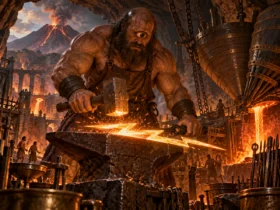
    Cyclops

    Giants in Greek mythology with a single eye in the middle of the forehead. They are told of as master smiths who made Zeus's thunderbolts, while in the Odyssey the cyclops Polyphemus is a man-eating giant who captures and eats the hero Odysseus's men.

  6. c. 8th–7th century BC (Hesiod's Theogony)
    Divine & Mythical Beasts ★★★★★ Greece

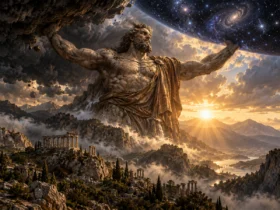
    Titans

    The race of giant gods who ruled the world before the Olympian gods in Greek mythology. Children of the sky god Uranus and the earth goddess Gaia, they were led by Cronus. They lost the ten-year war against Zeus and his siblings known as the Titanomachy.

  7. c. 8th–7th century BC (Hesiod's Theogony)
    Divine & Mythical Beasts ★★★★★ Greece

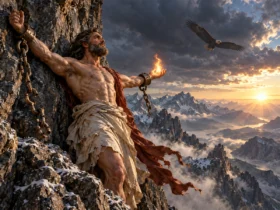
    Prometheus

    A Titan god of Greek mythology who stole the fire of the gods and gave it to humans, bringing civilization. As punishment, the angry Zeus chained him to a mountain where a great eagle pecked at his liver every day, until he was rescued by the hero Heracles.

  8. 5th–4th century BC (record by Ctesias)
    Divine & Mythical Beasts ★★★★★ Europe (ancient Greek records)

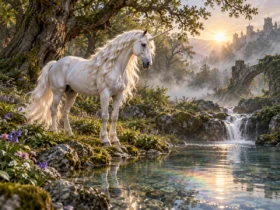
    Unicorn

    A horse-like creature with a single long horn on its forehead. It appears in ancient Greek records, and in medieval Europe it was a holy beast that only a pure maiden could capture. Its horn was believed to neutralize poison and was traded at high prices.

  9. Ancient India (Puranas, etc.)
    Divine & Mythical Beasts ★★★★★ India

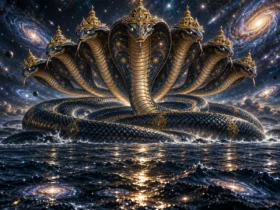
    Ananta

    The king of serpents with countless heads in Indian mythology, also called Shesha. He serves as the bed on which the god Vishnu sleeps in the primordial ocean and is said to support the world. His name means "endless."

  10. Ancient Greece
    Divine & Mythical Beasts ★★★★★ Greece (Lycia in Asia Minor)

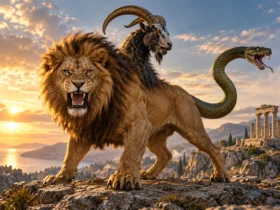
    Chimera

    A monster of Greek mythology with a lion's head, a goat's body and a serpent's tail, which breathes fire. It ravaged Lycia in Asia Minor but was slain by the hero Bellerophon riding the winged horse Pegasus. It is the origin of the word "chimera," a combination of different creatures.

  11. Ancient Greece
    Divine & Mythical Beasts ★★★★★ Greece

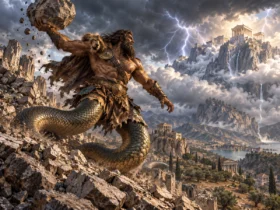
    Gigantes

    The race of giants in Greek mythology. Born from Gaia, goddess of the earth, they challenged the Olympian gods to battle (the Gigantomachy). The gods won with the help of the human hero Heracles. They are said to be the origin of the English word "giant."

  12. Medieval period (Norse mythology)
    Divine & Mythical Beasts ★★★★★ Scandinavia

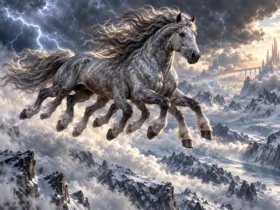
    Sleipnir

    The eight-legged grey divine horse ridden by Odin, chief god of Norse mythology. The fastest of all horses, it races across sky, land and sea and can even go to the land of the dead. It is also a child of the trickster god Loki.

  13. Ancient India onward
    Divine & Mythical Beasts ★★★★★ India

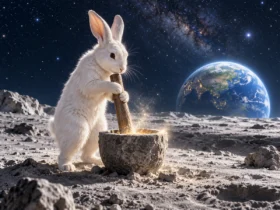
    The Moon Rabbit (Tsuki no Usagi)

    The tradition of seeing a rabbit in the markings of the moon. In Japan it pounds rice cakes (mochi); in China it makes the elixir of immortality. An Indian Buddhist tale says a rabbit that offered itself was painted on the moon.

  14. Ancient times (the Bible) to the Middle Ages
    Divine & Mythical Beasts ★★★★★ Middle East and Europe (Christianity)

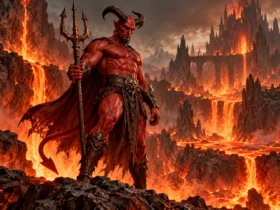
    The Devil

    In Christianity, the leader of evil who opposes God and tempts people toward evil. Also called Satan or Lucifer, he is said to have originally been an angel serving God who was cast out of heaven for his pride, a "fallen angel." The image with horns, a tail and bat wings became established in art from the Middle Ages on.

  15. Ancient Greece to the Middle Ages
    Divine & Mythical Beasts ★★★★★ Greece (Europe)

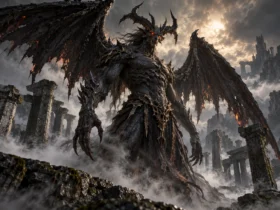
    Demon

    A word for devils and evil spirits. It comes from the ancient Greek "daimon," a spiritual being between gods and humans. As Christianity spread, it came to mean evil spirits opposed to God, and it often refers to the many devils who serve Satan (the Devil), leader of the fallen angels.

  16. Ancient India onward
    Divine & Mythical Beasts ★★★★★ India

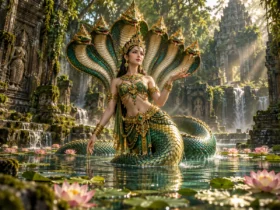
    Naga

    Serpent gods and spirits of Indian mythology, depicted as human above and snake below, or as a cobra with many heads. In Buddhism they became protectors of the Dharma, and in China and Japan they were translated as "dragons."

  17. Old Testament (BC)
    Divine & Mythical Beasts ★★★★★ Ancient Israel

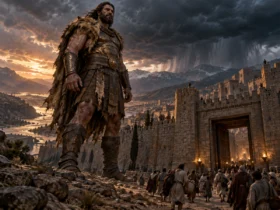
    Nephilim

    Mysterious giants in Genesis and other books of the Old Testament. They are said to be the children of the "sons of God" and human daughters, and in the Book of Enoch they are the children of fallen angels. Said to have been destroyed by Noah's Flood, they are a subject of giant legends.

  18. Medieval period (Norse mythology)
    Divine & Mythical Beasts ★★★★★ Scandinavia

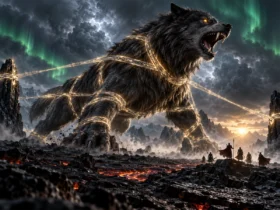
    Fenrir

    A giant wolf in Norse mythology, the son of the god Loki. Feared by the gods, he was bound with the magic fetter Gleipnir. He is foretold to swallow the chief god Odin at Ragnarok, the end of the world.

  19. Ancient Greece
    Divine & Mythical Beasts ★★★★★ Greece

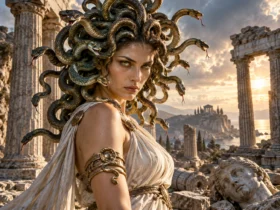
    Medusa

    One of the three Gorgon sisters of Greek mythology. Her hair is a mass of snakes, and anyone who looks into her eyes is turned to stone. The hero Perseus cut off her head, and from her blood the winged horse Pegasus was born. Her head was placed on the goddess Athena's shield to ward off evil.

  20. 13th century (recorded in the Eddas)
    Divine & Mythical Beasts ★★★★★ Scandinavia (Icelandic records)

    Ymir

    In Norse mythology, the primordial giant who appeared first, before the world was born. Ancestor of the frost giants, he was killed by Odin and his two brothers, and the world, including earth, sea, sky and mountains, was made from his body.

  21. 13th century (recorded in the Eddas)
    Divine & Mythical Beasts ★★★★★ Scandinavia (Icelandic records)

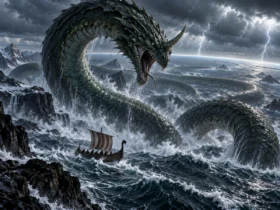
    Jormungandr (Midgard Serpent)

    A serpent in Norse mythology so huge it encircles the world. A child of the evil god Loki and brother of Fenrir, he was thrown into the sea and grew until he surrounded the human world, biting his own tail. At Ragnarok, the final battle, he and the thunder god Thor kill each other.

  22. Old Testament (BC)
    Divine & Mythical Beasts ★★★★★ Ancient Israel

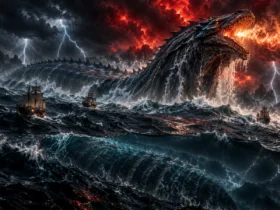
    Leviathan

    A giant sea monster in the Old Testament. Described as the mightiest creature God made, it breathes fire, and no weapon can harm it. It was later linked with demons and became the title of Hobbes's work of political philosophy.