1. Ancient China (BC)
    Yokai ★★★★★ China

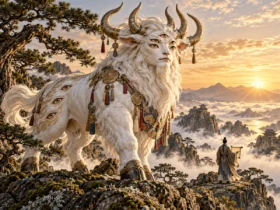
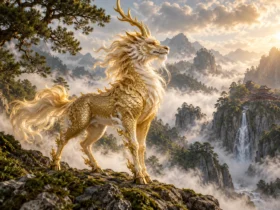
    Kirin (Qilin)

    An auspicious sacred beast of Chinese legend said to appear when a wise ruler arises. With the body of a deer, the tail of an ox and the hooves of a horse, it is said to be so gentle it will not even step on insects. It also gave its name to the giraffe in Japanese.
  2. Eastern Han (2nd century) / Romance of the Three Kingdoms c. 14th century
    Mysterious Books ★★★★★ China

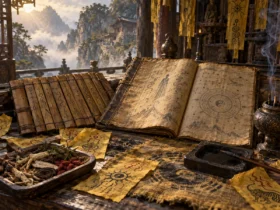
    Taiping Yaoshu (Book of the Way of Peace)

    A book of sorcery that Zhang Jiao, who started the Yellow Turban Rebellion, is said to have received from an immortal in the novel Romance of the Three Kingdoms. It was said to contain arts for summoning wind and rain. Its model is thought to be the Taiping Jing (Taiping Qingling Shu), a Taoist scripture that actually existed in the Eastern Han period.

  3. Ancient times (around the 3rd century AD) to the 17th century
    Mysteries & Phenomena ★★★★★ Egypt (Alexandria)

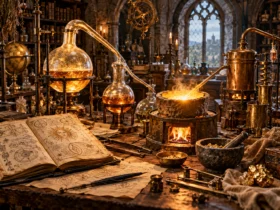
    Alchemy

    An art and philosophy from ancient to early modern times that sought to turn base metals such as lead into gold and to make an elixir of immortality. Born in Alexandria, Egypt, it developed in Europe by way of the Islamic world. It never achieved its goals, but its laboratory techniques became the foundation of modern chemistry.

  4. 4th–5th century (Gupta Empire)
    OOPArts ★★★★★ India

    Iron Pillar of Delhi

    An iron pillar about 7 m tall standing at the Qutub Minar complex in Delhi, a World Heritage site. Said to have been made in the Gupta era of the 4th–5th centuries, it is known as the "rustless iron pillar" because it has barely rusted in over 1,600 years. In Japan it is also called the "Ashoka Pillar."

  5. 7th century (first recorded in the Nihon Shoki)
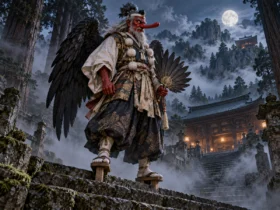
    Yokai ★★★★★ Japan

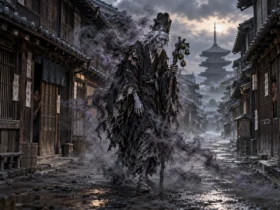
    Tengu

    One of Japan's best-known yokai: a red-faced, long-nosed figure dressed as a mountain ascetic who flies through the sky. Tied to mountain gods and the Shugendo faith, it is linked with sacred mountains across Japan.

  6. 7th century (King Pakal died in 683)
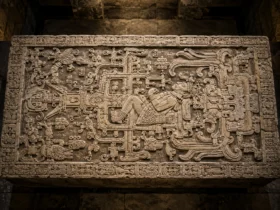
    OOPArts ★★★★★ Mexico (Maya civilization)

    Palenque Sarcophagus Lid (Pakal's Tomb)

    The carved lid of the 7th-century sarcophagus of King Pakal, found in 1952 beneath the Temple of the Inscriptions at the Maya site of Palenque, Mexico. It caused a stir because the figure seems to be piloting a rocket. Mayanists read it as a scene of the king's death and rebirth.

  7. Nihon Shoki (720)
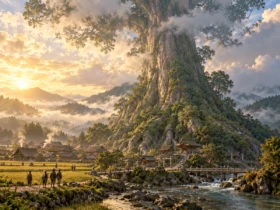
    Urban Legends ★★★★★ Japan (Fukuoka Prefecture)

    Miki no Kuni (The Land of the Giant Tree)

    A place in Chikugo, Kyushu, recorded in the Nihon Shoki as the site of a gigantic fallen tree. The tree was 970 jo (about 3 km) long; its shadow in the morning sun covered Mount Kishima in Saga, and in the evening sun Mount Aso in Kumamoto. It is said to be the origin of the place name Miike in Omuta, Fukuoka Prefecture.

  8. Nara period (Fudoki) onward
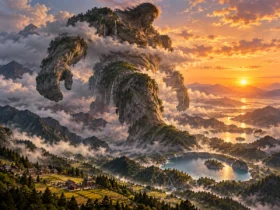
    Yokai ★★★★★ Japan

    Daidarabotchi

    Legends of a giant said to have made mountains and lakes, told all over Japan. He is said to have made Mount Fuji or dug Lake Biwa, and hollows and ponds said to be his footprints remain in many places. He is also said to be the origin of the place name Daita in Tokyo.

  9. Nara period (Kojiki, Nihon Shoki and Fudoki)
    Yokai ★★★★★ Japan

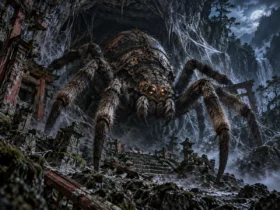
    Tsuchigumo (Earth Spider)

    A yokai known as a giant spider. Originally, in the ancient chronicles and provincial records, "tsuchigumo" was a name for local peoples who would not submit to the imperial court. The legend of Minamoto no Raiko slaying the earth spider is famous.

  10. Nara period (Kojiki and Nihon Shoki)
    Divine & Mythical Beasts ★★★★★ Japan

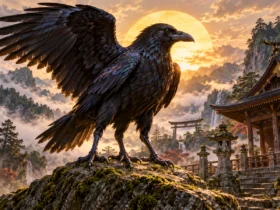
    Yatagarasu

    A great crow from Japanese mythology that guided Emperor Jimmu from Kumano to Yamato. Usually shown with three legs and revered as a messenger of the gods of Kumano, it is also famous as the symbol of the Japan Football Association.

  11. Nara period (Kojiki and Nihon Shoki)
    Divine & Mythical Beasts ★★★★★ Japan

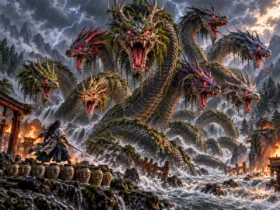
    Yamata no Orochi

    A gigantic serpent with eight heads and eight tails. Described in the Kojiki and Nihon Shoki, it was slain by the god Susanoo after being made drunk on sake, and the sword Kusanagi was found in its tail. It is the most famous monster of the Izumo myths.

  12. Ancient times onward
    Yokai ★★★★★ Japan

    Amanojaku

    A little demon that reads people's hearts and deliberately does the opposite to make mischief. It is linked with the imps trampled underfoot by guardian statues, and its name became the word for a contrary person.

  13. Around AD 500–800 (disputed)
    OOPArts ★★★★★ Colombia

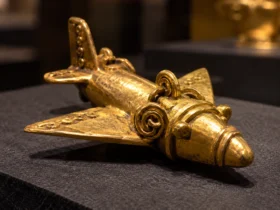
    Golden Space Shuttle (Quimbaya Airplanes)

    Small gold ornaments found at ancient sites in Colombia that look just like airplanes or the space shuttle. Because they have parts like wings and tail fins, they were hailed as proof of ancient aircraft. The leading view is that they are ornaments shaped like fish, birds or other animals.

  14. Ancient times onward
    Yokai ★★★★★ Japan

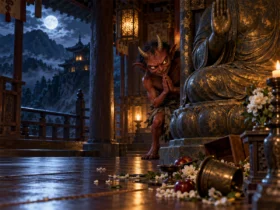
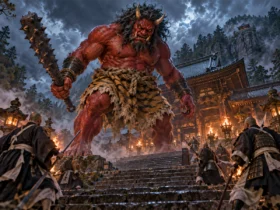
    Oni

    The quintessential Japanese yokai, with horns on its head and a tiger-skin loincloth. It is familiar from the Setsubun bean-throwing festival and the folktale Momotaro. Its appearance is said to come from the "ushitora" direction of the demon gate.

  15. Ancient China onward
    Divine & Mythical Beasts ★★★★★ China

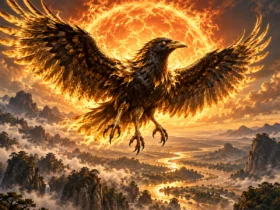
    Kin'u (The Golden Crow)

    A three-legged crow said in Chinese mythology to live in the sun. It is a symbol of the sun itself and is paired with the rabbit of the moon. "Kin'u gyokuto" (golden crow, jade rabbit) means the sun and the moon, and by extension the passing years.

  16. Ancient China onward
    Divine & Mythical Beasts ★★★★★ China

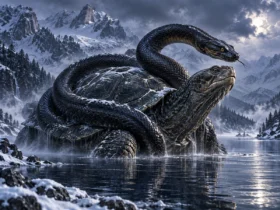
    Genbu (Black Tortoise)

    One of the Four Symbols, a sacred beast in the form of a tortoise entwined with a snake that guards the north. It governs winter and the element of water. Genbudo Cave in Hyogo Prefecture is named after it, and the cave in turn gave its name to basalt (genbugan).

  17. Around AD 300–1500 (Diquis culture)
    OOPArts ★★★★★ Costa Rica

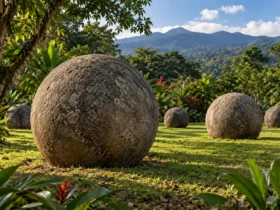
    Stone Spheres of Costa Rica

    More than 300 stone spheres found in southern Costa Rica, Central America. The smallest are a few centimeters across, the largest over 2 m, weighing more than ten tons. Thought to have been made by the Diquis culture around AD 300–1500, they were inscribed as a World Heritage site in 2014.

  18. Ancient times onward
    Yokai ★★★★★ Japan

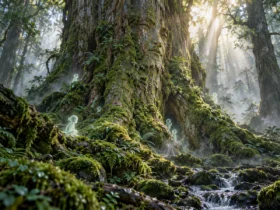
    Kodama (Tree Spirit)

    A spirit said to dwell in old trees. The echo heard in the mountains (kodama or yamabiko) was thought to be the voice of these spirits answering. Cutting down a tree with a kodama is said to bring a curse.

  19. Ancient times (recorded in the Nihon Shoki and Fudoki) onward
    Yokai ★★★★★ Japan (Kumamoto Prefecture)

    Shiranui

    Mysterious lights that appear far out on the Yatsushiro Sea and Ariake Sea in Kyushu around the night of the first day of the eighth lunar month, multiplying into thousands of fires lined up in a row. They are recorded as far back as the Nihon Shoki. Today they are thought to be a kind of mirage in which the lights of fishing boats are bent by temperature differences in the air.

  20. Ancient China onward
    Divine & Mythical Beasts ★★★★★ China

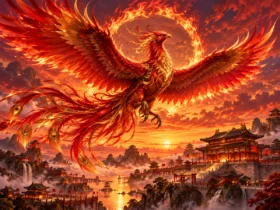
    Suzaku (Vermilion Bird)

    One of the Four Symbols, a sacred beast in the form of a red bird that guards the south. It governs summer and the element of fire. It is sometimes identified with the phoenix, and it gave its name to Suzaku Avenue, which ran through the center of the Heian capital.

  21. Ancient China onward
    Divine & Mythical Beasts ★★★★★ China

    Seiryu (Azure Dragon)

    One of the Four Symbols, a sacred beast in the form of a blue dragon that guards the east. It governs spring and the element of wood. It is painted on the walls of the Takamatsuzuka and Kitora tombs and was built into the plan of the Heian capital.

  22. Ancient China to the Edo period
    Divine & Mythical Beasts ★★★★★ China

    Hakutaku (Bai Ze)

    A legendary sacred beast of China that speaks human language and knows about every yokai and calamity in the world. In Edo-period Japan, pictures of it became popular as charms against illness and disaster.

  23. Ancient Celts (modern form 19th–20th century America)
    Mysteries & Phenomena ★★★★★ Ireland and Scotland (Celtic)

    Halloween

    A festival held on October 31. Its origin is said to be "Samhain," celebrated by the ancient Celts at the end of summer, when the spirits of the dead and monsters were thought to return to this world. Jack-o'-lanterns, costumes and trick-or-treating spread mainly in America.

  24. Parthian to Sasanian period (c. 3rd century BC to 7th century AD)
    OOPArts ★★★★★ Iraq

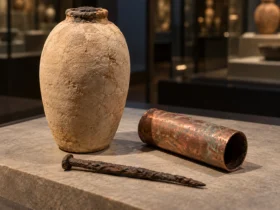
    Baghdad Battery

    An ancient clay jar containing a copper cylinder and an iron rod, found near Baghdad, Iraq. The "ancient battery" theory was published in 1938, and replicas producing a weak current made it famous. No wires have been found, and other uses such as storing scrolls are considered more likely.

  25. Ancient times onward
    Yokai ★★★★★ Japan

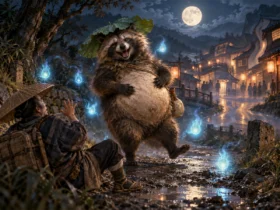
    Bake-danuki (Shapeshifting Tanuki)

    A tanuki (raccoon dog) yokai that tricks people and transforms into people and things. Legends of famous great tanuki abound in Shikoku and Sado, and it is beloved through folktales like Bunbuku Chagama and stories of tanuki drumming on their bellies.

  26. Ancient China onward
    Divine & Mythical Beasts ★★★★★ China

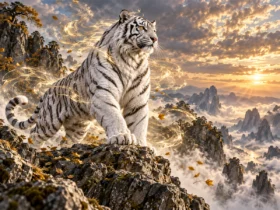
    Byakko (White Tiger)

    One of the Four Symbols, a sacred beast in the form of a white tiger that guards the west. It governs autumn and the element of metal. It is painted in the Kitora tomb and gave its name to the Byakkotai, the young samurai unit of the Aizu domain at the end of the Edo period.

  27. Ancient times onward
    Yokai ★★★★★ Japan

    Yakubyogami (God of Pestilence)

    A god or yokai said to bring epidemics. People of the past thought outbreaks of disease were the work of the god of pestilence and drove it away with festivals and rituals. It is also the origin of the word "yakubyogami" for a person who brings trouble.

  28. Ancient times onward
    Yokai ★★★★★ Japan

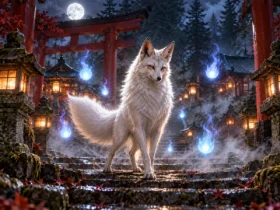
    Yoko (Fox Spirit)

    The general name for fox yokai that bewitch people or take human form. Foxes are said to grow more tails and power the longer they live. Both good foxes, revered as messengers of Inari, and bad foxes that possess people have been told of.

  29. Ancient times onward
    Divine & Mythical Beasts ★★★★★ China

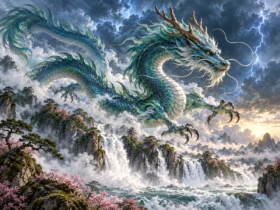
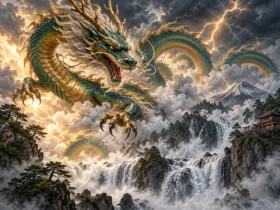
    Ryu (Japanese Dragon)

    A sacred creature with a long, snake-like body, horns and scales that governs water and rain. It came to Japan from China, where belief in the dragon god Ryujin, master of lakes, rivers and ponds, took deep root.

  30. Ancient times (Nihon Shoki)
    Yokai ★★★★★ Japan

    Ryomen Sukuna

    A being said to have one body with two faces and four arms and four legs. The Nihon Shoki describes him as a bandit who defied the imperial court and was killed, but in the Hida region he is remembered as a hero who founded temples.