1. Ancient China (BC)
    Yokai ★★★★★ China

    Kirin (Qilin)

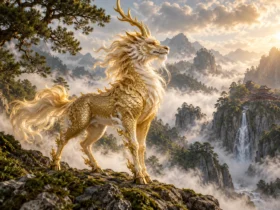
    An auspicious sacred beast of Chinese legend said to appear when a wise ruler arises. With the body of a deer, the tail of an ox and the hooves of a horse, it is said to be so gentle it will not even step on insects. It also gave its name to the giraffe in Japanese.
  2. 7th century (first recorded in the Nihon Shoki)
    Yokai ★★★★★ Japan

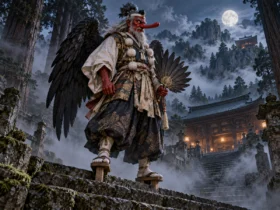
    Tengu

    One of Japan's best-known yokai: a red-faced, long-nosed figure dressed as a mountain ascetic who flies through the sky. Tied to mountain gods and the Shugendo faith, it is linked with sacred mountains across Japan.

  3. Nara period (Fudoki) onward
    Yokai ★★★★★ Japan

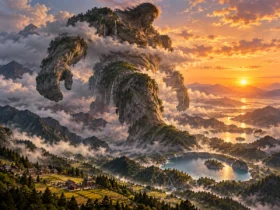
    Daidarabotchi

    Legends of a giant said to have made mountains and lakes, told all over Japan. He is said to have made Mount Fuji or dug Lake Biwa, and hollows and ponds said to be his footprints remain in many places. He is also said to be the origin of the place name Daita in Tokyo.

  4. Nara period (Kojiki, Nihon Shoki and Fudoki)
    Yokai ★★★★★ Japan

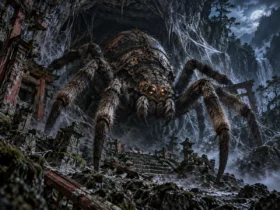
    Tsuchigumo (Earth Spider)

    A yokai known as a giant spider. Originally, in the ancient chronicles and provincial records, "tsuchigumo" was a name for local peoples who would not submit to the imperial court. The legend of Minamoto no Raiko slaying the earth spider is famous.

  5. Ancient times onward
    Yokai ★★★★★ Japan

    Amanojaku

    A little demon that reads people's hearts and deliberately does the opposite to make mischief. It is linked with the imps trampled underfoot by guardian statues, and its name became the word for a contrary person.

  6. Ancient times onward
    Yokai ★★★★★ Japan

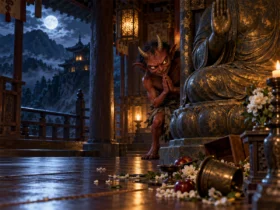
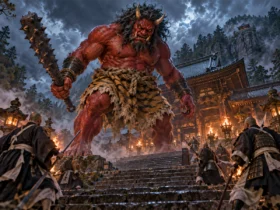
    Oni

    The quintessential Japanese yokai, with horns on its head and a tiger-skin loincloth. It is familiar from the Setsubun bean-throwing festival and the folktale Momotaro. Its appearance is said to come from the "ushitora" direction of the demon gate.

  7. Ancient times onward
    Yokai ★★★★★ Japan

    Kodama (Tree Spirit)

    A spirit said to dwell in old trees. The echo heard in the mountains (kodama or yamabiko) was thought to be the voice of these spirits answering. Cutting down a tree with a kodama is said to bring a curse.

  8. Ancient times (recorded in the Nihon Shoki and Fudoki) onward
    Yokai ★★★★★ Japan (Kumamoto Prefecture)

    Shiranui

    Mysterious lights that appear far out on the Yatsushiro Sea and Ariake Sea in Kyushu around the night of the first day of the eighth lunar month, multiplying into thousands of fires lined up in a row. They are recorded as far back as the Nihon Shoki. Today they are thought to be a kind of mirage in which the lights of fishing boats are bent by temperature differences in the air.

  9. Ancient times onward
    Yokai ★★★★★ Japan

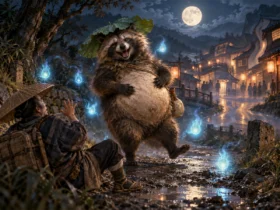
    Bake-danuki (Shapeshifting Tanuki)

    A tanuki (raccoon dog) yokai that tricks people and transforms into people and things. Legends of famous great tanuki abound in Shikoku and Sado, and it is beloved through folktales like Bunbuku Chagama and stories of tanuki drumming on their bellies.

  10. Ancient times onward
    Yokai ★★★★★ Japan

    Yakubyogami (God of Pestilence)

    A god or yokai said to bring epidemics. People of the past thought outbreaks of disease were the work of the god of pestilence and drove it away with festivals and rituals. It is also the origin of the word "yakubyogami" for a person who brings trouble.

  11. Ancient times onward
    Yokai ★★★★★ Japan

    Yoko (Fox Spirit)

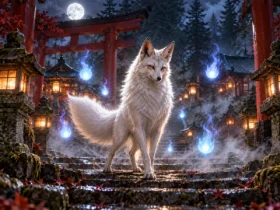
    The general name for fox yokai that bewitch people or take human form. Foxes are said to grow more tails and power the longer they live. Both good foxes, revered as messengers of Inari, and bad foxes that possess people have been told of.

  12. Ancient times (Nihon Shoki)
    Yokai ★★★★★ Japan

    Ryomen Sukuna

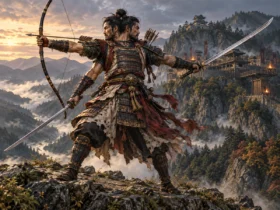
    A being said to have one body with two faces and four arms and four legs. The Nihon Shoki describes him as a bandit who defied the imperial court and was killed, but in the Hida region he is remembered as a hero who founded temples.