1. 4th–5th century (Gupta Empire)
    OOPArts ★★★★★ India

    Iron Pillar of Delhi

    An iron pillar about 7 m tall standing at the Qutub Minar complex in Delhi, a World Heritage site. Said to have been made in the Gupta era of the 4th–5th centuries, it is known as the "rustless iron pillar" because it has barely rusted in over 1,600 years. In Japan it is also called the "Ashoka Pillar."
  2. 7th century (King Pakal died in 683)
    OOPArts ★★★★★ Mexico (Maya civilization)

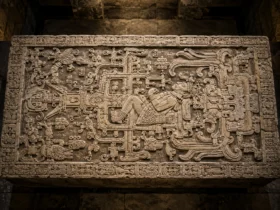
    Palenque Sarcophagus Lid (Pakal's Tomb)

    The carved lid of the 7th-century sarcophagus of King Pakal, found in 1952 beneath the Temple of the Inscriptions at the Maya site of Palenque, Mexico. It caused a stir because the figure seems to be piloting a rocket. Mayanists read it as a scene of the king's death and rebirth.

  3. Around AD 500–800 (disputed)
    OOPArts ★★★★★ Colombia

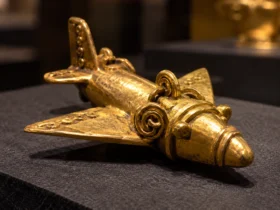
    Golden Space Shuttle (Quimbaya Airplanes)

    Small gold ornaments found at ancient sites in Colombia that look just like airplanes or the space shuttle. Because they have parts like wings and tail fins, they were hailed as proof of ancient aircraft. The leading view is that they are ornaments shaped like fish, birds or other animals.

  4. Around AD 300–1500 (Diquis culture)
    OOPArts ★★★★★ Costa Rica

    Stone Spheres of Costa Rica

    More than 300 stone spheres found in southern Costa Rica, Central America. The smallest are a few centimeters across, the largest over 2 m, weighing more than ten tons. Thought to have been made by the Diquis culture around AD 300–1500, they were inscribed as a World Heritage site in 2014.

  5. Parthian to Sasanian period (c. 3rd century BC to 7th century AD)
    OOPArts ★★★★★ Iraq

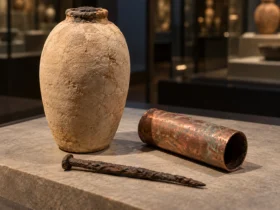
    Baghdad Battery

    An ancient clay jar containing a copper cylinder and an iron rod, found near Baghdad, Iraq. The "ancient battery" theory was published in 1938, and replicas producing a weak current made it famous. No wires have been found, and other uses such as storing scrolls are considered more likely.