Orbs
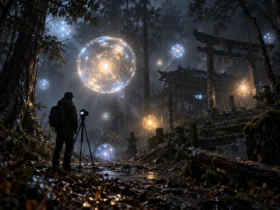
White or translucent balls of light that appear in photos. They are sometimes said to be spirits or energy, but they are thought to be the camera flash reflecting off dust, water droplets, insects and the like.
Japanese yokai, cryptids, urban legends, UFOs, mythical beasts and ancient mysteries, translated into English.
Entries: 431
White or translucent balls of light that appear in photos. They are sometimes said to be spirits or energy, but they are thought to be the camera flash reflecting off dust, water droplets, insects and the like.
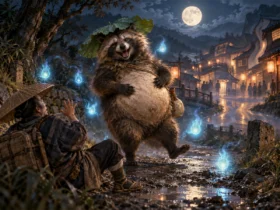
A tanuki (raccoon dog) yokai that tricks people and transforms into people and things. Legends of famous great tanuki abound in Shikoku and Sado, and it is beloved through folktales like Bunbuku Chagama and stories of tanuki drumming on their bellies.
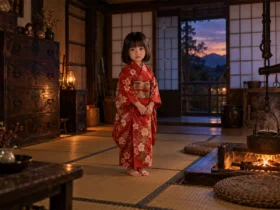
A child-like yokai said to live in old houses in northern Japan. A house with a zashiki-warashi prospers, and when it leaves, the family declines. Featured in The Legends of Tono, it is the best-known yokai of good fortune.
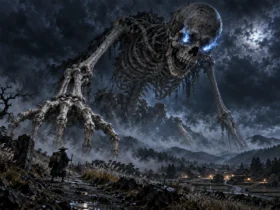
A gigantic skeleton yokai said to wander fields at night and attack and eat people. It is said to be formed from the bones of people who died without being given proper funerals. Its image comes from an ukiyo-e print by Utagawa Kuniyoshi.
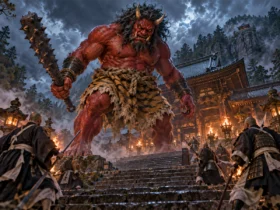
The quintessential Japanese yokai, with horns on its head and a tiger-skin loincloth. It is familiar from the Setsubun bean-throwing festival and the folktale Momotaro. Its appearance is said to come from the "ushitora" direction of the demon gate.
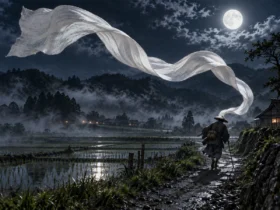
A yokai in the form of a strip of white cotton cloth about one tan long, which flutters through the evening sky and wraps itself around people's necks and faces. It comes from the folklore of Kimotsuki, Kagoshima Prefecture, and became famous nationwide through the manga GeGeGe no Kitaro.
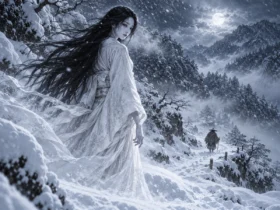
A beautiful female yokai in a white kimono who appears on snowy nights and freezes people with her icy breath. The version in Lafcadio Hearn's Kwaidan is the most famous, and legends of her are told throughout Japan's snow country.
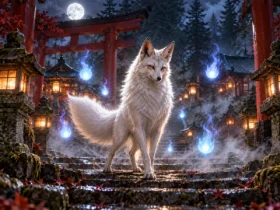
The general name for fox yokai that bewitch people or take human form. Foxes are said to grow more tails and power the longer they live. Both good foxes, revered as messengers of Inari, and bad foxes that possess people have been told of.
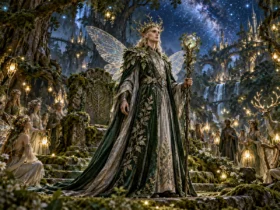
The king of the fairies in European folklore. He appears as a dwarf king in a medieval French romance and became widely known as the fairy king in Shakespeare's A Midsummer Night's Dream.
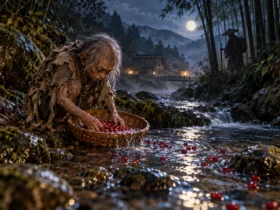
A yokai that makes a "shoki shoki" sound like washing azuki beans by the river. Usually only the sound is heard, with nothing to be seen. It is said to sing, "Shall I wash beans, or catch a person and eat them?", and legends of it are found throughout Japan.
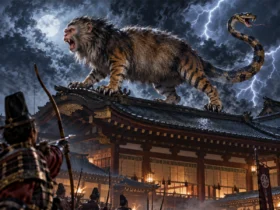
A monster with the face of a monkey, the body of a tanuki, the limbs of a tiger and a snake for a tail. It cried eerily at night, and in The Tale of the Heike it was shot down by Minamoto no Yorimasa. Its name became a word for anything of uncertain identity.
A spirit said to dwell in old trees. The echo heard in the mountains (kodama or yamabiko) was thought to be the voice of these spirits answering. Cutting down a tree with a kodama is said to bring a curse.
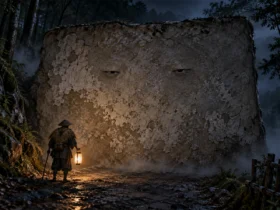
A yokai that appears as an invisible wall on a night road, blocking the way forward. It comes from a Fukuoka legend introduced by Yanagita Kunio, and it is said to vanish if you sweep the bottom of the wall with a stick.
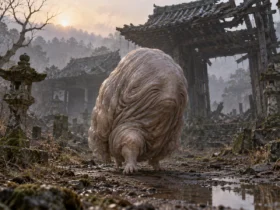
A yokai that looks like a flabby lump of flesh, with no distinction between face and body, said to smell like rotting flesh. Toriyama Sekien drew it, and it is linked with the tale of a "flesh man" that appeared at Sunpu Castle at the start of the Edo period.
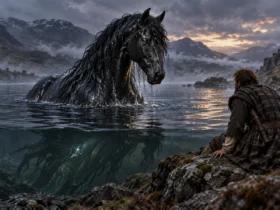
A water spirit in the form of a horse said to live in the sea and lochs of Scotland. Even more dangerous than the kelpie, it was feared for dragging riders into the water and eating everything but the liver.
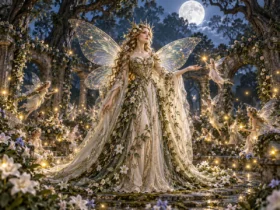
The queen of the fairies in Shakespeare's comedy A Midsummer Night's Dream. Through a trick played by her husband, the fairy king Oberon, she falls in love with a craftsman whose head has been turned into a donkey's. A moon of Uranus is named after her.
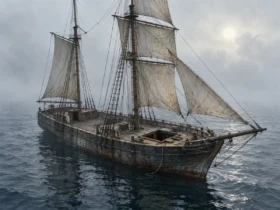
A sailing ship found drifting in the Atlantic in 1872. Its cargo and food were still aboard, but the captain's family and the entire crew had vanished. It is history's most famous "ghost ship" mystery.
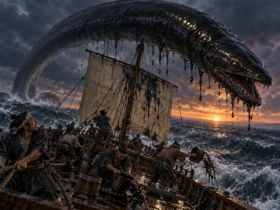
A huge sea monster off the coast of Hitachi Province (Ibaraki Prefecture) described in Edo-period essays. It took hours to pass over a ship, and oil dripped from its body.
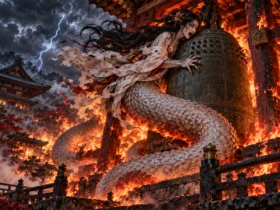
A young woman who, betrayed in her love for the monk Anchin, turned into a giant serpent and chased him. The "Legend of Anchin and Kiyohime," in which she burned him to death inside the bell of Dojoji Temple, is a celebrated subject of Noh and kabuki.
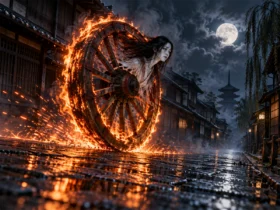
A yokai in which a woman rides along a night road in an ox-cart with a single wheel wrapped in flames. It was said to curse anyone who saw it, and appears in Edo-period ghost story collections and Toriyama Sekien's yokai pictures.