Alien Big Cats
Large cats like leopards or pumas sighted in regions where they should not live. Especially common in Britain, with the "Beast of Bodmin Moor" in Cornwall the most famous.
Japanese yokai, cryptids, urban legends, UFOs, mythical beasts and ancient mysteries, translated into English.
Entries: 431
Large cats like leopards or pumas sighted in regions where they should not live. Especially common in Britain, with the "Beast of Bodmin Moor" in Cornwall the most famous.
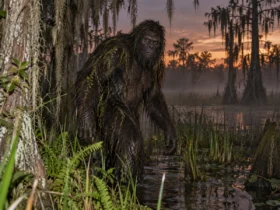
A hominid-type cryptid said to live in the swamps of Florida. It is named for the powerful skunk-like stench it gives off. An unidentified photo sent in 2000 caused a stir.
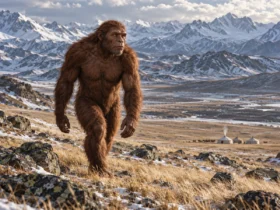
A hominid-type cryptid with a near-human appearance said to live in the mountains of Mongolia and the Caucasus. It is known for the theory that it is a surviving Neanderthal.
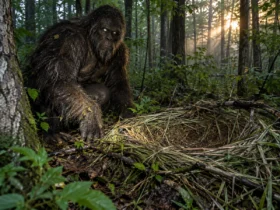
A hominid-type cryptid said to live in the forests and grasslands of Ohio. Considered a relative of Bigfoot, it is said to leave nest-like structures made of grass.
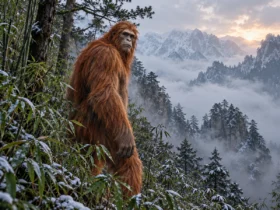
A hominid-type cryptid with reddish-brown hair said to live in mountainous areas such as Shennongjia in Hubei Province, China. The name means "wild man" in Chinese. In the 1970s, Chinese research institutions carried out large-scale investigations.
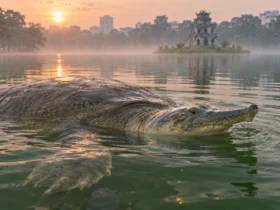
A legendary giant turtle said to live in Hoan Kiem Lake in Hanoi, Vietnam. Told of as the divine turtle to which a hero returned a sacred sword, it was confirmed to be one of the world's largest softshell turtles.
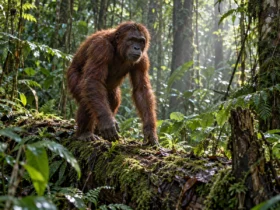
A small, bipedal hominid-type cryptid about 1 m tall said to live in the forests of Sumatra, Indonesia. The name means "short person." It drew renewed attention when fossils of a small early human were found in 2003.
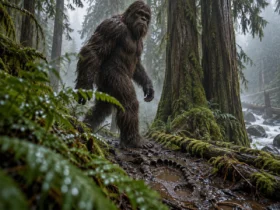
A hairy, ape-like cryptid two to three meters tall said to live in the forests of North America. The name spread with news of giant footprints in 1958, and it became world-famous with film footage in 1967.
A lake cryptid said to live in Lake Kussharo, Hokkaido. Sightings followed one after another in the 1970s, and it was named after Nessie. Theories say it is driftwood, swimming deer or waterfowl mistaken for a creature.
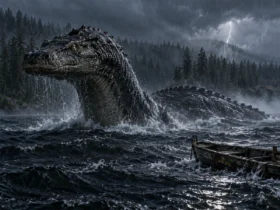
A dragon-like cryptid said to live in Lake Brosno in Tver Oblast, Russia. Legend says it swallowed Mongol soldiers in the Middle Ages, and sightings came one after another in the 1990s as well.
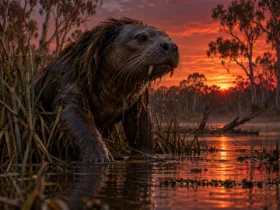
A monster living in swamps, rivers and waterholes in the folklore of Australia's Aboriginal peoples. It is said to let out terrifying cries at night and attack people who approach the water.
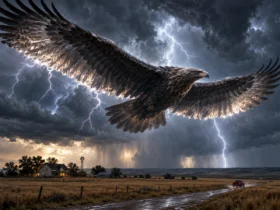
A giant bird in Native American mythology whose wingbeats cause thunder. As a cryptid, sightings of giant birds with wingspans of several meters are told across North America.
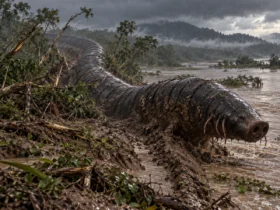
A cryptid like a giant earthworm tens of meters long, said to live underground and in rivers in Brazil and elsewhere in South America. It is said to leave deep trenches in the ground and drag livestock under.
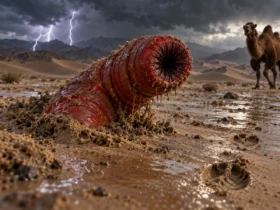
A cryptid like a thick red worm said to live in the Gobi Desert of Mongolia. Locally called "olgoi-khorkhoi," it is feared for killing people by spitting venom or discharging electricity.
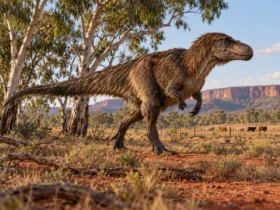
A cryptid like a giant, bipedal carnivorous dinosaur said to live in Arnhem Land in northern Australia. It appears in Aboriginal folklore and is also said to attack livestock.
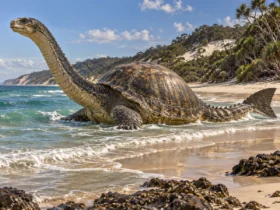
A sea cryptid said to have been sighted around the Great Barrier Reef in Australia, with a turtle-like body, a long neck and a fish-like tail. A sighting was reported to a museum at the end of the 19th century.
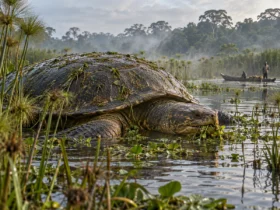
A giant turtle cryptid with a shell several meters across, said to live in the lakes and swamps of the Congo in central Africa. It is told of in the same region as Mokele-mbembe.
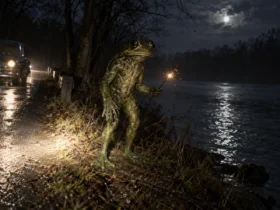
A bipedal creature with a frog-like face sighted in Loveland, Ohio. It became famous in 1972 when police officers reported seeing it on a road.
The carcass of a strange animal with a beak-like mouth that washed up on a beach in Montauk, New York, in 2008. Its photo spread online, but it is thought to have been a decomposed raccoon.
A small humanoid creature with a large head and glowing eyes seen by young people in Dover, Massachusetts, in 1977. It was sighted for only two days, and its identity remains a mystery.