Entries: 431

Mysterious Books ★★★★★ Europe

Grimoire

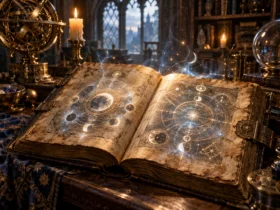
The general name for European books of magic recording how to summon angels, demons and spirits and how to make amulets and magic circles. They spread from the Middle Ages to the early modern period as manuscripts and cheap printed books. Famous examples include the "Key of Solomon" and the "Lemegeton," and they became the model for the spellbooks of fantasy fiction.
Mysterious Books ★★★★★ United States

Necronomicon

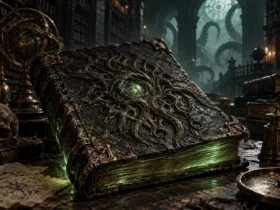
A fictional grimoire created by the American horror writer H. P. Lovecraft in his stories. A forbidden book written by the mad Arab Abdul Alhazred, it is said to drive its readers insane. It became a central item of the Cthulhu Mythos, and fake books claiming to be "the real thing" have even been published.

Divine & Mythical Beasts ★★★★★ Greece

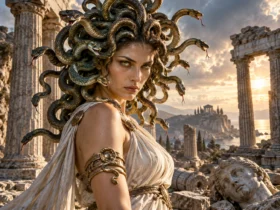
Medusa

One of the three Gorgon sisters of Greek mythology. Her hair is a mass of snakes, and anyone who looks into her eyes is turned to stone. The hero Perseus cut off her head, and from her blood the winged horse Pegasus was born. Her head was placed on the goddess Athena's shield to ward off evil.

Divine & Mythical Beasts ★★★★★ Czechia (Jewish tradition)

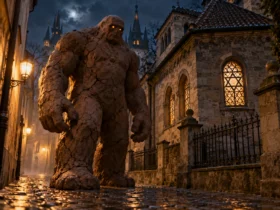
Golem

An artificial giant made of mud or clay in Jewish tradition. It moves by the power of sacred letters and obeys its maker. A famous story says that erasing the "e" from "emeth" (truth) on its forehead, leaving "meth" (death), turns it back to earth. The legend of Rabbi Loew of 16th-century Prague is especially famous.

Divine & Mythical Beasts ★★★★★ England (Europe)

Imp

A small devil or goblin of European folklore. The word originally meant "shoot" or "child," and imps were thought to be the children or servants of devils. Seen as minor demons who merely play tricks on people, they were also thought to be witches' "familiars." The imp statue in England's Lincoln Cathedral is famous.

Divine & Mythical Beasts ★★★★★ Europe

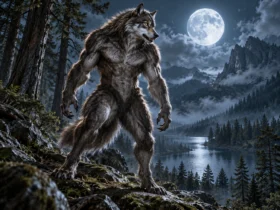
Werewolf

A monster of European folklore said to turn into a wolf on full moon nights. It goes back to the Greek myth of King Lycaon, and in the 16th–17th centuries some people were even put on trial as werewolves. The idea that silver bullets can kill them spread mainly through modern stories and films.

Divine & Mythical Beasts ★★★★★ Greece (Lycia in Asia Minor)

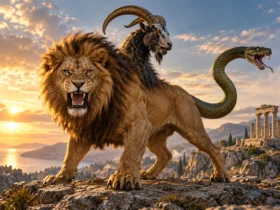
Chimera

A monster of Greek mythology with a lion's head, a goat's body and a serpent's tail, which breathes fire. It ravaged Lycia in Asia Minor but was slain by the hero Bellerophon riding the winged horse Pegasus. It is the origin of the word "chimera," a combination of different creatures.

Divine & Mythical Beasts ★★★★★ Greece (Europe)

Demon

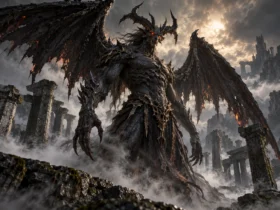
A word for devils and evil spirits. It comes from the ancient Greek "daimon," a spiritual being between gods and humans. As Christianity spread, it came to mean evil spirits opposed to God, and it often refers to the many devils who serve Satan (the Devil), leader of the fallen angels.

Divine & Mythical Beasts ★★★★★ France

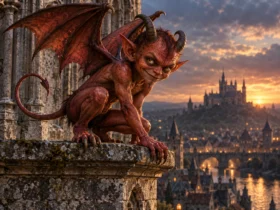
Gargoyle

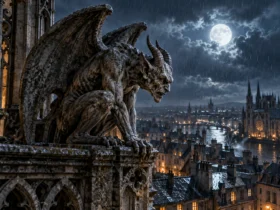
A stone carving in the shape of a monster placed on the roofs of European cathedrals and other buildings. Its original role was a rain spout that spat water from its mouth, and it was also thought to ward off evil. In Rouen, France, there is a legend of a saint defeating the dragon Gargouille. In fantasy, gargoyles are stone monsters that come to life.

Mysteries & Phenomena ★★★★★ Japan (Tokyo)

Oitekebori (The "Leave It Behind" Moat)

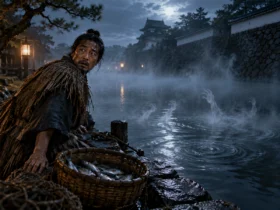
One of the "Seven Wonders of Honjo," ghost stories of Honjo in Edo (today's Sumida, Tokyo). When anglers tried to take home fish caught in the moat, a voice from the water said "Leave it, leave it," and the fish vanished. It is said to be the origin of the Japanese expression "oitekebori" (being left behind).

Urban Legends ★★★★★ Japan

Hanaichimonme

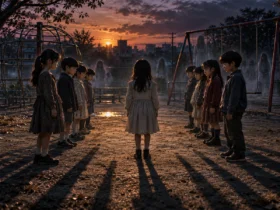
A children's song for a game in which two teams take turns claiming children from the other side while singing. Because "ichi monme" was an old unit of money and weight, a dark theory says the song depicts child traders buying children cheaply.

Urban Legends ★★★★★ Japan (Saitama Prefecture)

Toryanse

A children's song about an exchange between a parent and child walking the narrow path to a Tenjin shrine and the gatekeeper. Because it says going is fine but coming back is scary, many dark meanings have been suggested, such as abandoning children, human sacrifice and checkpoint inspections.

Urban Legends ★★★★★ Japan

Kagome Kagome

A children's song for a game in which children circle a blindfolded "it," who must guess who is standing directly behind. Because of its cryptic words, many dark meanings have been suggested: the sorrow of a courtesan, a miscarriage, a prisoner, an execution, even a code for the hiding place of the Tokugawa treasure.

Urban Legends ★★★★★ Japan (Kanagawa Prefecture)

The Girl in Red Shoes (Akai Kutsu)

An urban legend about the children's song "Akai Kutsu" (Red Shoes). There are rumors that the girl taken away by a foreigner was kidnapped, or that the "foreigner" in the lyrics was really a "great-grandfather." A sad true story is told about the girl said to be its model.

Urban Legends ★★★★★ Germany

Doppelganger

The phenomenon of seeing another self that looks exactly like you. The German word means "double walker." It is said that seeing your own doppelganger means your death is near, and there are accounts of sightings by Goethe and Akutagawa Ryunosuke.

Urban Legends ★★★★★ United States

Moon Landing Hoax Theory

The conspiracy theory that humanity's first moon landing by Apollo 11 in 1969 was really faked by the United States in a studio. A waving flag and the lack of stars in the sky are offered as evidence, but all have been explained scientifically.

Urban Legends ★★★★★ United States

New World Order (Conspiracy Theory)

The conspiracy theory that a tiny secret elite plans to unite the world under a single government and control the people. Originally a term in international politics for "the new international order after the Cold War," it spread as a rallying cry of conspiracy theories.

Urban Legends ★★★★★ Germany

Illuminati

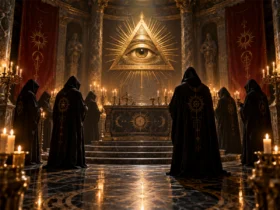
A real secret society founded in Bavaria, Germany, in 1776 and dissolved only about ten years later. Even after its dissolution, conspiracy theories that it "survived and controls the world from behind the scenes" have been passed down, making it a byword for urban legends.

Urban Legends ★★★★★ Japan

Red Paper, Blue Paper (Aka Kami, Ao Kami)

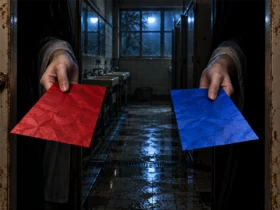
A school ghost story in which, when you find there is no toilet paper, a voice asks, "Do you want red paper or blue paper?" Answer "red" and you are covered in blood; answer "blue" and your blood is drained until you die pale blue.

Urban Legends ★★★★★ Japan

The After-School Music Room

School ghost stories in which piano music is heard from the empty music room after school, or the eyes of the composers' portraits on the wall move. They have been told all over Japan as a staple of the "seven wonders of the school."